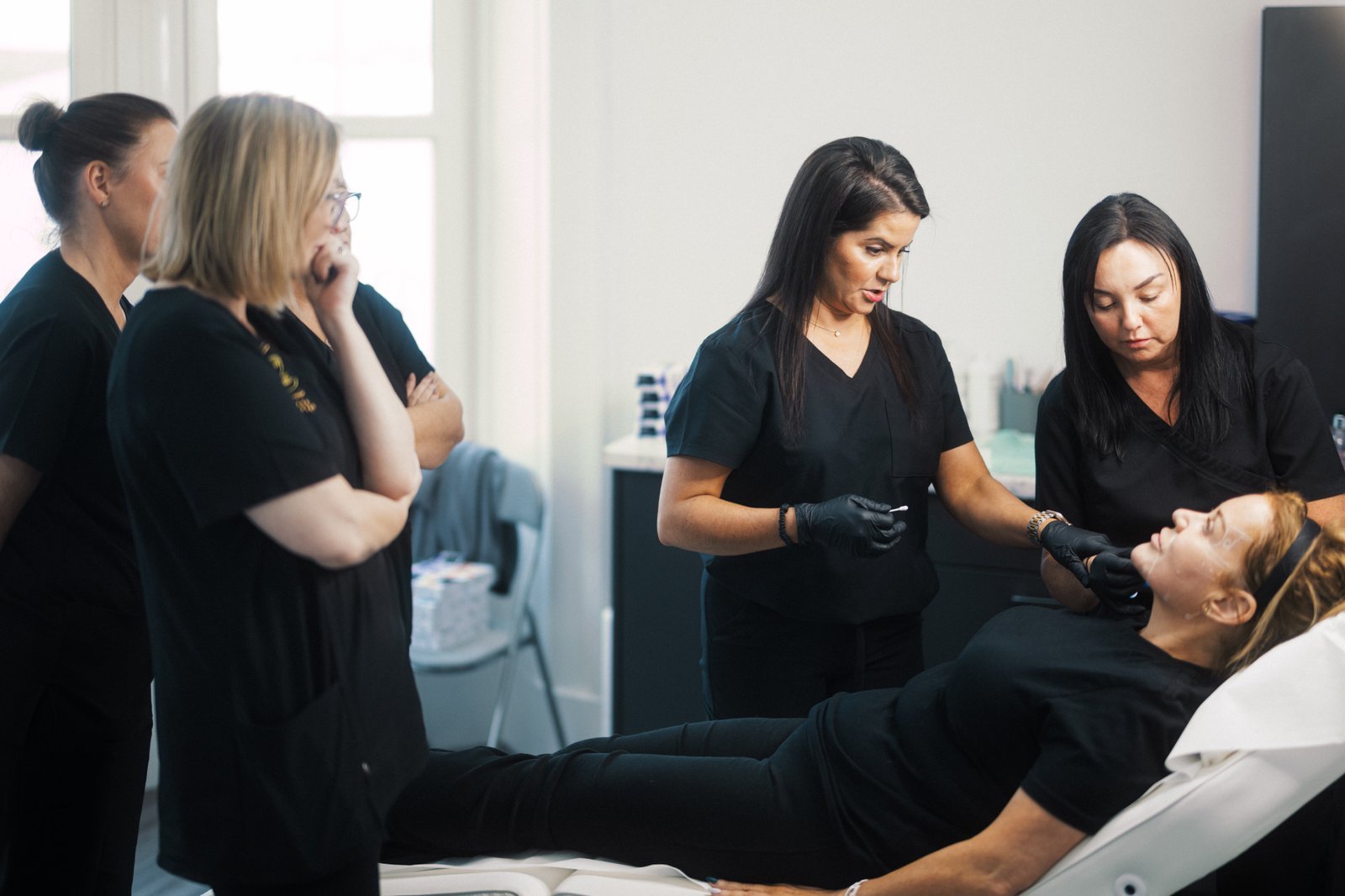
Just like many clinical journeys, the path into aesthetic medicine often begins quietly. For many registered nurses, it starts with curiosity and a sense that the clinical skills they have spent years refining could be applied in a new and evolving area of practice.
As non-surgical cosmetic treatments continue to grow in popularity, aesthetic medicine has become a more visible part of modern healthcare conversations, encouraging many nurses to explore nurse injector training in Scotland as a structured way to enter this developing field.
Within this expanding area of practice, aesthetics offers nurses an opportunity to broaden their professional expertise while continuing to deliver patient-centred care in a clinical environment.
Medical aesthetics training for nurses builds on the foundations of traditional nursing practice, allowing practitioners to extend their skills into areas such as facial aesthetics, injectable treatments, and skin health [6].
Core skills such as patient assessment, communication, and clinical decision-making remain central in aesthetic practice.
With the right education, supportive training, and ongoing mentorship, many nurses are able to start a career in aesthetics while continuing to uphold the professional standards expected within healthcare practice.
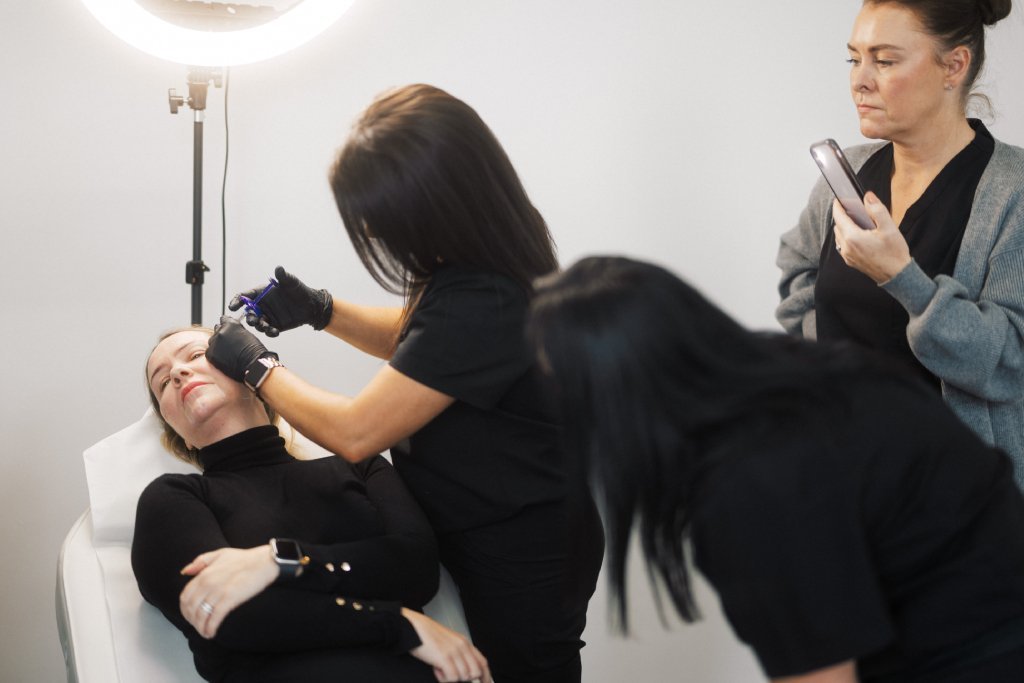
Common Concerns for Beginners
As interest in aesthetic medicine continues to grow, it’s natural for individuals to have questions before enrolling in medical aesthetics training for nurses.
Starting something new in healthcare is never taken lightly. Nurses want to be sure they are learning safely, developing the right clinical skills, and entering the field in a way that protects both patients and professional standards.
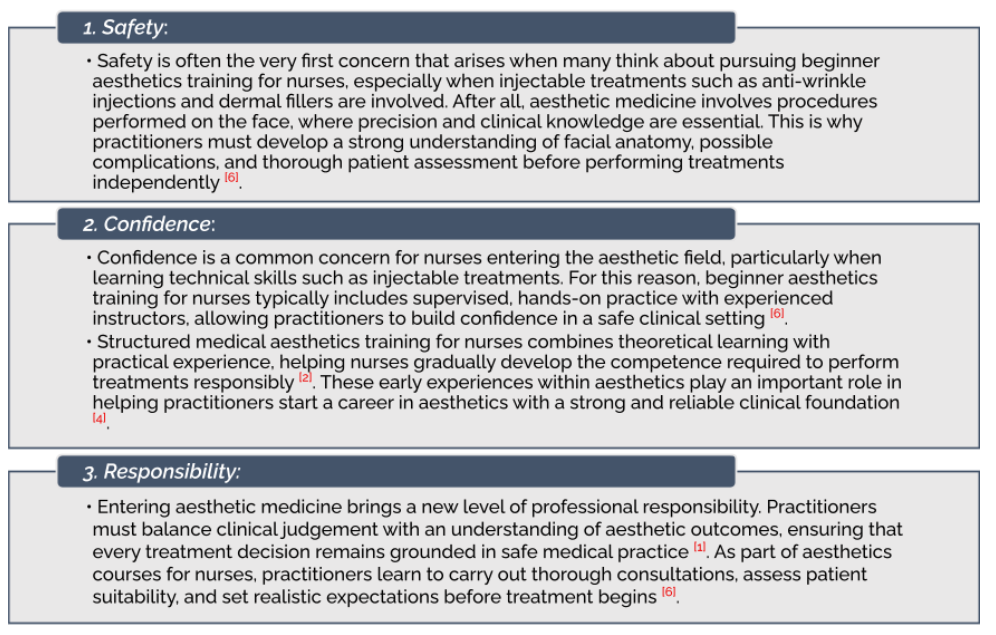
These principles form a core part of medical aesthetics training for nurses, ensuring that patient safety, ethical practice, and overall wellbeing remain central to clinical decision-making [5].
For many practitioners hoping to start a career in aesthetics, understanding these professional responsibilities is just as important as learning the technical skills involved in performing injections.
What Good Beginner Training Should Include
Not all training programmes are equal, which is why choosing the right beginner aesthetics training for nurses is essential. The quality of early education can shape how confidently and responsibly practitioners go on to practise in the field.
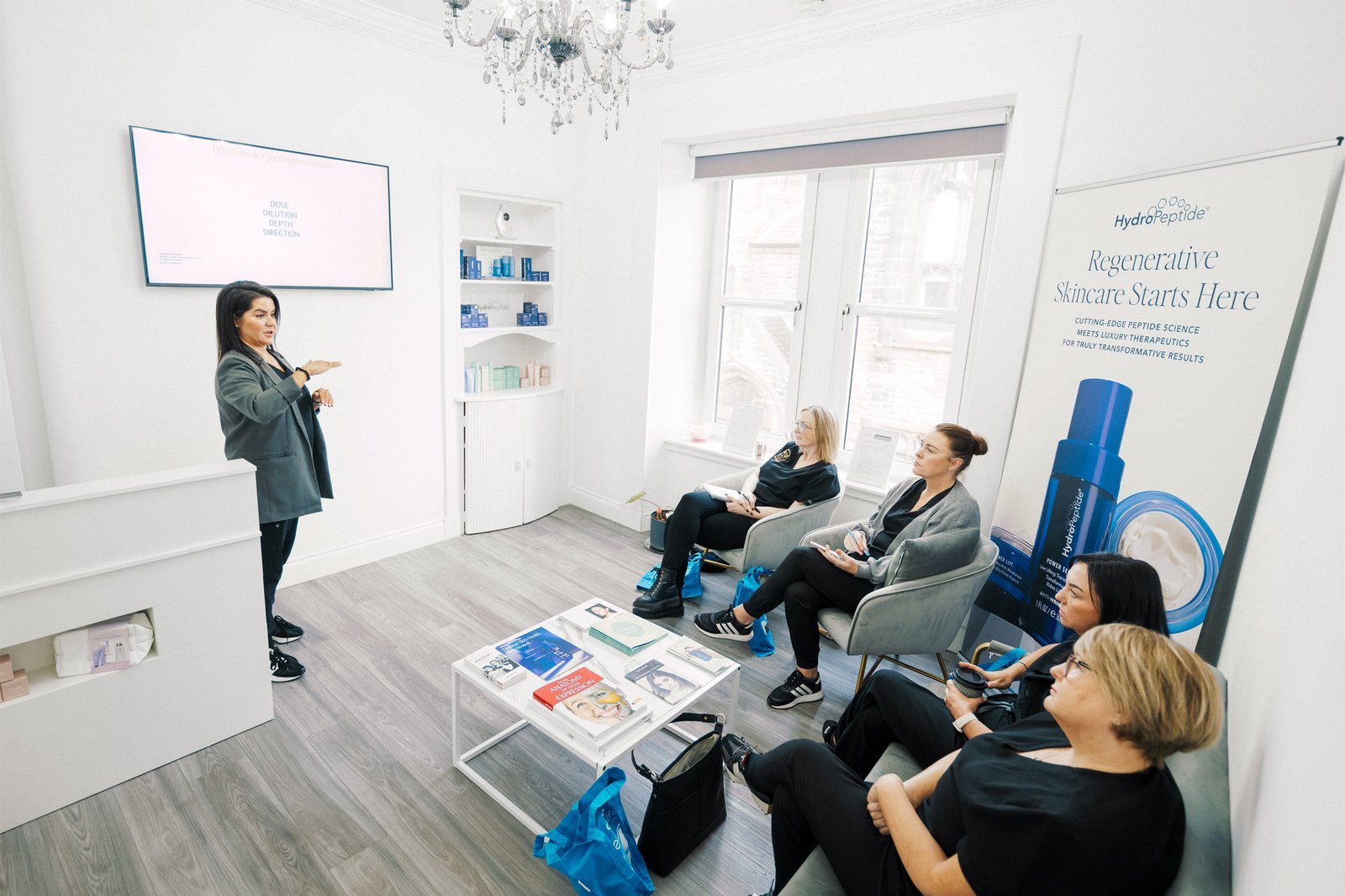
Effective beginner aesthetics training for nurses combines theoretical learning with supervised clinical practice, helping practitioners develop both knowledge and technical competence [2].
Strong programmes typically include teaching on facial anatomy, consultation skills, treatment planning, and complication management [6].
Structured medical aesthetics training for nurses should also introduce practitioners to professional standards, consent procedures, and regulatory considerations relevant to aesthetic practice in the UK [5].
These elements are essential for practitioners hoping to start a career in aesthetics, ensuring treatments are delivered safely and ethically [5].
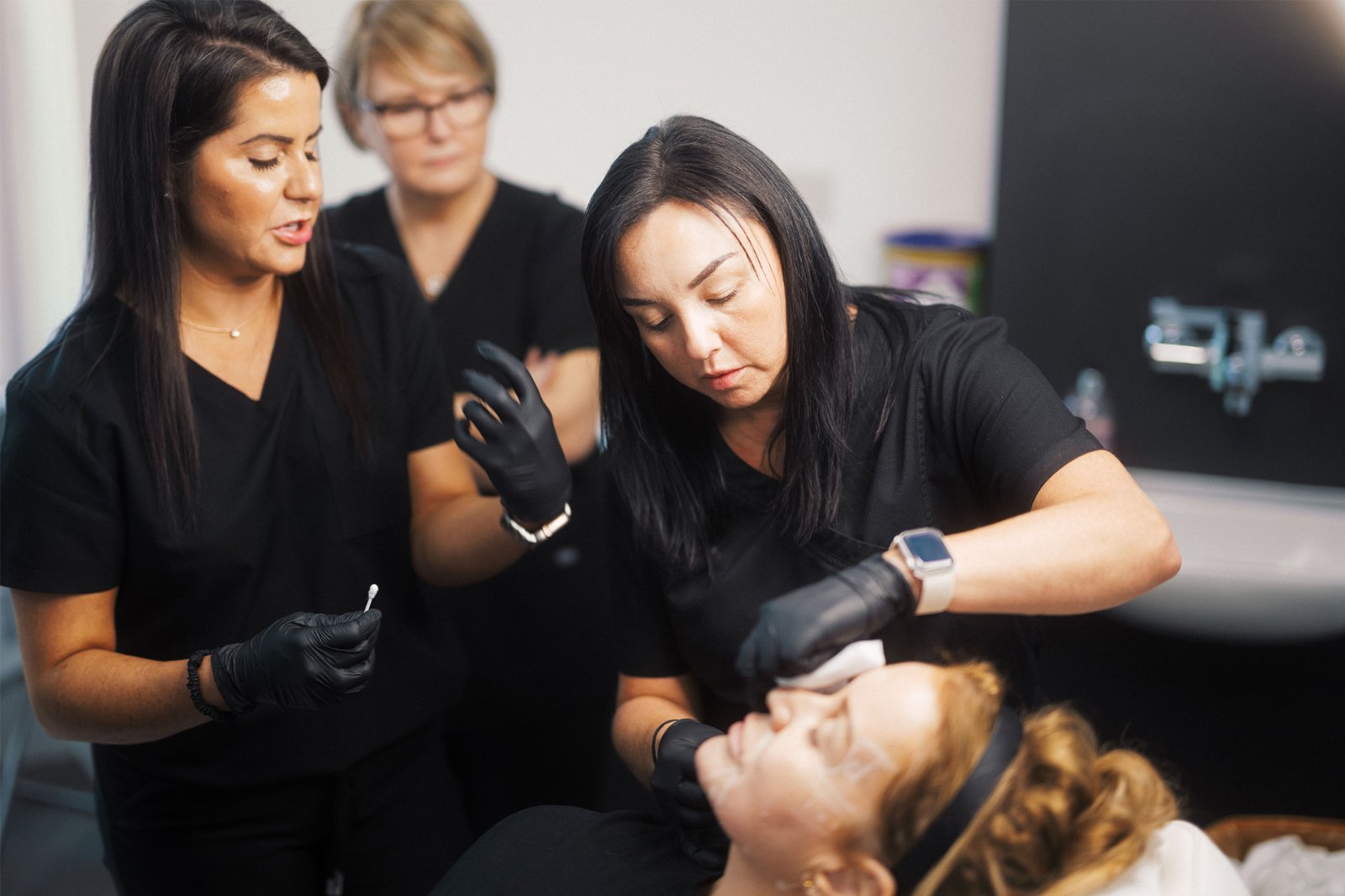
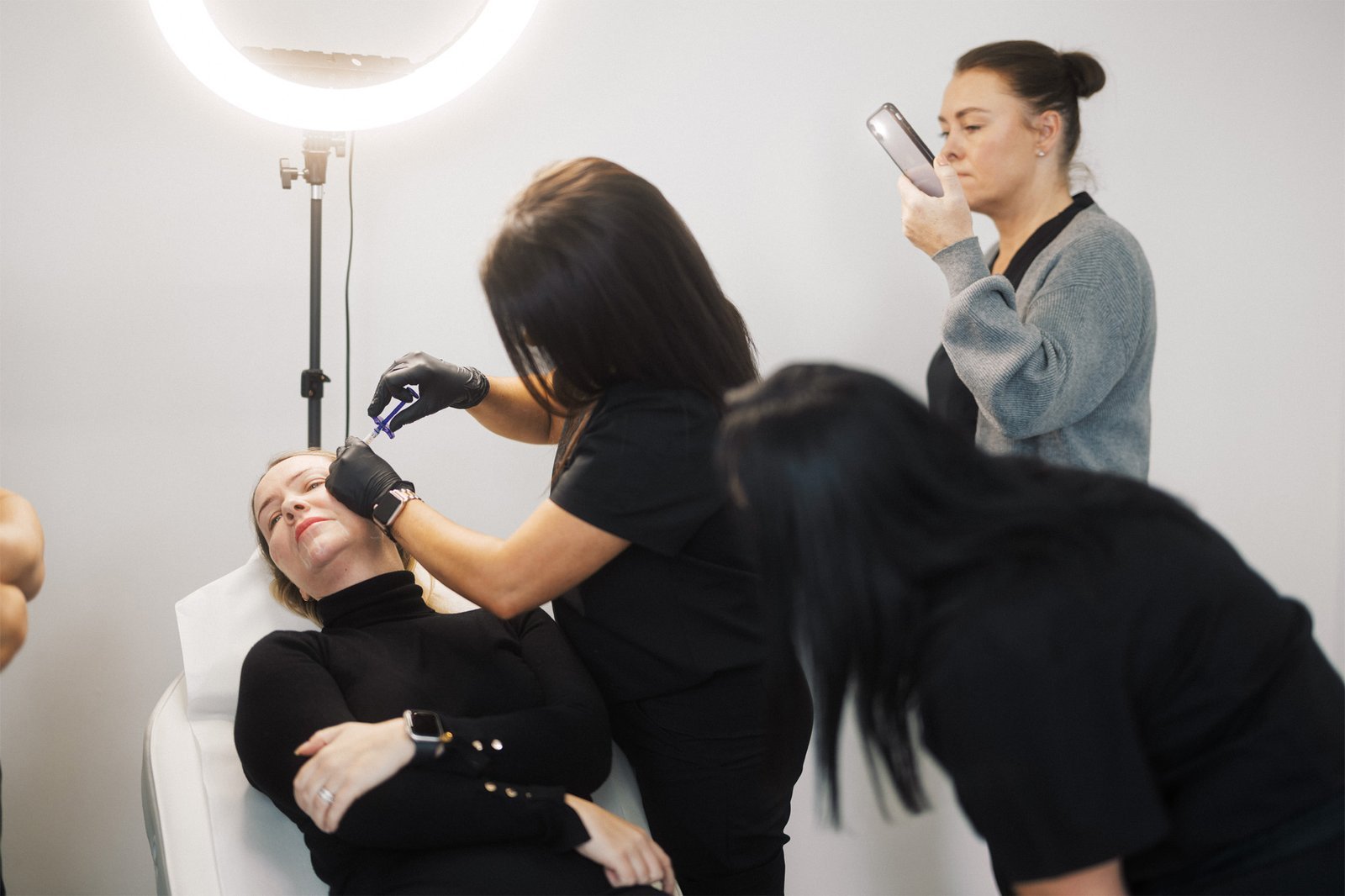
High-quality training also includes hands-on experience with injectable procedures under expert supervision [2].
For individuals considering to start a career in aesthetics, choosing a programme that prioritises clinical education, practical experience, and patient safety is key to building confidence early in their careers [3].
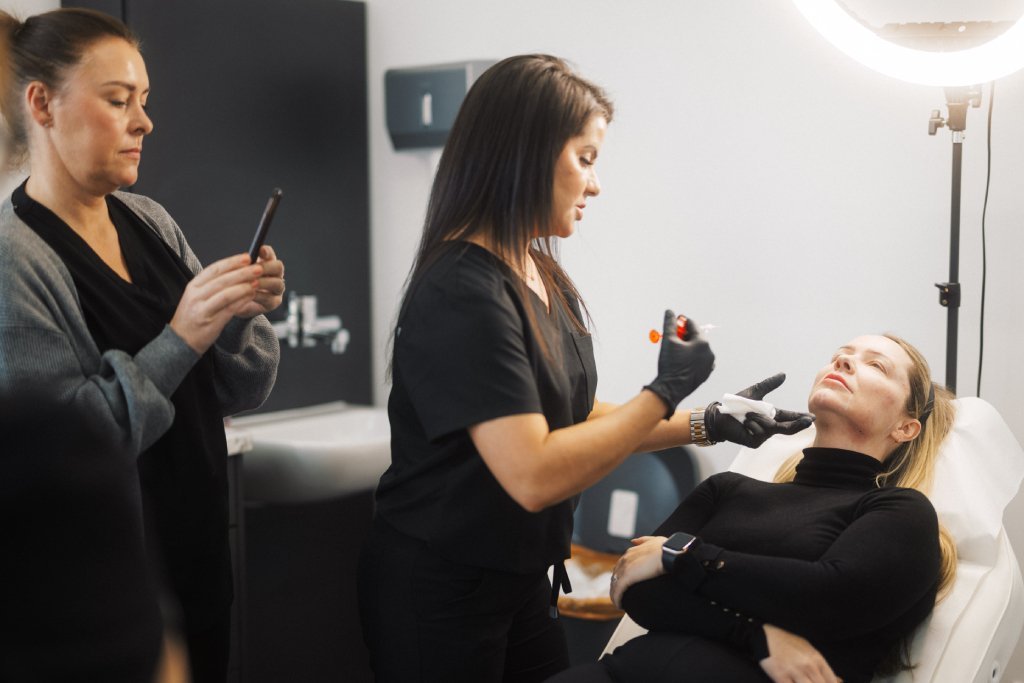
Why Mentorship Matters Early On
One of the most valuable aspects of training in aesthetics courses for nurses is the mentorship and support available after the initial course is complete [6].
Starting aesthetic practice can feel like a big step, and having access to experienced practitioners for guidance can make a significant difference [4].
Ongoing support helps reinforce the learning gained during beginner aesthetics training for nurses and encourages safe clinical decision-making as new practitioners begin treating patients [5].
For this reason, many academies include post-course mentorship as part of medical aesthetics training for nurses [6].
This allows newly qualified practitioners to seek advice, review cases, and continue refining their skills after certification [6].
With this kind of continued guidance, many practitioners find their confidence and competence grow steadily during the early stages of clinical practice [4].
How Aesthetics Can Complement a Nursing Career
Aesthetic medicine offers nurses an opportunity to expand their professional scope while continuing to apply the clinical knowledge they have developed throughout their healthcare careers.
Through medical aesthetics training for nurses, practitioners can build specialised expertise in non-surgical cosmetic procedures while still drawing on their medical background.
Many nurses discover that beginner aesthetics training for nurses allows them to use familiar skills, such as patient communication, clinical assessment, and compassionate care, in a new context focused on skin health and aesthetic treatments [5].
In many ways, the transition feels like a natural extension of the skills they already use every day in healthcare practice.
For some practitioners, completing beginner aesthetics training for nurses offers a way to diversify their career while continuing to provide patient-focused care [3].
Some choose to incorporate aesthetics alongside existing clinical roles, while others decide to start a career in aesthetics as a dedicated professional pathway [1].
What to Expect From ATA Beginner Pathways
For nurses considering aesthetics training, ATA pathways are designed to support practitioners from their first steps in aesthetic medicine through to confident clinical practice.
The programmes provide a structured introduction to the field, helping practitioners understand how to safely start a career in aesthetics while maintaining high professional standards.
Through carefully designed medical aesthetics training for nurses, individuals are guided through the core principles of patient consultation, treatment planning, and injectable techniques.
The focus is not only on learning procedures, but on developing safe and responsible clinical practice.
This approach to training ensures practitioners gain both the technical skills and the professional judgement required to deliver ethical, patient-centred aesthetic treatments.
Entering aesthetic medicine can be a rewarding step for nurses looking to expand their clinical careers.
Through comprehensive medical aesthetics training for nurses, practitioners can develop the skills and confidence needed to start a career in aesthetics while maintaining high professional standards.
If you are ready to explore beginner aesthetics training for nurses, book a free discovery call with Dr Lauren to discuss the best training pathway for your goals.
Bibliography:
- AAAMS. (n.d.). Considering becoming an aesthetic nurse? Here’s what you need to know. [online] Available at:
https://aaams.net/blog/considering-becoming-an-aesthetic-nurse-heres-what-you-need-to-know/ - Derma Institute. (n.d.). Nurses aesthetic training. [online] Available at:
https://dermainstitute.co.uk/nurses - Renu Academy. (n.d.). Beginner’s guide to aesthetic training: What you need to know before you start. [online] Available at:
https://renuacademy.co.uk/beginners-guide-to-aesthetic-training-what-you-need-to-know-before-you-start/ - Acquisition Aesthetics. (n.d.). How to become an aesthetic nurse. [online] Available at:
https://www.acquisitionaesthetics.co.uk/blog/how-to-become-an-aesthetic-nurse/ - Hamilton Fraser. (n.d.). Getting started in aesthetics for nurses. [online] Available at:
https://www.hamiltonfraser.co.uk/content-hub/getting-started-in-aesthetics-for-nurses - Harley Academy. (n.d.). Training courses for nurses. [online] Available at:
https://www.harleyacademy.com/training-courses-for-nurses