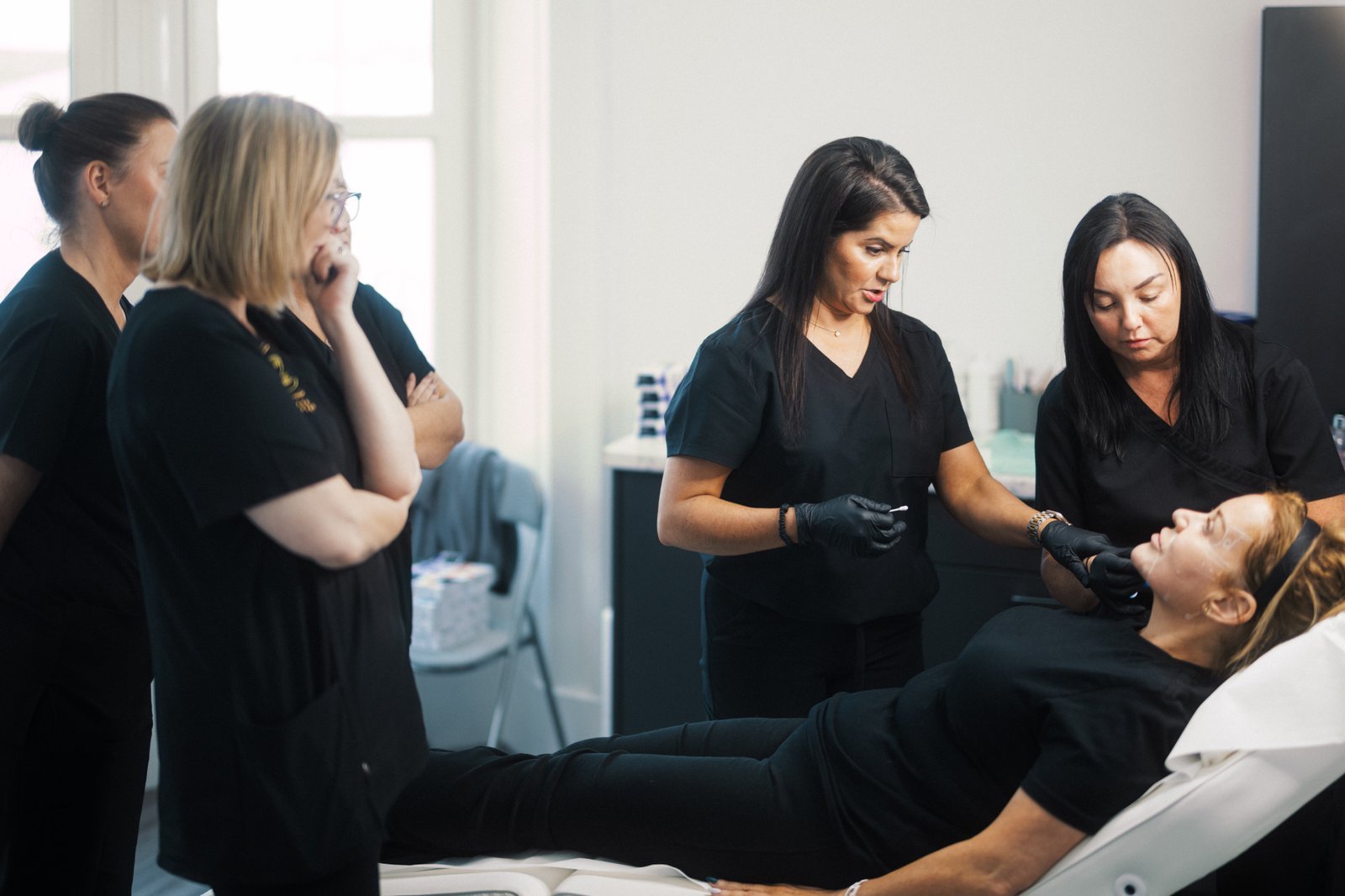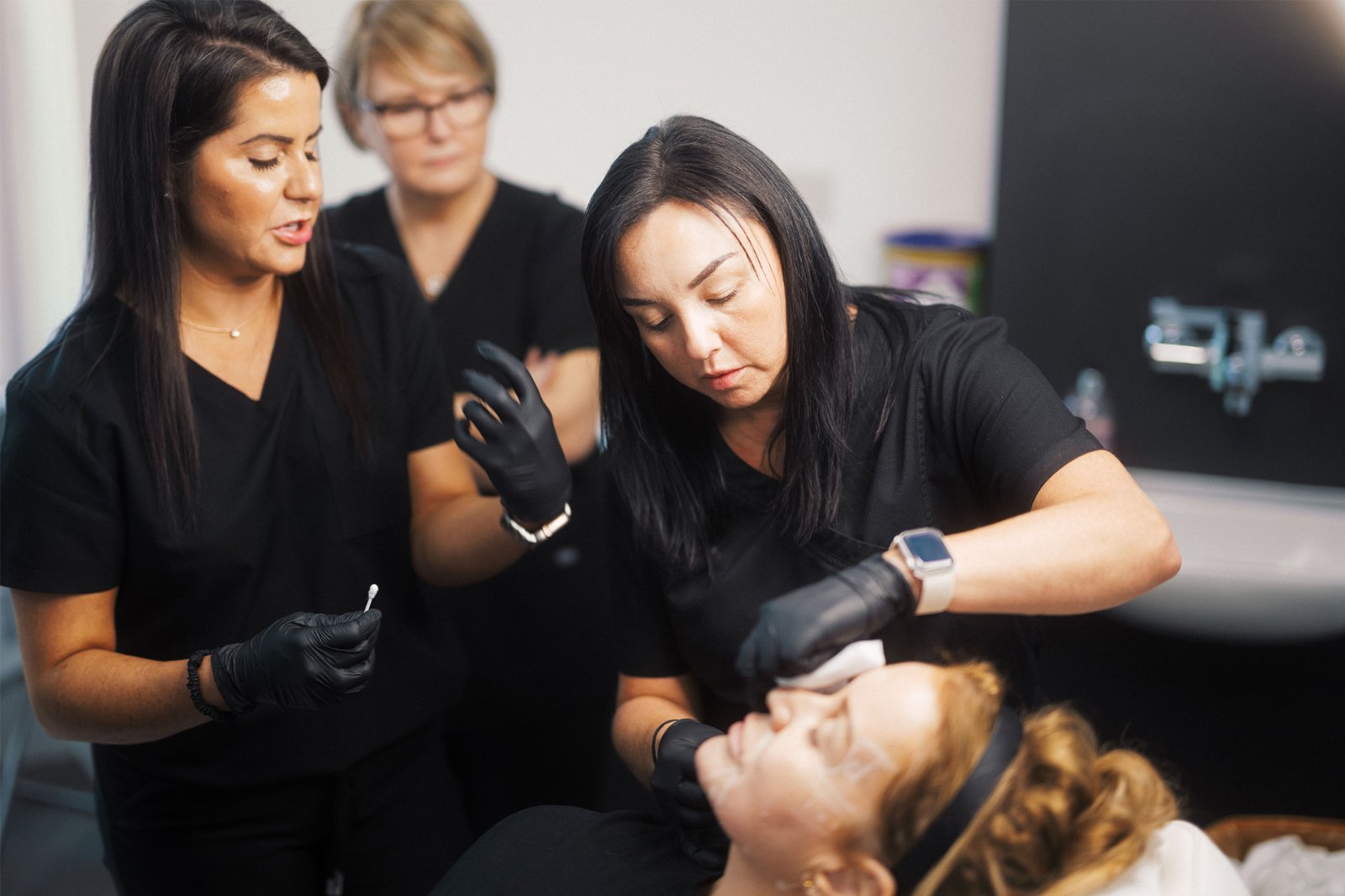

For many clinicians, completing a foundation course marks the beginning of a new professional direction.
However, progression in aesthetics is not simply about enrolling in the next available course; it is about developing the clinical judgement, confidence, and consistency required to move forward safely.
Transitioning from foundation to intermediate level represents a significant step, one that should be approached with intention rather than urgency.

Natural progression after foundation
After completing initial aesthetic courses for nurses or other entry-level training, it is natural to start thinking about what comes next. Foundation training typically introduces core principles such as basic injection techniques, patient consultation, and safety protocols.
At this stage, many practitioners feel motivated to expand their treatment portfolio. This often includes exploring options like a lip filler training course or moving toward more comprehensive facial treatments.
However, it’s important to recognise that progression is not automatic. Just because foundation training is complete does not necessarily mean a practitioner is ready for more complex procedures. Intermediate training requires a deeper level of competence and understanding.
Not just the “next step” — requires readiness
Intermediate-level education is often perceived as the logical next stage, but it demands significantly more than basic technical ability. It involves:
- Greater responsibility in clinical decision-making
- A deeper understanding of facial anatomy
- The ability to manage complications independently
This is why advanced aesthetics training should only be pursued when a practitioner has built a strong and reliable foundation. Without this, the risk of inconsistent results or patient dissatisfaction increases.

What intermediate training involves
- More advanced treatment areas
Intermediate courses expand beyond basic procedures to include areas such as:
- Lips
- Cheeks
- Jawline
These regions require precision and a refined understanding of both structure and aesthetics. For example, lip treatments are not just about volume; they involve proportion, symmetry, and movement.
- Increased clinical responsibility
At this level, practitioners are expected to:
- Conduct more detailed consultations
- Make independent treatment decisions
- Understand when not to treat
This shift from guided learning to independent practice is a defining feature of intermediate aesthetic training in Scotland, that providers often emphasise.
The skills required
Progressing safely requires more than learning new techniques. It depends on developing a set of core clinical skills.
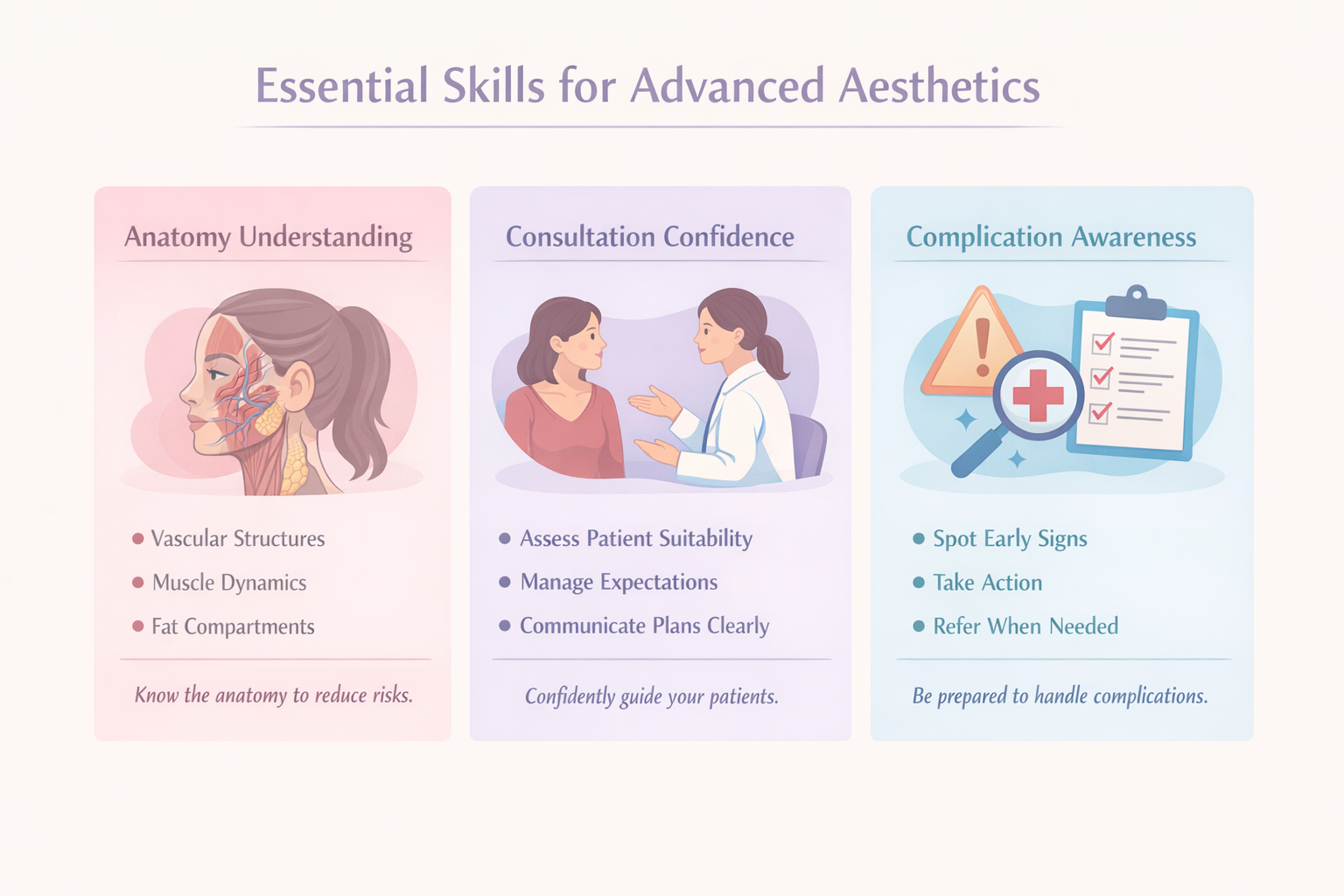
This level of responsibility is a key component of advanced aesthetics training.
Common Mistakes
- Moving too quickly
One of the most common errors is progressing before mastering the basics. This can lead to:
- Inconsistent results
- Increased complication risk
- Reduced patient trust
Rushing into intermediate courses without adequate experience often creates more challenges than opportunities.
- Chasing treatments, not competence
Another mistake is focusing on learning popular procedures rather than building core skills. For example, enrolling in multiple courses (such as a lip filler training course) without consolidating knowledge can result in fragmented learning.
True progression in aesthetics is based on competence, not the number of treatments offered.
How to know you’re ready
- Confidence with basics
You should feel comfortable performing foundational treatments independently, with consistent outcomes.
- Patient selection
Being able to identify suitable and unsuitable patients is a strong indicator of readiness. This includes understanding limitations and knowing when to decline treatment.
- Consistent results
Consistency is key. If your results are predictable and align with patient expectations, it suggests a solid foundation has been established.
When these elements are in place, moving into intermediate aesthetic training in Scotland clinics offers a more appropriate and safer step.
What good training should include
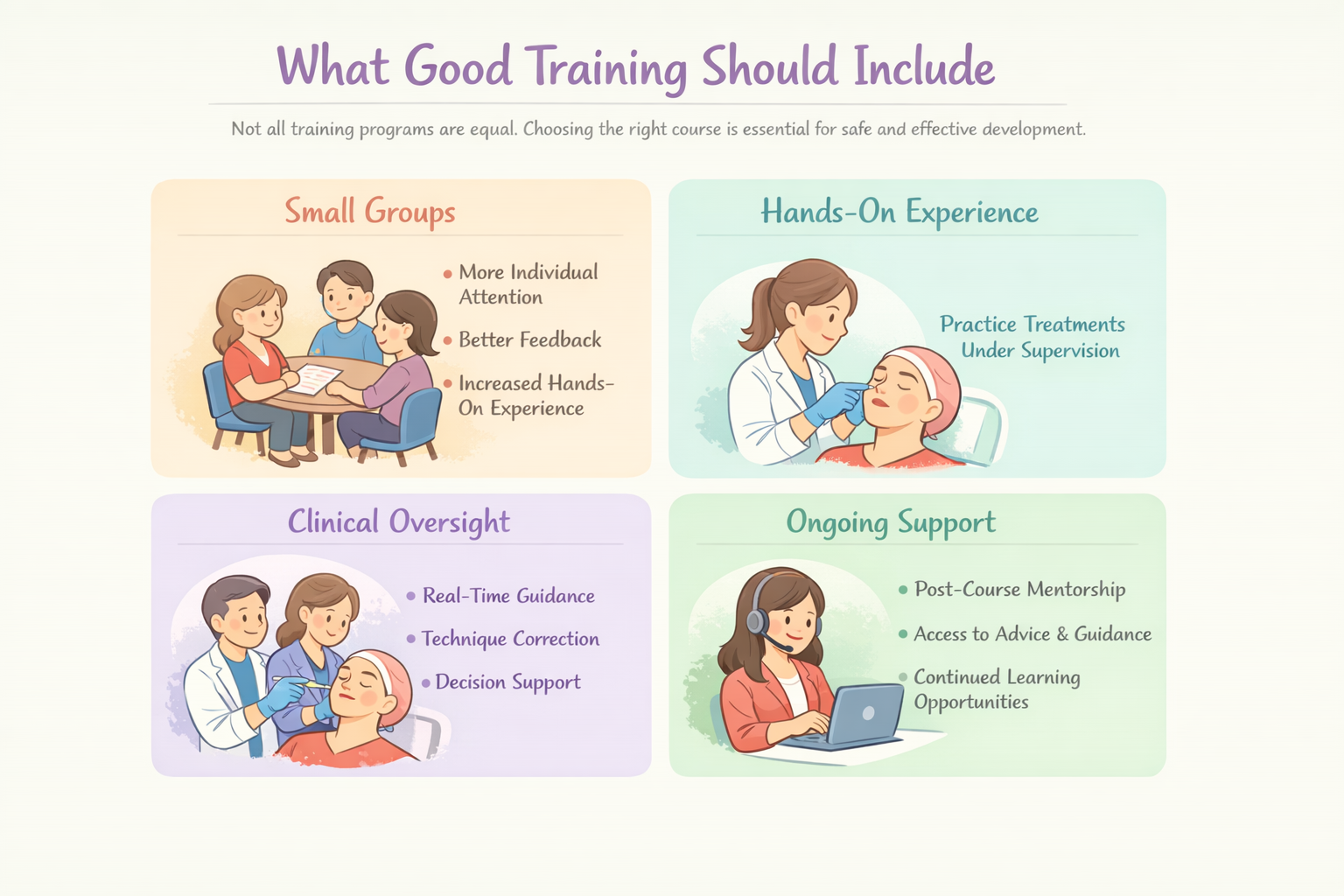
Strong support systems are a hallmark of reputable advanced aesthetics training providers.
Conclusion
Progressing from foundation to intermediate level is an important milestone in any aesthetic courses for nurses or clinician’s journey. However, it should never be approached as a simple next step.
True progression in aesthetics requires readiness; built through experience, consistency, and a deep understanding of both technique and patient care.
By focusing on competence rather than speed, and by choosing high-quality training such as intermediate aesthetic training in Scotland, practitioners and clinicians can develop safely and sustainably.
Ultimately, success in aesthetics is not defined by how quickly you progress, but by how well you build your skills over time.
Bibliography:
- Seamless Health – 2026 – The Future of Aesthetic Medicine: Why Now Is the Time to Train in Aesthetics [online] Available at:
https://www.seamlesshealth.ca/post/the-future-of-aesthetic-medicine - Cosmetic courses – 2025 – Getting started in aesthetics [online] Available at:
https://cosmeticcourses.co.uk/getting-started-in-aesthetics/