Choosing the right training course in medical aesthetics can be one of the most important decisions you make for your career. With so many aesthetic training courses available, it’s easy to feel overwhelmed or worse, to choose the wrong one.
The consequences aren’t just financial. The wrong course can cost you money, confidence, and time, leaving you underprepared, unsupported, and unsure of your next steps.
Whether you’re just starting out or looking to advance your skills, understanding what training suits you is essential for long-term success in this rapidly growing field.
This guide breaks down Foundation, Intermediate, and Advanced training options, and explains how a structured pathway like Aesthetic Training Academy by Dr Lauren can support your progression from beginner to advanced practitioner.
Why Choosing the Wrong Course Costs More Than You Think
Many practitioners enter aesthetics with excitement and ambition, only to discover that their chosen course didn’t deliver what they needed. A short, poorly structured injector training course might teach theory without hands-on practice, or offer techniques without explaining the underlying anatomy and safety principles.
This can lead to hesitation when treating patients, limited treatment offerings, or even the need to retrain entirely.
The right medical aesthetics training course should build competence progressively, reinforce safety, and provide mentorship beyond the classroom.
When training aligns with your experience level, you gain confidence, clinical skills, and a clear pathway forward; saving you time and money in the long run.
Foundation Training: Building the Right Base
Who is Foundation training for?
Foundation training is designed for beginners who are new to aesthetics or have little to no injectable experience. This includes doctors, nurses, dentists, pharmacists, and other eligible healthcare professionals who want to enter the field safely and confidently.
For many, foundation Botox and filler courses are their first exposure to aesthetic medicine. At this stage, it’s critical not to rush. Skipping foundational knowledge often leads to gaps that become problematic later on.
What does foundation training give you?
High-quality foundation aesthetic training courses focus on:
- Facial anatomy and physiology
- Patient assessment and consultation skills
- Safety protocols and complication awareness
- Core injectable treatments such as anti-wrinkle injections and basic dermal filler
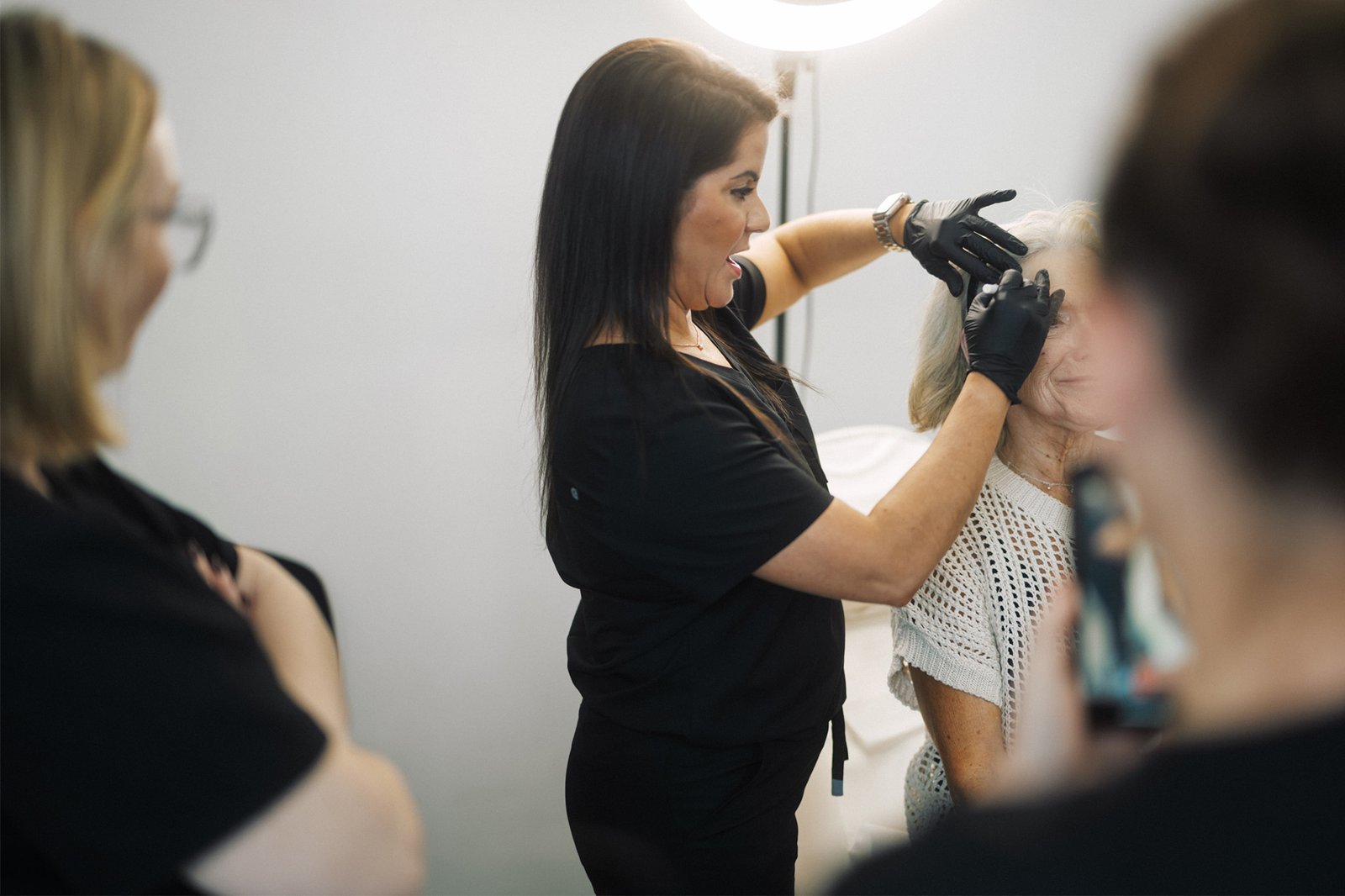
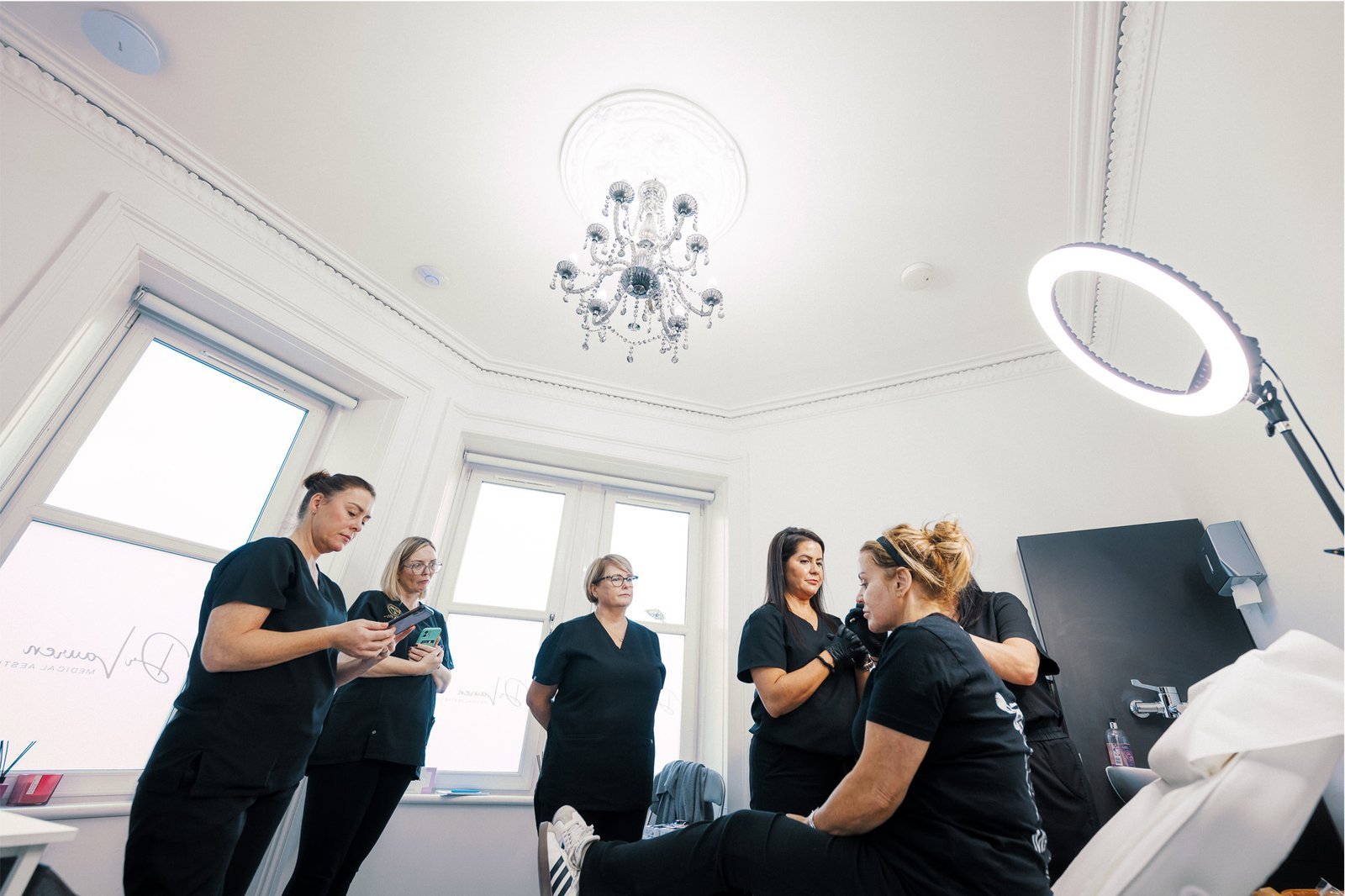
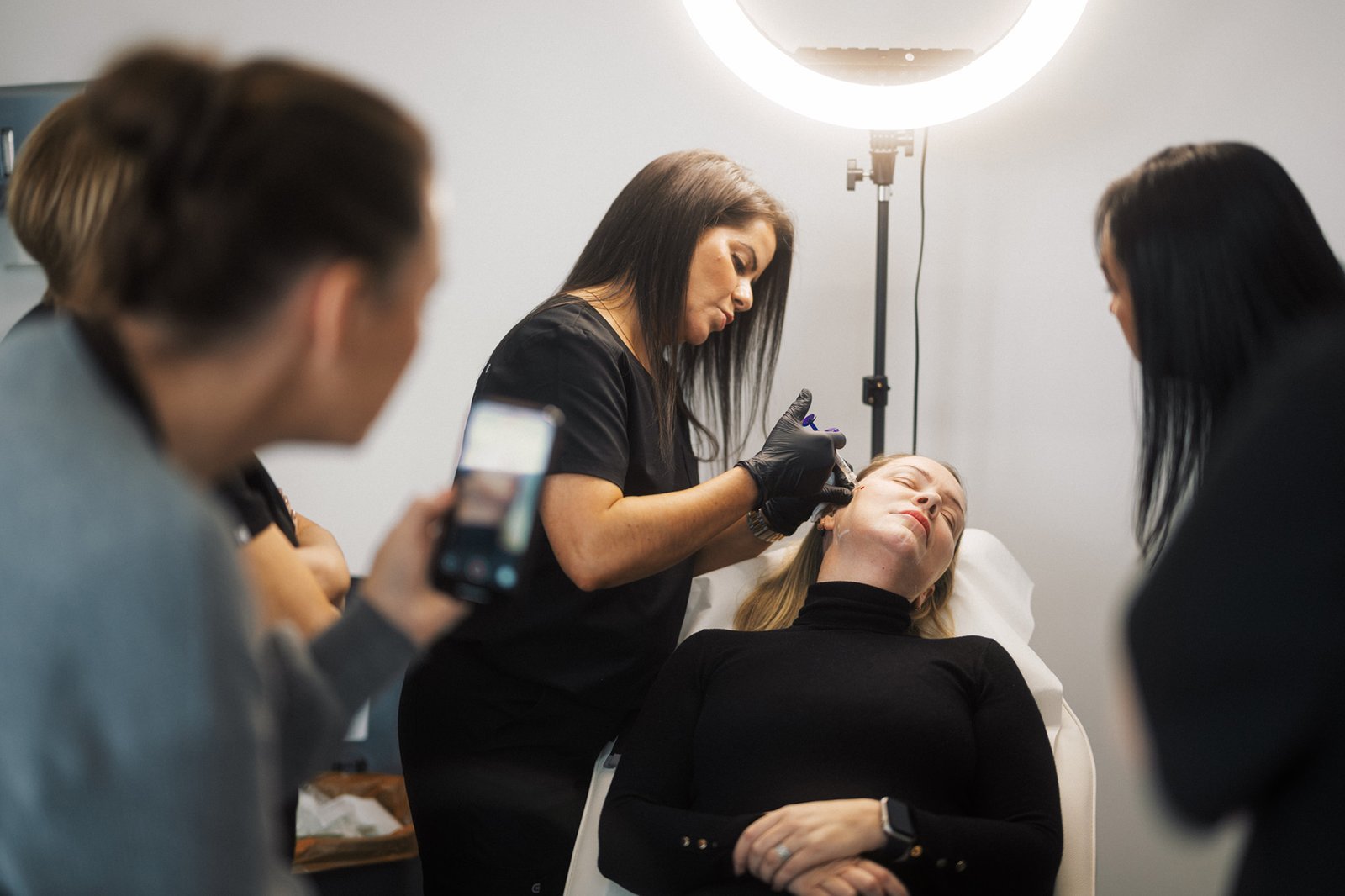
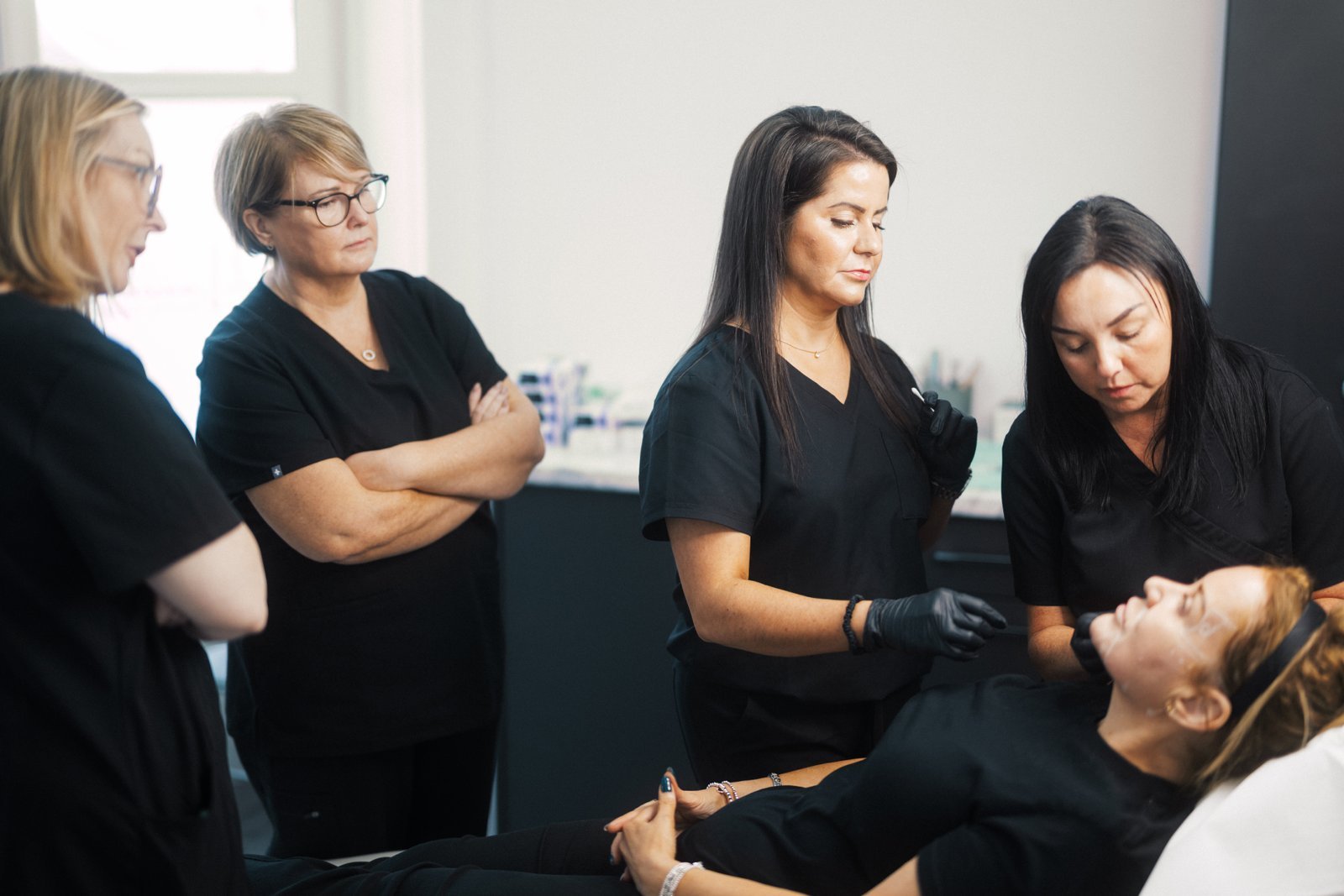
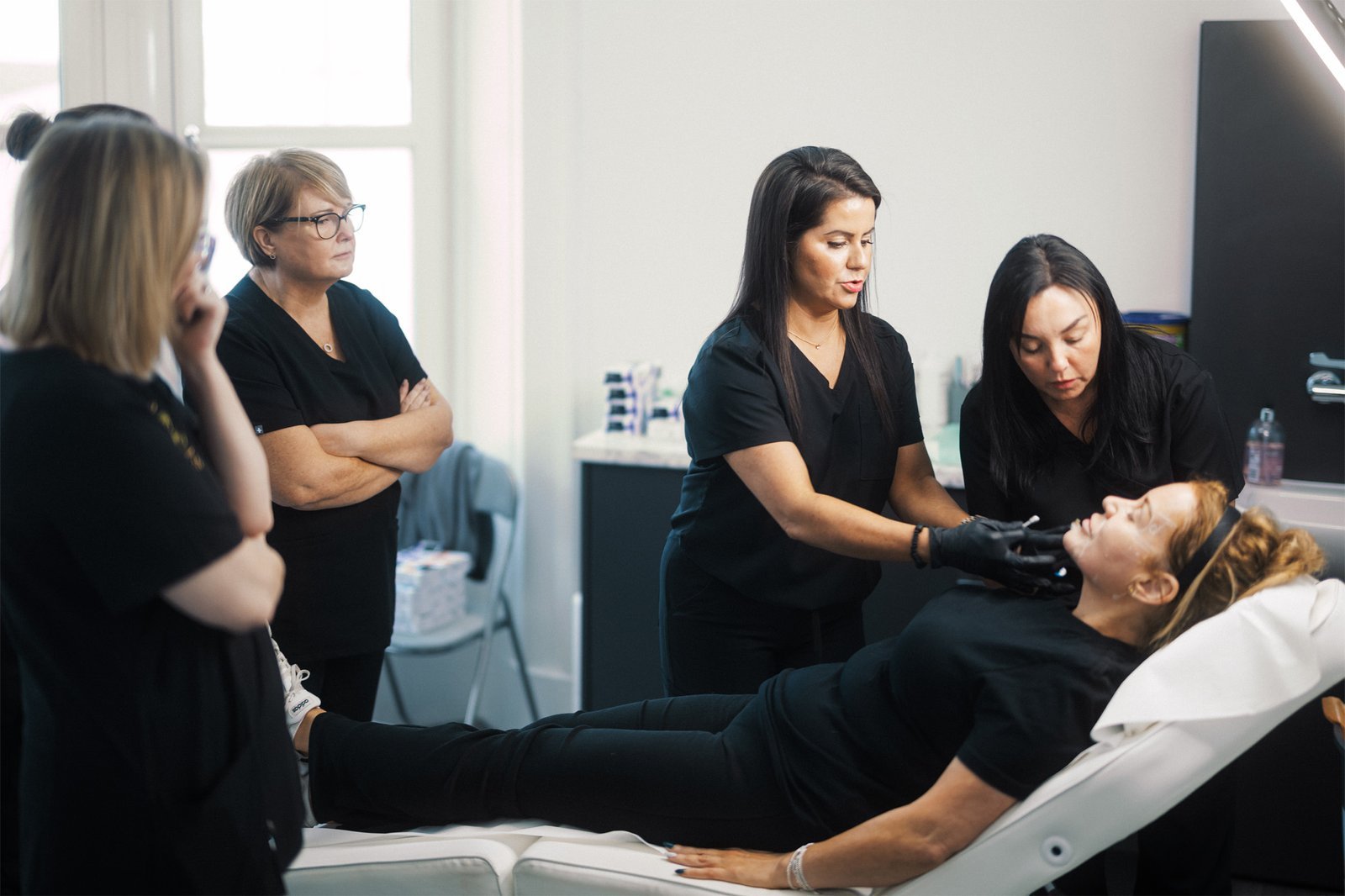
- Supervised hands-on practice with live models
Foundation training gives you more than technical skills; it provides reassurance. You learn why you’re performing a treatment, not just how. This level of understanding is particularly important for those seeking aesthetic training in Scotland, where professional standards and patient expectations are high.
Intermediate Training: Skill-Building and Confidence
Once you’ve completed foundation training and started treating patients, the next step is Intermediate training. This level is about consolidation and expansion and this course is exclusive to Dr Lauren.
Who is Intermediate Training for?
Intermediate medical aesthetics training is ideal for practitioners who are comfortable with basic Botox and filler courses but want to refine technique, improve outcomes, and expand their treatment portfolio.
What does intermediate training focus on?
At this stage, injector training becomes more nuanced. You’ll develop:
- Improved injection techniques and facial assessment
- Treatment planning for more diverse patient needs
- Combination treatments for balanced, natural results
- Greater confidence in managing patient expectations
- Exposure to additional aesthetic procedures
Intermediate training bridges the gap between “new injector” and “confident practitioner.” Many clinicians find that this is where their confidence truly grows, as repetition and mentorship reinforce their skills.
Advanced Training: Refinement, Complex Cases, and Growth
Advanced aesthetic courses are designed for experienced injectors who want to elevate their practice to an expert level. This is where artistry meets science.
Who should take advanced aesthetic courses?
If you’re already practicing regularly, have a solid patient base, and are comfortable with core treatments, advanced training is your next step. These courses are not about learning the basics; they’re about mastering them.
What do advanced courses offer?
Advanced aesthetic courses focus on:
- Complex facial anatomy and high-risk areas
- Advanced dermal filler techniques
- Full-face rejuvenation and bespoke treatment plans
- Managing complications with confidence
- Refinement of technique for superior aesthetic outcomes
Advanced training supports professional growth, helping you stand out in a competitive market. It’s especially valuable for practitioners who want to position themselves as experts or mentors within the field of medical aesthetics training.
Medical Professionals: Different Entry Points, Same Responsibility
Who can train in medical aesthetics?
Medical aesthetics training is suitable for qualified healthcare professionals, including:
- Doctors
- Nurses
- Dentists
- Pharmacists
Each professional background brings different strengths. For example, doctors and dentists often have extensive anatomy knowledge, while nurses and pharmacists may excel in patient care and medication management.
However, all practitioners must develop a strong medical foundation specific to aesthetics.
Regardless of background, everyone needs comprehensive injector training that prioritises anatomy, safety, and complication management. In aesthetics, shortcuts are risky and patients expect the same high standard of care from every practitioner.

The ATA Pathway: Structured Progression and Mentorship
One of the biggest challenges in aesthetics is knowing what to do next after completing a course. This is where a structured pathway makes all the difference.
The ATA pathway is designed to guide practitioners through foundation, intermediate, and advanced aesthetic courses in a logical, supported way. Rather than isolated training days, it offers progression with purpose.
What makes the ATA pathway different?
- Clear progression between training levels
- Ongoing mentorship and support
- Emphasis on safety, confidence, and clinical excellence
- Courses tailored to your experience and goals
For those seeking aesthetic training in Scotland, the ATA pathway provides reassurance that you’re not navigating your career alone. Mentorship ensures that learning continues beyond the classroom and into real-world practice.
How to Choose the Right Course for You
When deciding which course is right for you, ask yourself:
- What is my current level of experience?
- Am I confident in my anatomy and safety knowledge?
- Do I want to learn basics, refine skills, or master advanced techniques?
- Does the course offer mentorship and progression?
The best aesthetic training courses don’t just teach techniques; they build practitioners. Whether you’re starting with foundation botox and filler courses or progressing to advanced aesthetic courses, the right training should align with your long-term vision.
Conclusion:
Medical aesthetics is a rewarding but demanding field. Choosing the right injector training at the right time can define your confidence, competence, and career trajectory.
From foundation training that builds safe practice, to intermediate courses that strengthen skill and confidence, to advanced aesthetic courses that refine expertise, each stage matters.
If you’re ready to invest in training that supports growth, safety, and excellence, explore the ATA courses today. Discover a clear pathway, expert mentorship, and aesthetic training courses designed to help you succeed at every stage of your journey.
Bibliography:
- GC Aesthetics Academy – 2025 – Which Medical Aesthetics Course Is Right for You? [online] Available at:
https://gcaesthetics.ca/medical-aesthetics-course-guide/ - Natalie Worster – 2025 – How to Choose the Right Aesthetics Course for You [online] Available at:
https://www.matrixbeautyacademy.co.uk/how-to-choose-aesthetic-course/?srsltid=AfmBOooLqewmI63hoAKJBla738xrMZTjpzbBZ2QlIz7wk5vtN-zuz5li - Faces on Faces – 2025 – The Definitive Guide to Choosing Your Aesthetics Training Provider [online] Available at:
https://www.facesonfaces.com/aesthetics-courses/how-to-choose-aesthetic-course-provider/