Every career is shaped by the chances we dare to take and the doors we choose to walk through, yet in a world overflowing with options, knowing which path to follow is not always simple.
Choosing the right aesthetic training academy is one of the most important decisions a clinician will make when entering medical aesthetics training, as early education plays a defining role in long-term clinical standards and patient safety.
This is Where the Aesthetic Training Academy (ATA) by Dr Lauren Stands Apart.
Developed to meet this exact need, ATA offers a carefully structured, doctor-led educational journey that reflects modern industry standards and real-world clinical practice.
For those exploring aesthetic courses in Scotland, it provides the reassurance of local, medically led training while still meeting national standards of excellence.
And whether your goal is to build strong foundations in injectables or refine advanced facial techniques, the ATA’s Botox and filler courses offer a clear, supportive way to step confidently into modern aesthetic practice.
How Training at ATA Is Structured
What a typical training day looks like at ATA will naturally depend on the level of training you choose. Each course is designed to support clinicians at different stages of their medical aesthetics training journey, building knowledge and confidence step by step.
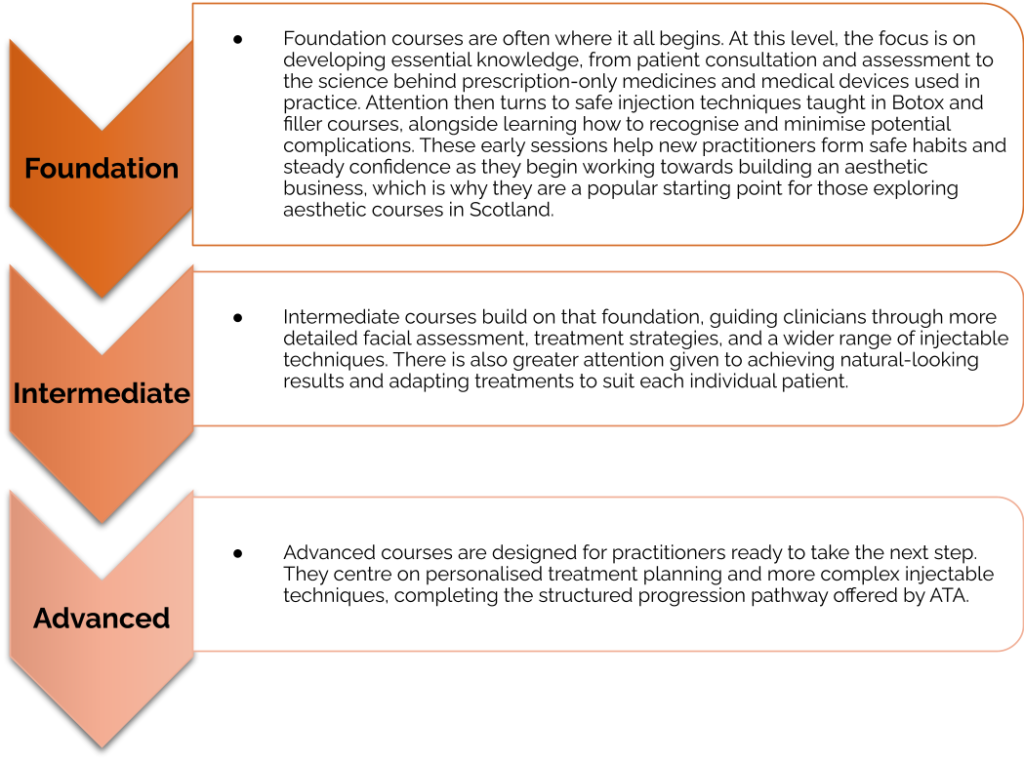
Together, these training levels create a clear and supportive route through Botox and filler courses, allowing clinicians to develop their skills in a way that feels practical, achievable, and carefully paced, rather than rushed or overwhelming.
Personalised Learning, Real Clinical Experience
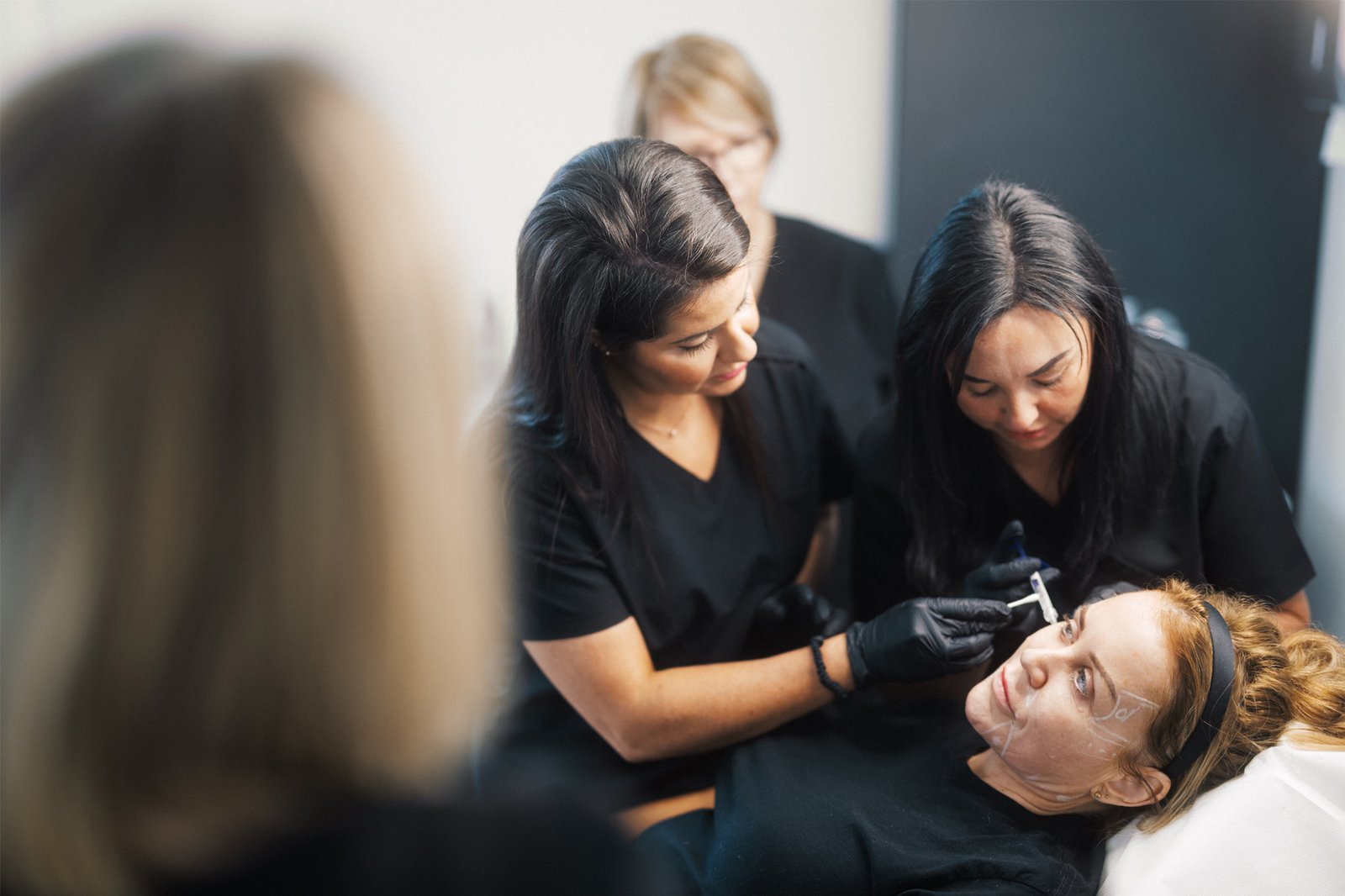
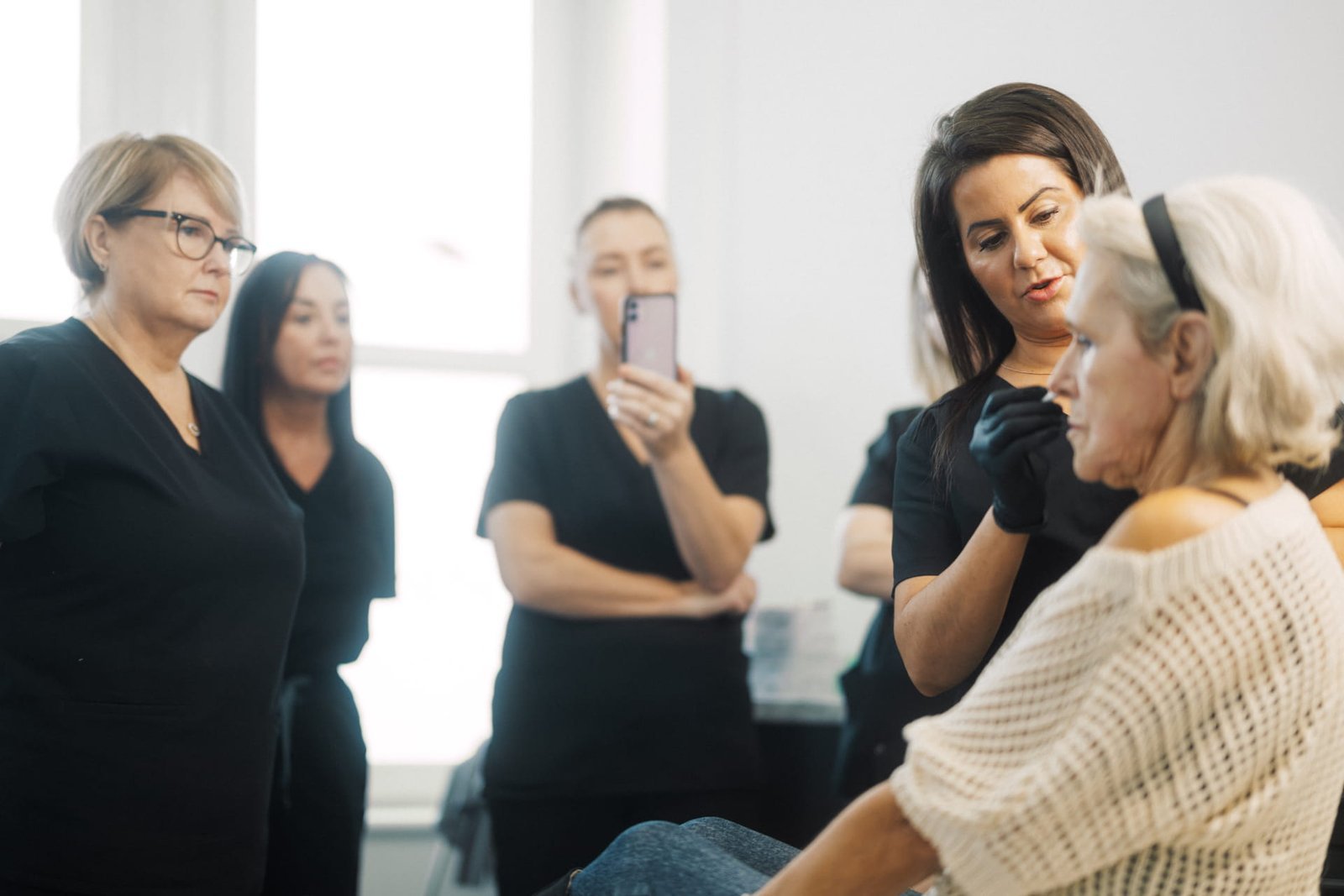
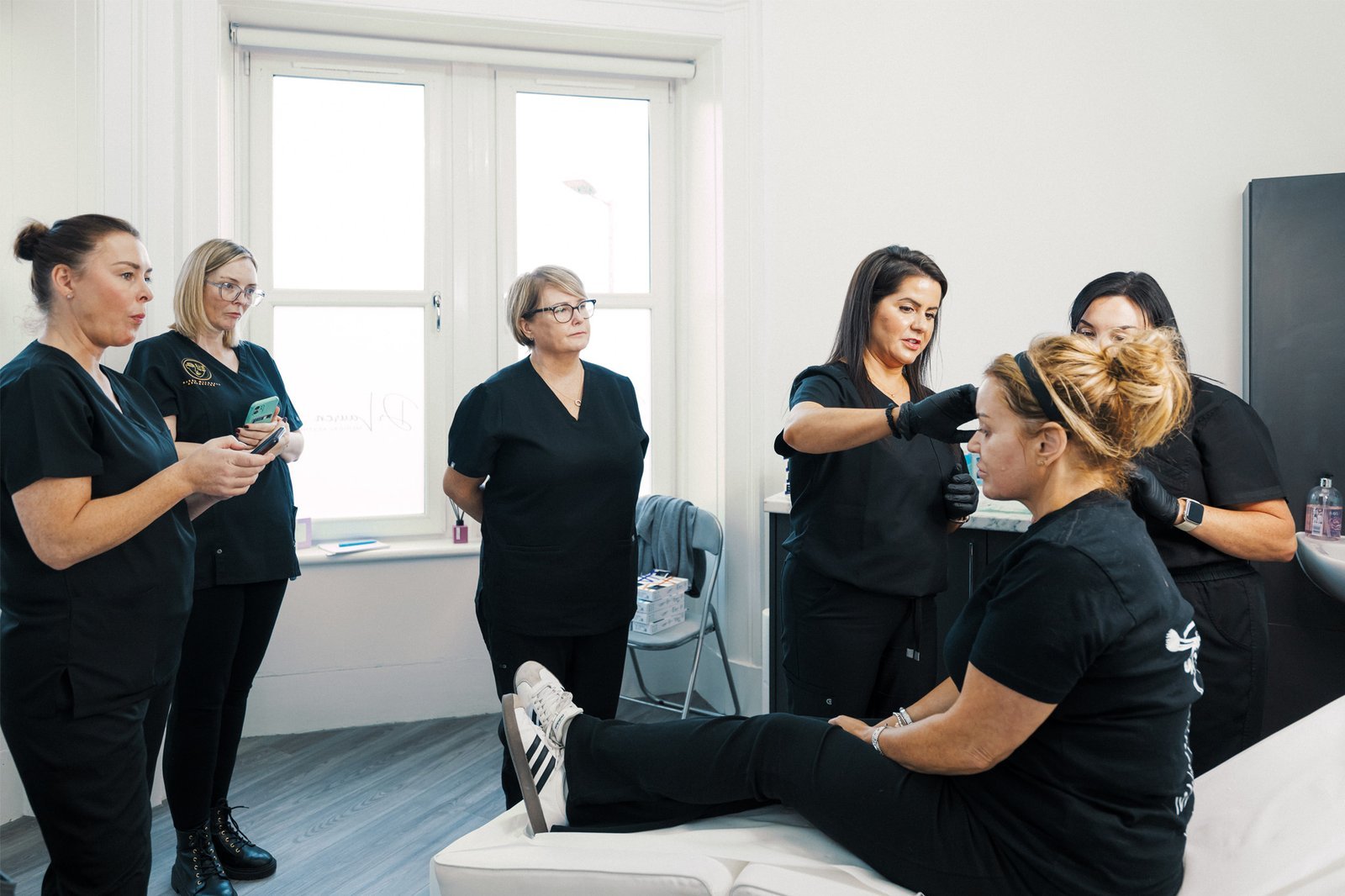
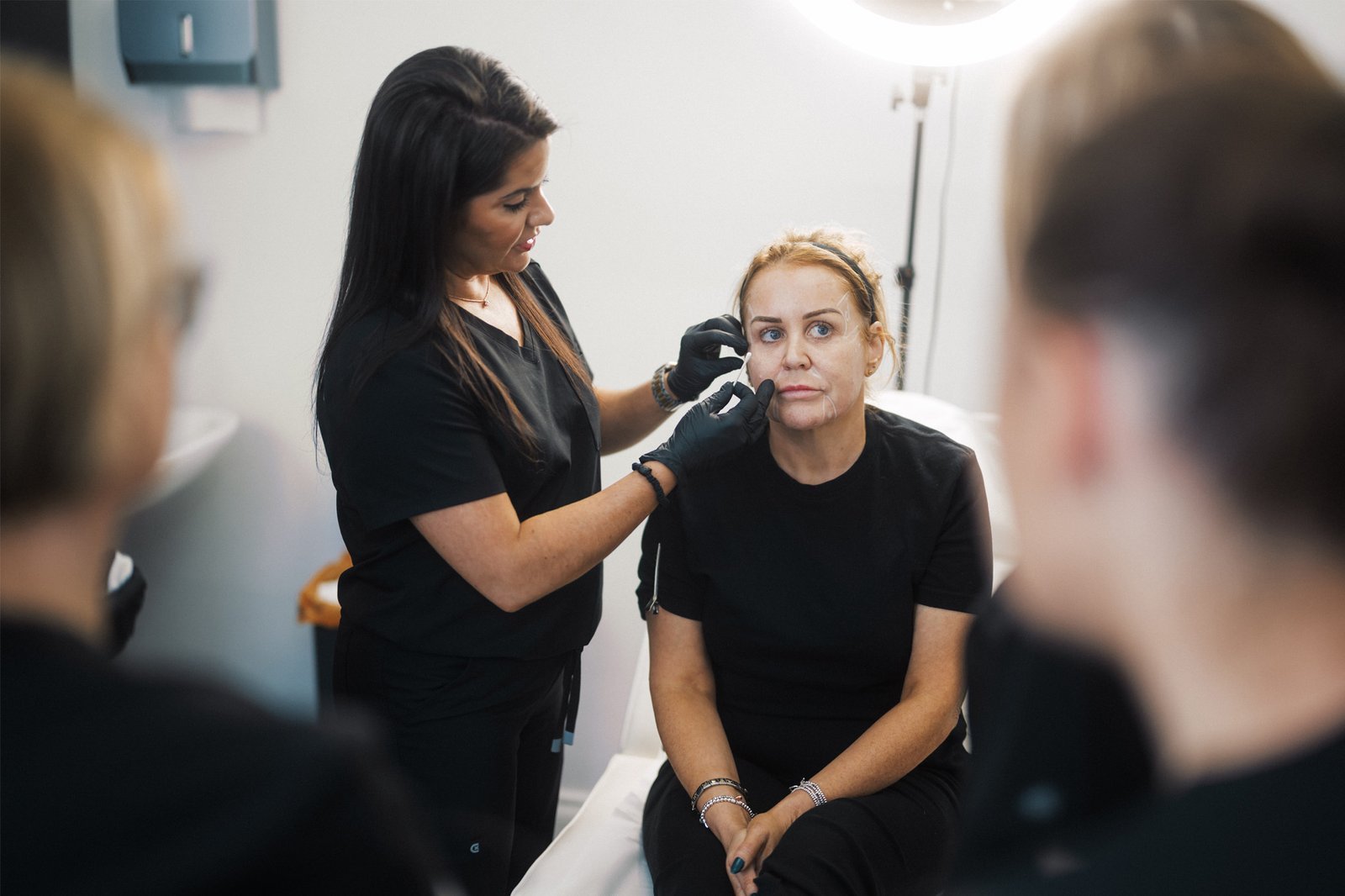
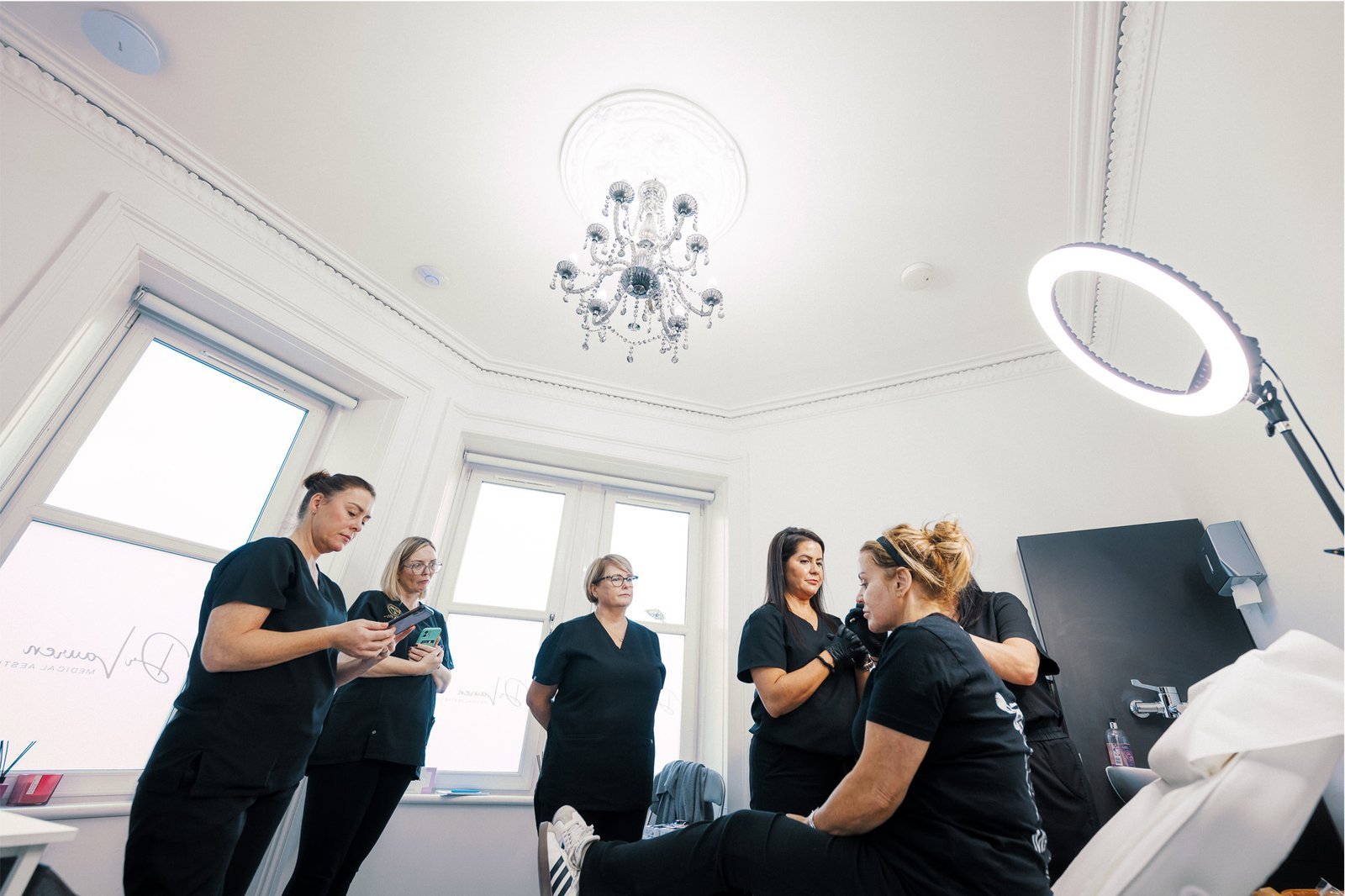
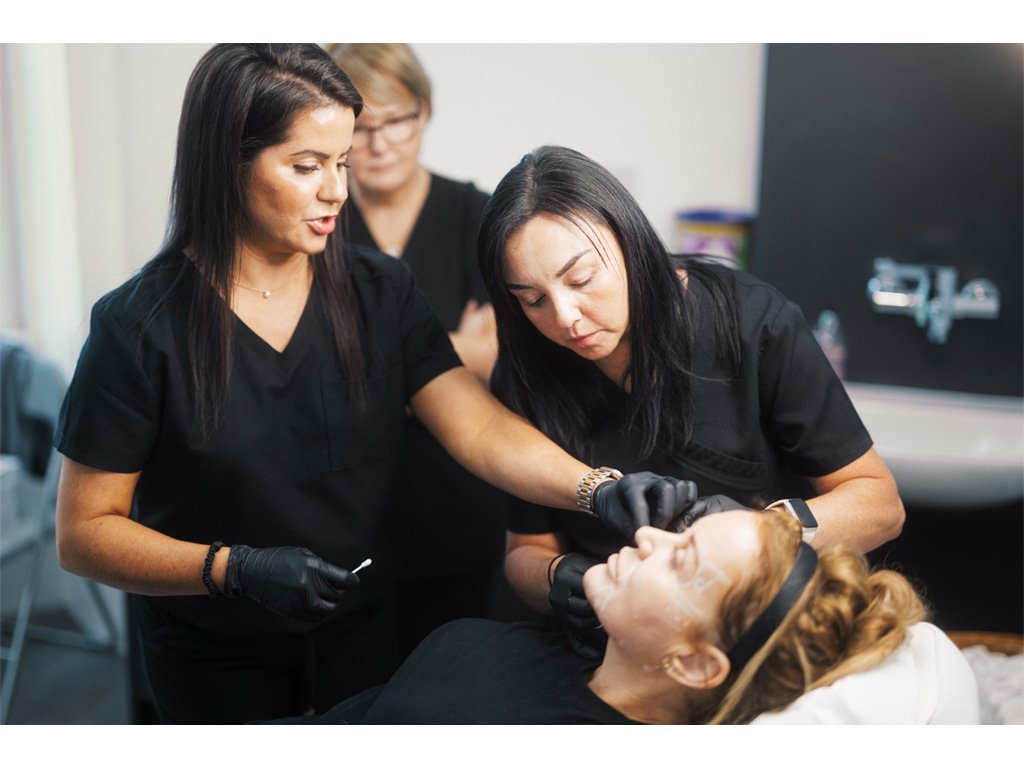
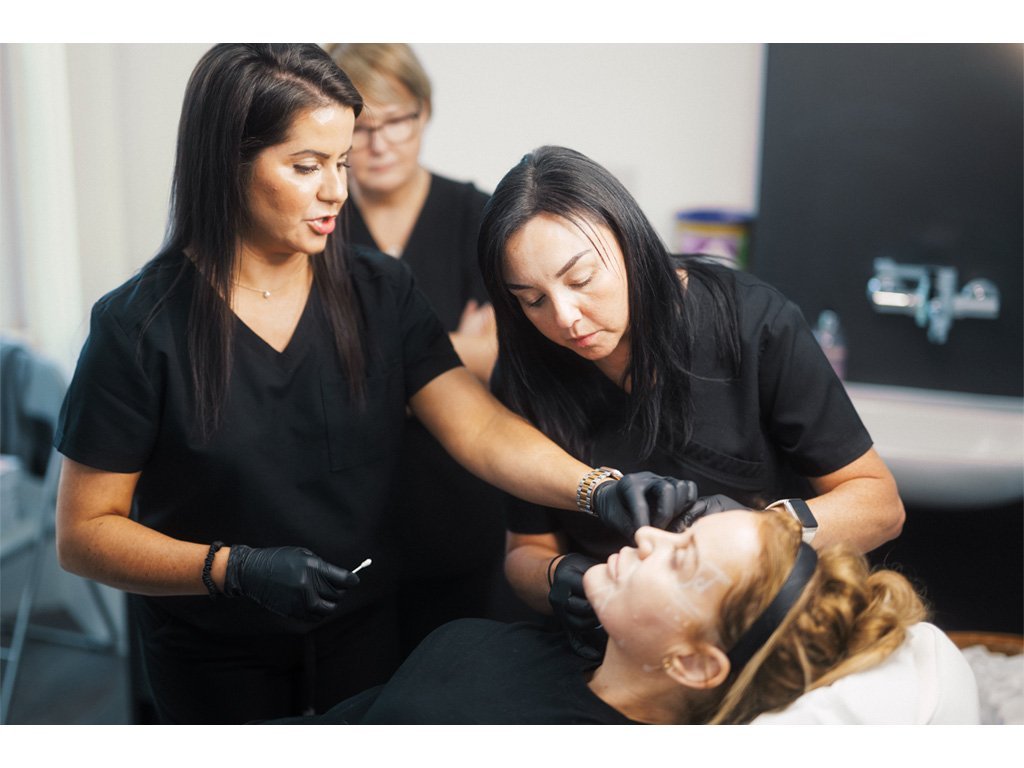
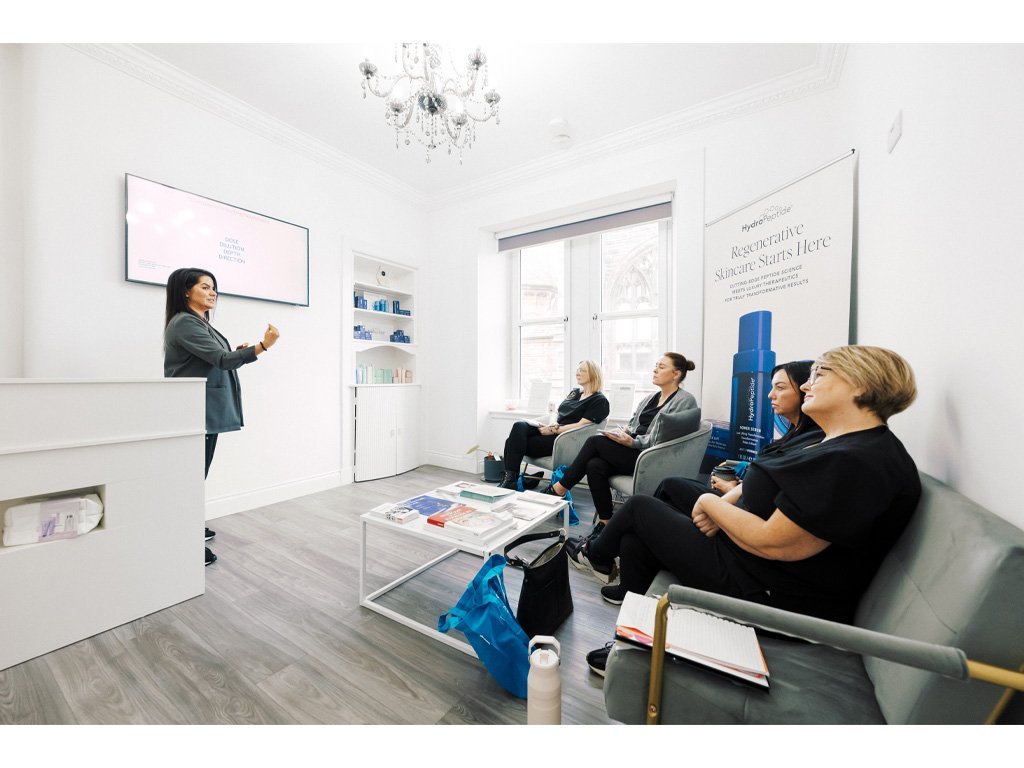
Training at ATA is intentionally designed to be highly interactive and personalised. Sessions are usually delivered in small groups of 4, ensuring every practitioner receives direct supervision, tailored feedback, and enough time to properly absorb the material.
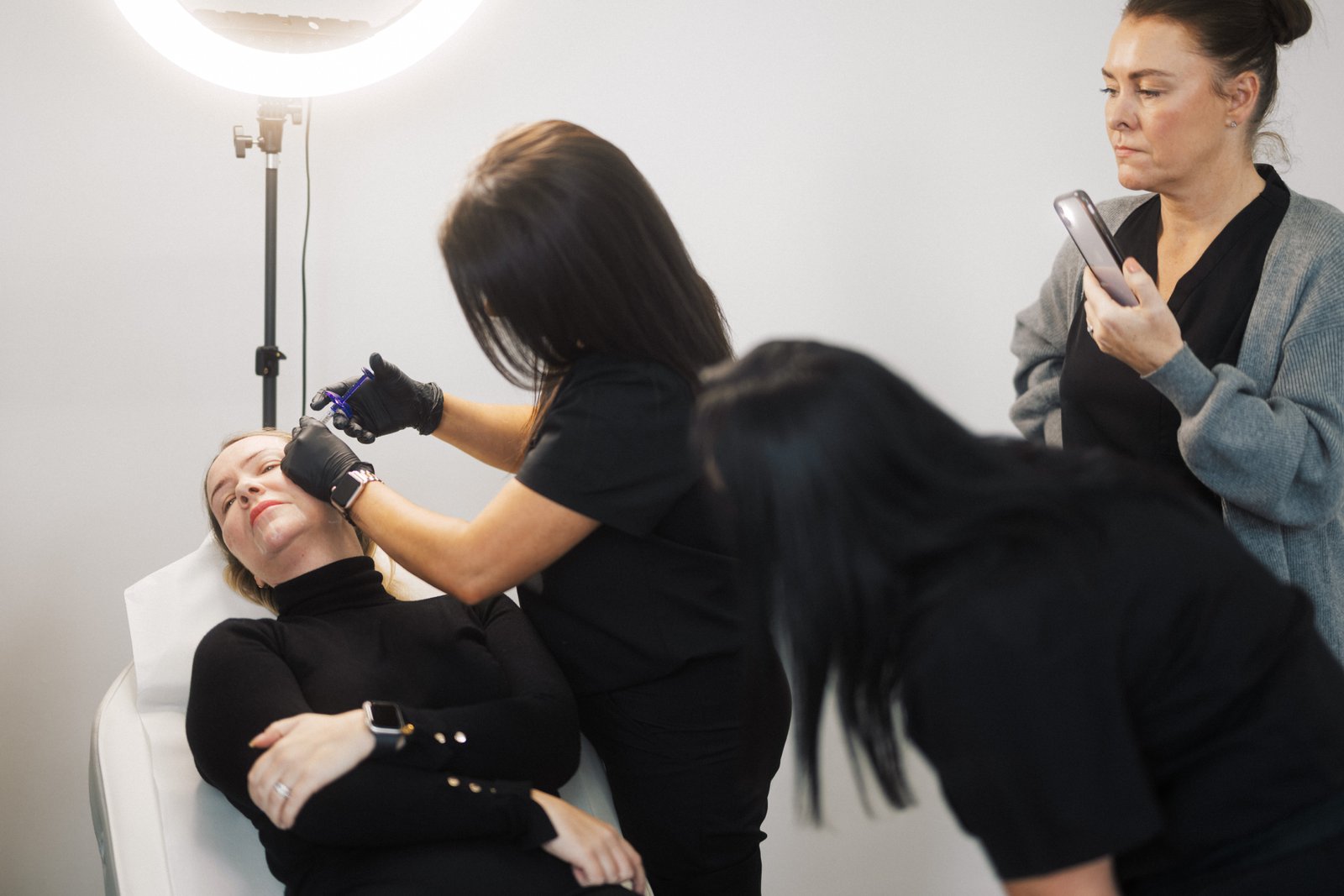
Hands-on injecting also forms a central part of the experience, with practitioners working on live models throughout their training. There is a strong emphasis placed on safety, patient assessment, and treatment outcomes, rather than technique alone.
All treatments are closely supervised by Dr Lauren, creating a calm, supportive, and structured learning environment. This approach continues to attract practitioners seeking high-quality aesthetic courses in Scotland, where they can build confidence and develop safe, clinically sound injecting skills.
Where Safety and Standards Come First
At the Aesthetic Training Academy, education is evidence-based and ethically grounded, placing strong emphasis on practising with integrity and genuine respect for patients.
As part of our medical aesthetics training, safety is embedded throughout the course curriculum. Our teaching extends beyond technique alone to include safe and effective injection practices and thorough patient assessment.
It also develops the ability to identify, manage, and minimise complications with confidence and care.
In addition, Dr Lauren’s training is offered exclusively to appropriately qualified and regulated medical professionals, reinforcing a clear commitment to patient safety and professional accountability.
Why ATA Is Different
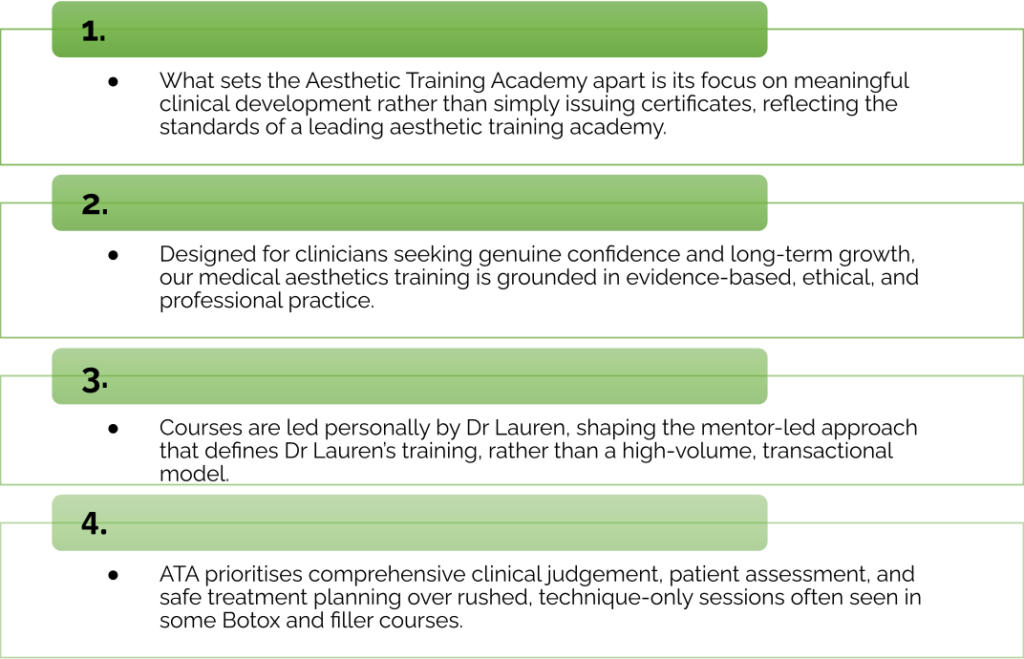
For those exploring high-quality aesthetic courses in Scotland, ATA offers something that can be surprisingly hard to find: the ease of local access combined with the reassurance of nationally recognised standards.
And for clinicians considering the next step in their professional journey, Dr Lauren’s training provides a carefully structured place to begin.
You can apply through our website or book a call to explore course options, entry requirements, and professional pathways that genuinely align with your goals and clinical values.