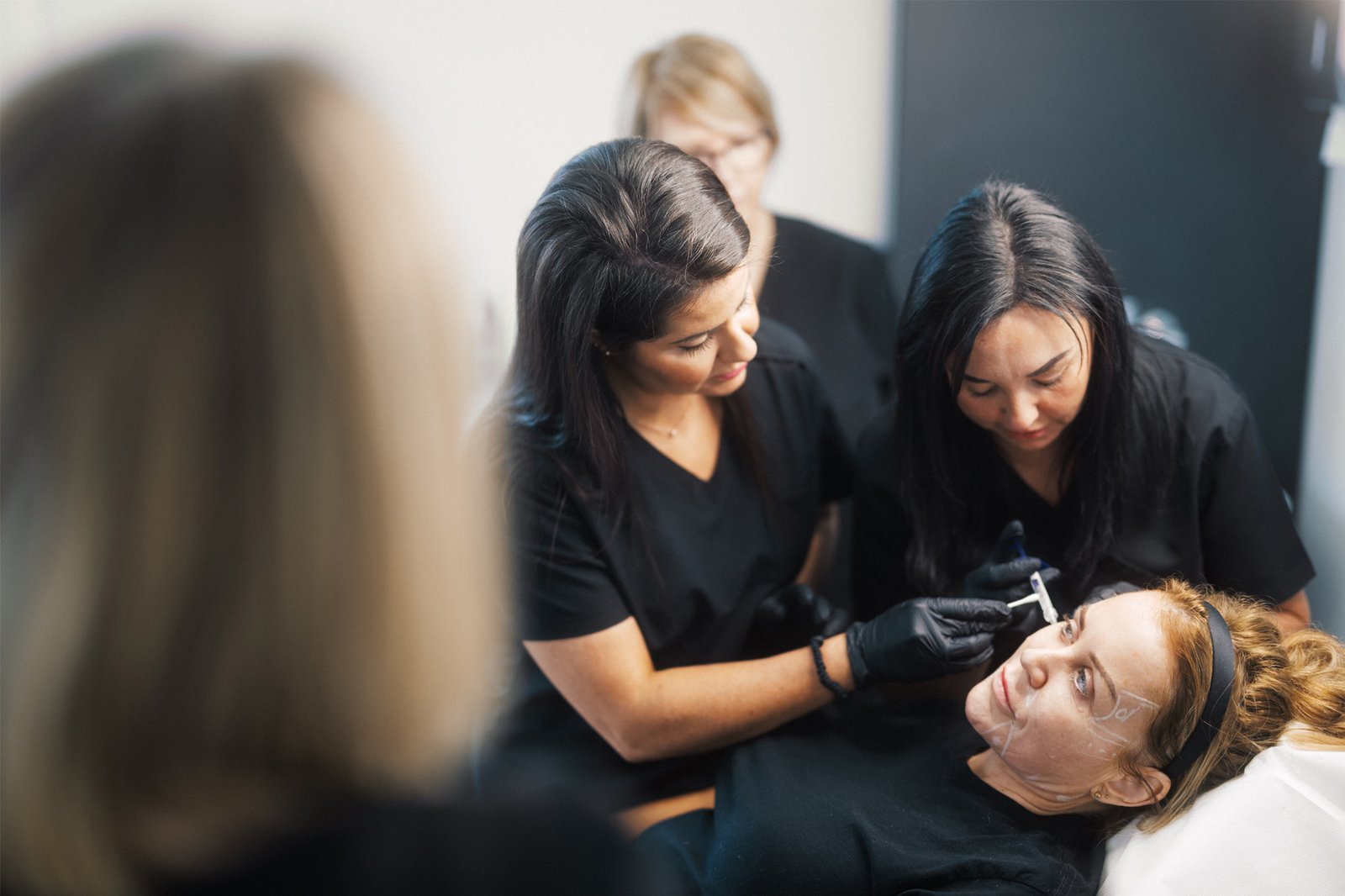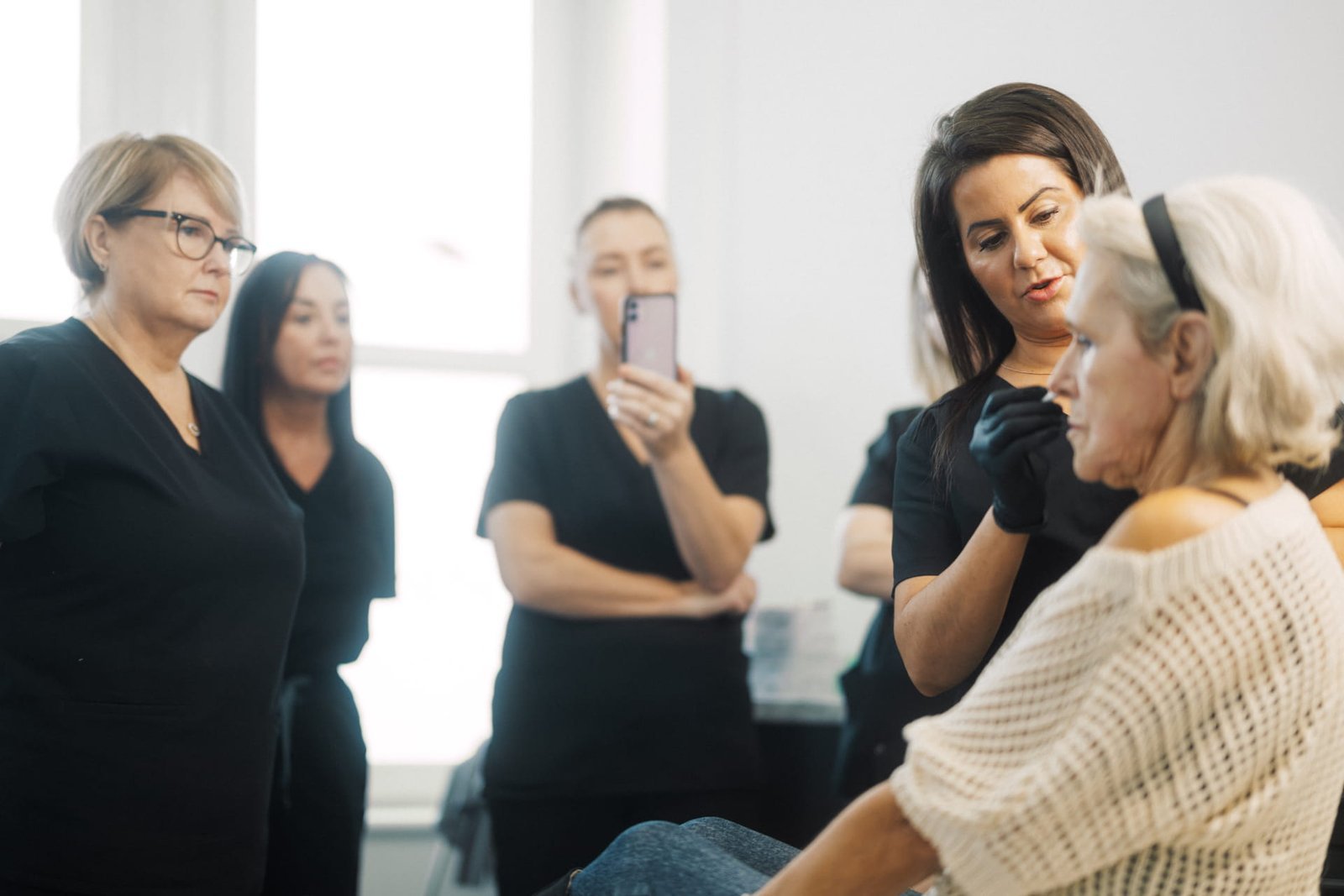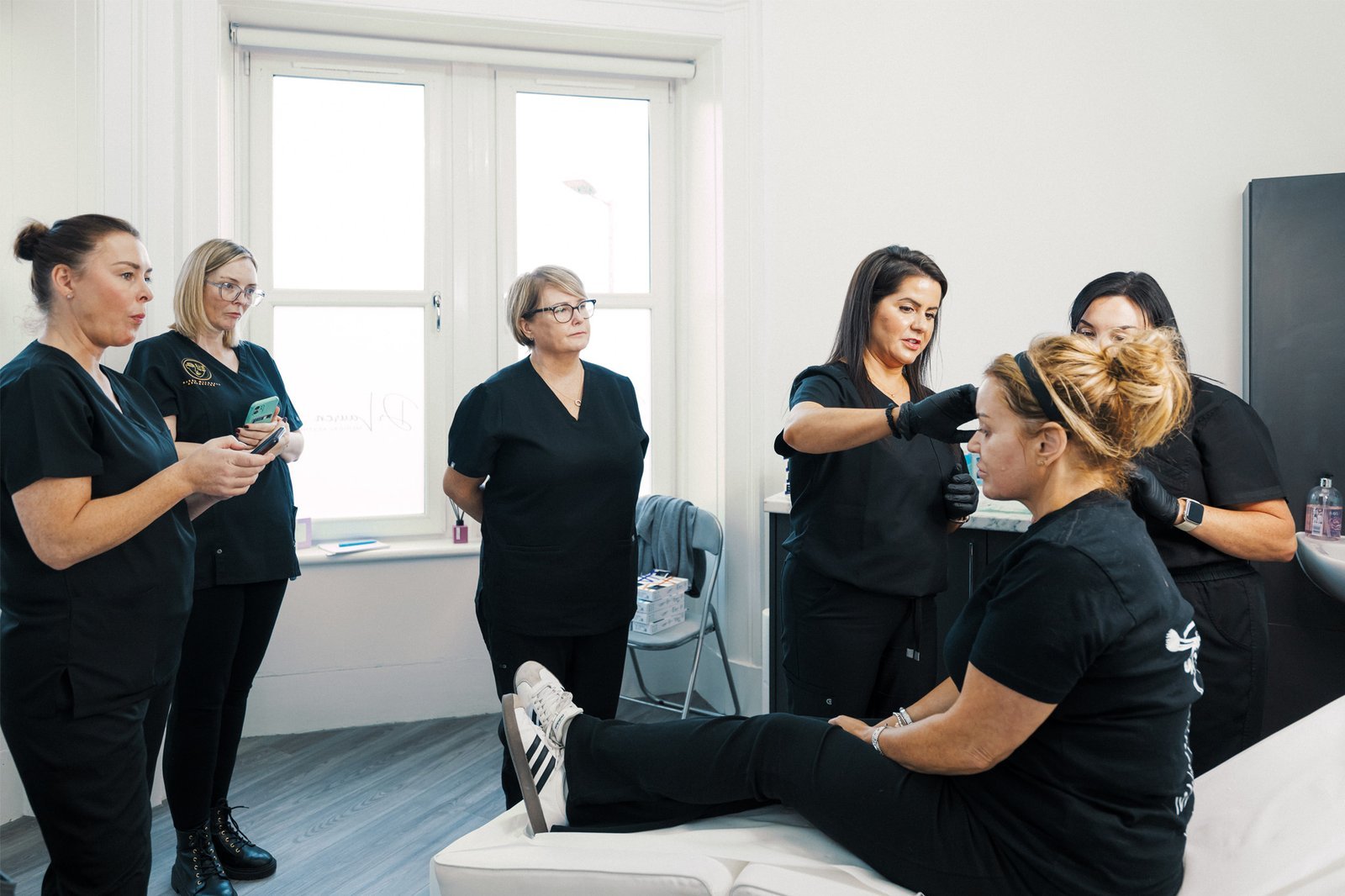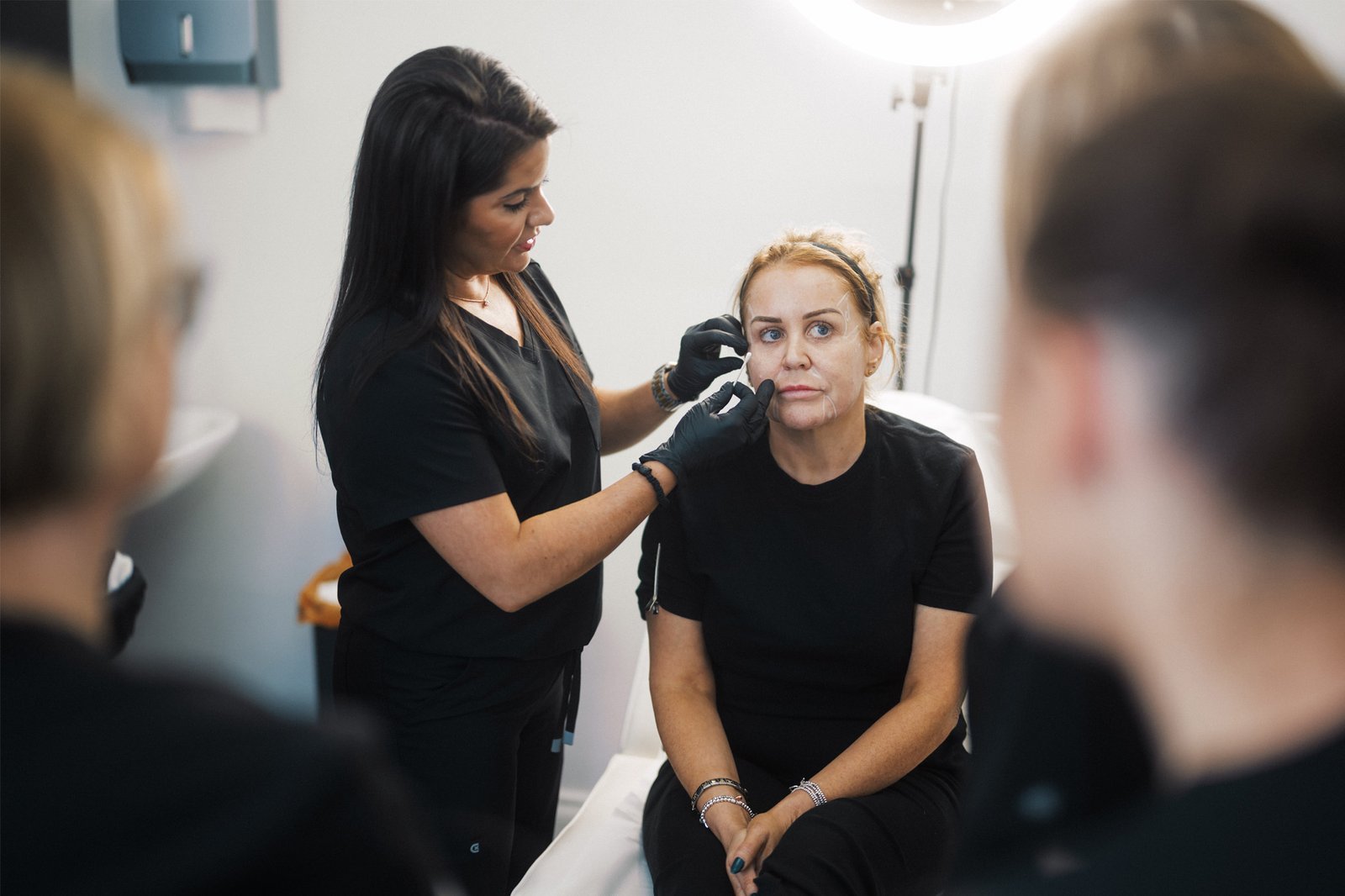
In modern aesthetic medicine, successful treatment is no longer defined by simply correcting an isolated concern.
Patients are not collections of individual features
They are individuals with unique facial anatomy, personal motivations, emotional concerns, and long-term goals.
Yet despite this, many aesthetic consultations still focus too heavily on a single area, whether it is lips, jawline, forehead lines, or under-eye hollows.
This narrow approach can lead to treatments that technically address a “problem” while failing to create natural balance or genuine patient satisfaction. Aesthetic medicine works best when practitioners look beyond the obvious concern and assess the patient as a whole.
The most experienced clinicians understand that exceptional outcomes begin long before any injectable treatment takes place. They begin with listening, observation, education, and careful planning.
This is why demand for advanced aesthetics training has grown significantly in the UK in recent years. Practitioners increasingly recognise that communication and assessment skills are just as important as injection technique in consultation.
Treating the patient (rather than simply treating the visible issue) creates safer, more natural, and more sustainable outcomes.
The role of consultation
The consultation is the foundation of every successful aesthetic treatment. Without a thorough consultation, even technically well-performed procedures can result in disappointment, unrealistic expectations, or inappropriate treatment decisions.
A proper consultation is not simply about asking what treatment the patient wants. It is about understanding why they want it.
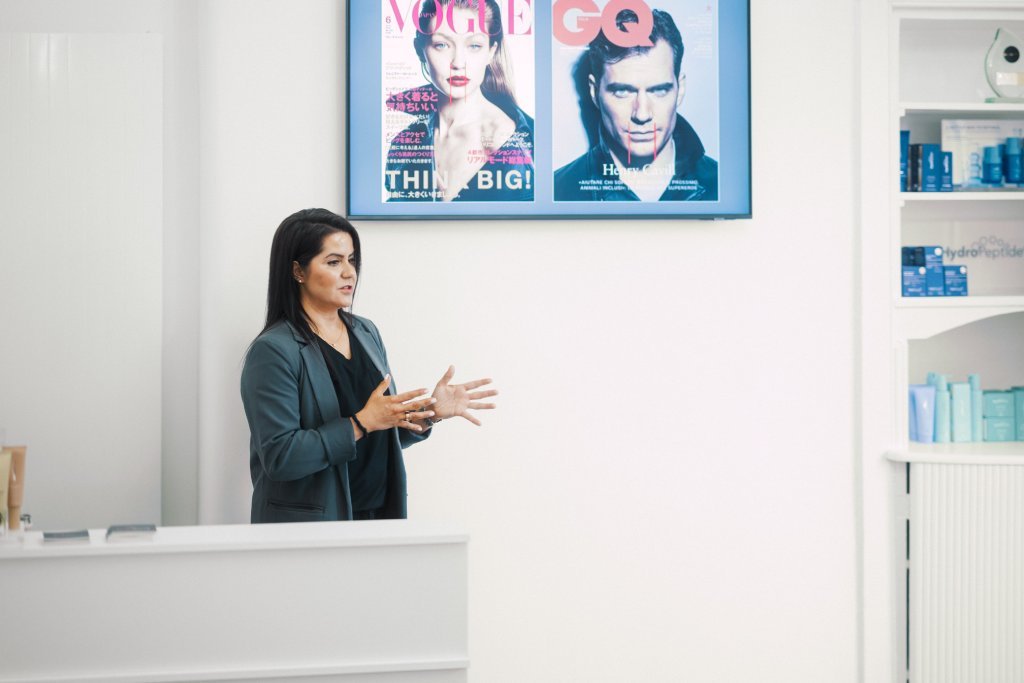
Understanding patient goals
Patients often describe concerns in simple terms:
- “I look tired.”
- “My face looks heavy.”
- “I want more definition.”
- “I don’t look like myself anymore.”
However, these statements usually reflect deeper concerns about ageing, confidence, or self-perception. A skilled practitioner must carefully explore the underlying motivation before recommending treatment.
This process forms a key part of how to assess patients’ aesthetics effectively. Assessment is not only visual; it is psychological, emotional, and conversational.
Key areas explored during consultation
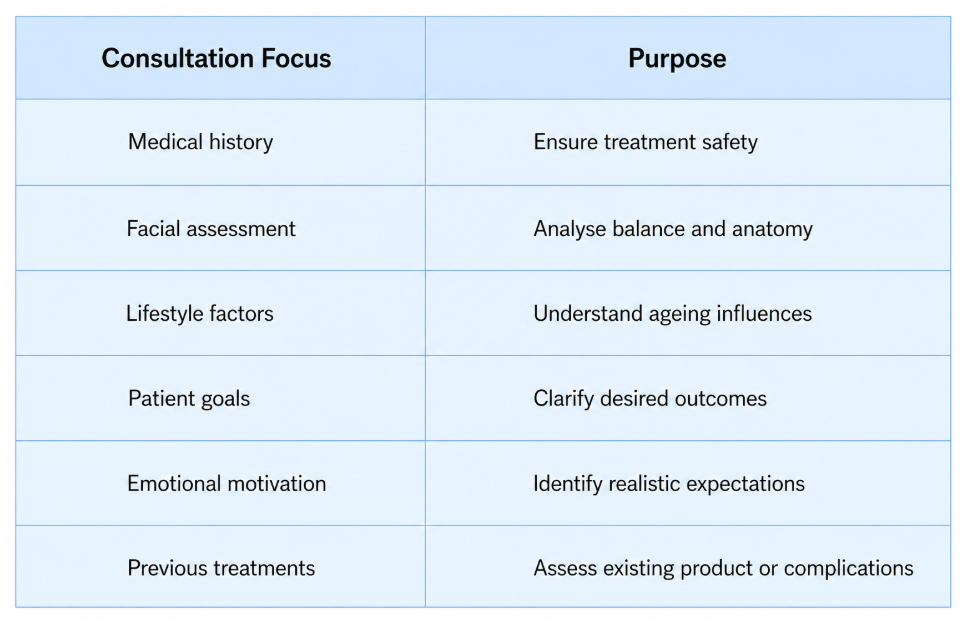
When consultations are rushed, practitioners may overlook important details that affect both safety and patient satisfaction.
Professionals undertaking aesthetic training programmes are increasingly taught to focus on listening rather than selling; this is an important part of the consultation skills development. This shift toward patient-centred consultation is improving standards across the industry.
Consultation process flow
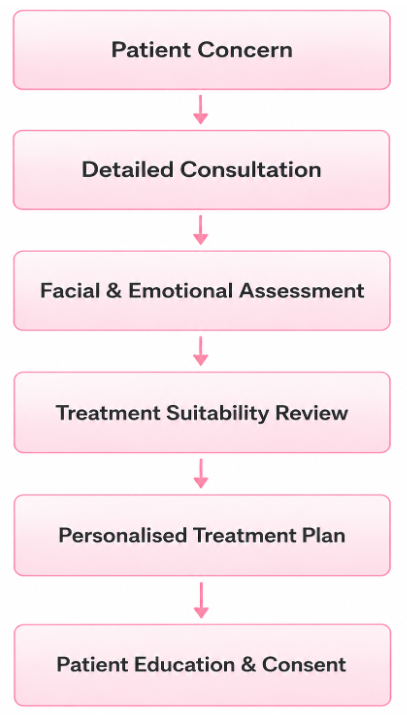
A consultation should never feel transactional. It should feel collaborative.
Looking beyond the area
One of the biggest mistakes in aesthetics is treating isolated areas without considering overall facial harmony.
The face functions as a connected structure. Changes in one area influence the appearance of another. For example, treating lips excessively without balancing surrounding facial proportions may create unnatural outcomes, even if the lips themselves are technically well treated.
This is why comprehensive patient assessment in aesthetics training has become such an important focus within advanced practitioner education.
Facial balance matters more than individual features
Patients frequently focus on one visible concern because it is the feature they notice most. However, the root cause may lie elsewhere.
For example:
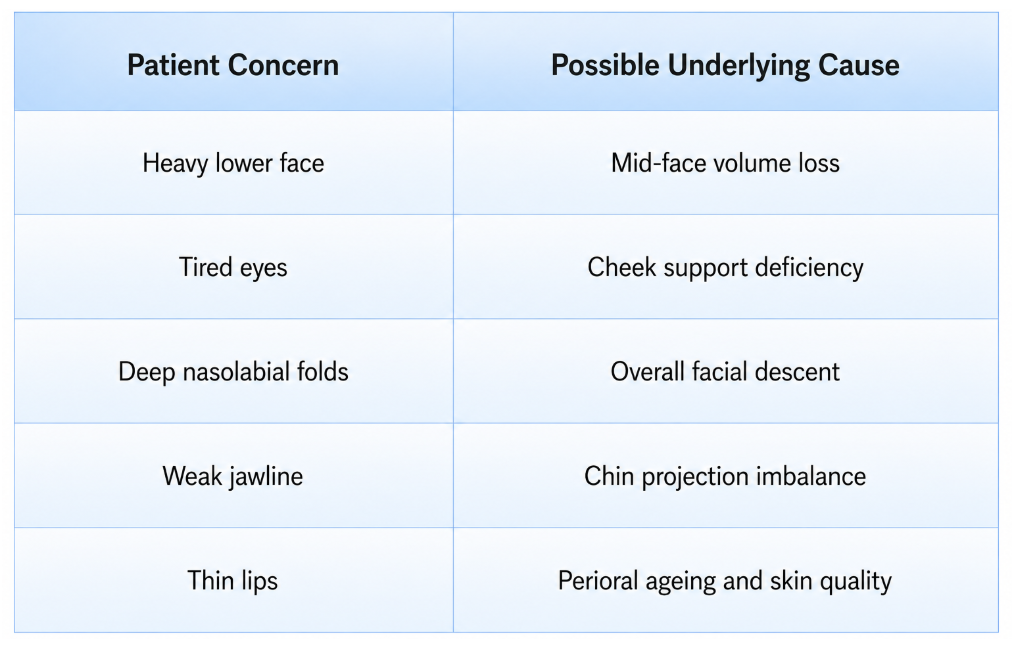
A practitioner who focuses only on the requested treatment area may miss the bigger picture entirely.
Treating the face holistically
Holistic facial assessment considers:
- Facial symmetry
- Proportion between upper, mid, and lower face
- Skin quality and elasticity
- Muscle movement
- Bone structure
- Ageing patterns
- Ethnic and gender-specific characteristics
This wider perspective helps practitioners create subtle, balanced outcomes rather than isolated corrections. Patients often achieve better results with less product when the treatment plan is based on overall harmony rather than over-correcting one area.
Communication & trust
Technical skill alone is not enough to build successful patient relationships. Trust is built through communication, honesty, and transparency.
Strong communication skills of an aesthetics practitioner help patients feel informed, reassured, and involved in the treatment process.
Why communication matters
Patients entering aesthetic clinics may feel:
- Nervous
- Self-conscious
- Uncertain about treatment
- Influenced by social media trends
- Concerned about judgement
The consultation environment should help reduce anxiety rather than increase pressure.
Good communication allows practitioners to:
- Understand patient motivations
- Identify unrealistic expectations
- Explain risks clearly
- Discuss alternatives honestly
- Build long-term patient relationships
Poor communication, by contrast, often leads to dissatisfaction; even when treatment results are objectively good.

Setting realistic expectations
One of the most important parts of consultation is expectation management.
Patients may arrive with filtered photographs, celebrity references, or unrealistic assumptions about what injectables can achieve. Ethical practitioners must guide patients toward achievable outcomes.
Unrealistic vs realistic expectations
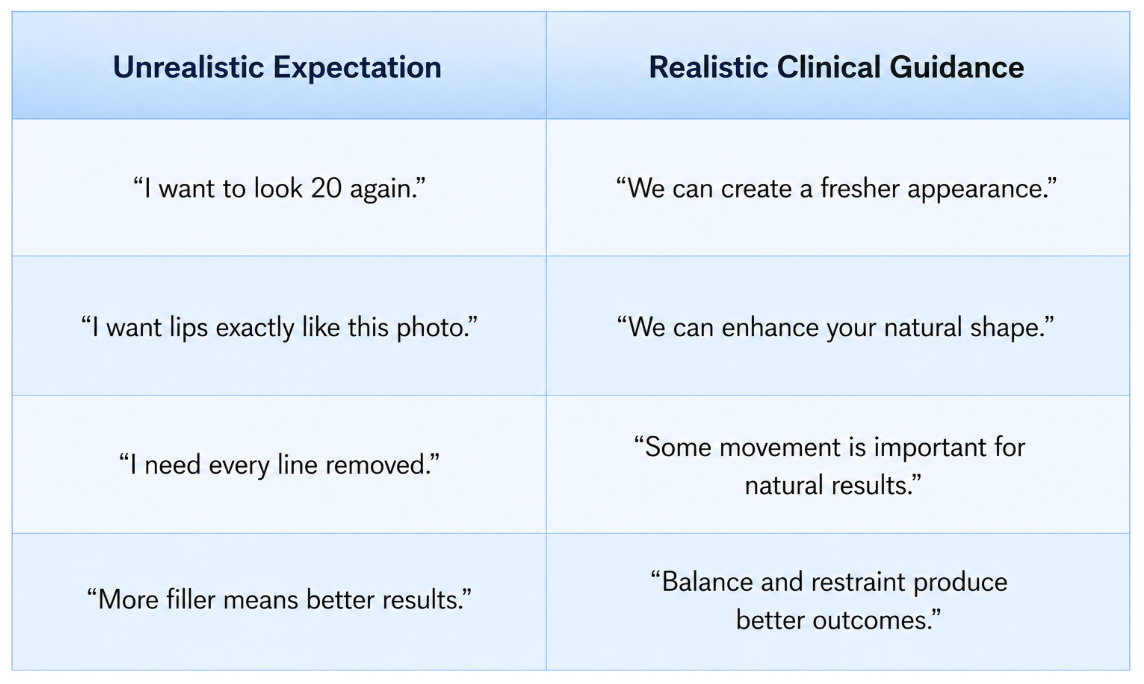
Professionals enrolled in an aesthetics course are trained to navigate these conversations confidently while maintaining empathy and professionalism (qualities of a solid consultant).
Holistic care
True aesthetic care extends beyond injectables or procedures. It considers the patient’s overall wellbeing, confidence, and long-term satisfaction.
Holistic treatment means recognising that aesthetic medicine is not solely about changing appearance; it is about improving how patients feel about themselves.
A patient-centred approach
A patient-centred consultation focuses on:
- Education rather than pressure
- Long-term planning rather than quick fixes
- Prevention rather than overcorrection
- Emotional wellbeing alongside physical appearance
Practitioners with a strong background and roots in consultation skills development and formal training stand out; they understand that patient satisfaction often depends more on communication and trust than dramatic physical change.
Combining clinical skill with emotional intelligence
Successful aesthetic practitioners require:
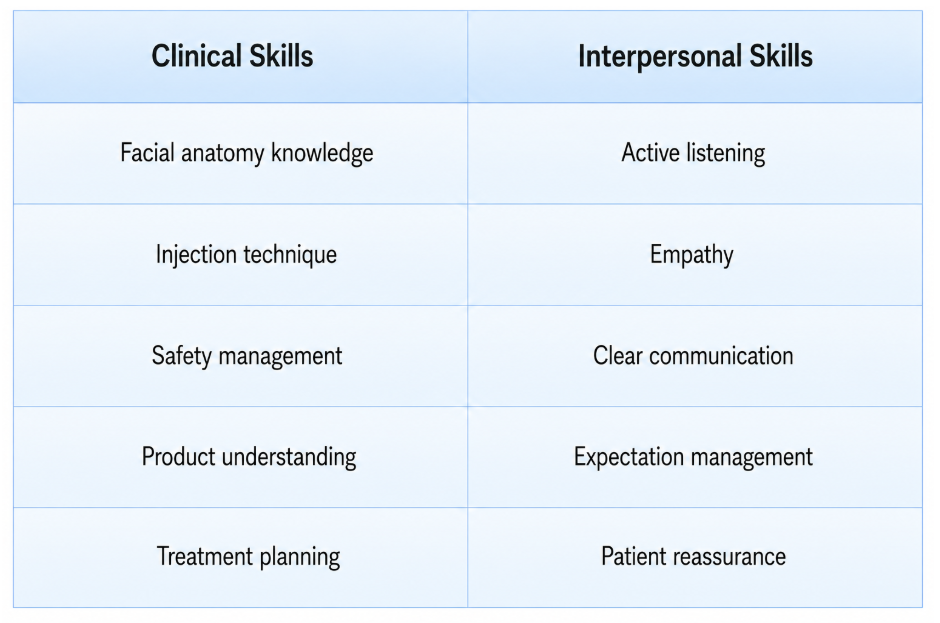
This balance between technical expertise and emotional intelligence defines high-quality aesthetic care.
Conclusion
Aesthetic medicine should never revolve around isolated features alone. Successful treatment requires understanding the entire person; their anatomy, goals, emotional concerns, and long-term expectations.
The best outcomes are rarely created through aggressive correction or trend-driven treatments. They are achieved through careful assessment, honest communication, and thoughtful planning.
Strong consultation skills allow practitioners to identify not only what patients want, but what they truly need. This is why advanced education in aesthetic training involves aesthetic practitioner communication, and aesthetics programmes increasingly have a focus on developing consultation skills, which is important within the industry.
When practitioners focus on treating the patient rather than simply treating the problem, outcomes become safer, more natural, and more rewarding for everyone involved.
Better consultations truly lead to better outcomes.
BIBLIOGRAPHY
- Alia Wilson – 2026 – Long-term complications of unknown injectables [online] Available at:
https://www.plasticsurgery.org/news/articles/long-term-complications-of-unknown-injectables - Consentz – 2026 – CQC Fundamental Standards: Guide for Aesthetic Clinics [online] Available at:
https://www.consentz.com/cqc-fundamental-standards/ - Ageless – 2025 – How to Prepare for Your Aesthetic Treatment (And What to Avoid) [online] Available at:
https://agelessindy.com/how-to-prepare-for-your-aesthetic-treatment-and-what-to-avoid/ - Harley Academy – 2025 – 3 Ways You Can Ruin Lip Filler Results Before Injecting [online] Available at
https://www.harleyacademy.com/aesthetic-medicine-articles/3-ways-you-can-ruin-lip-filler-results-before-injecting/