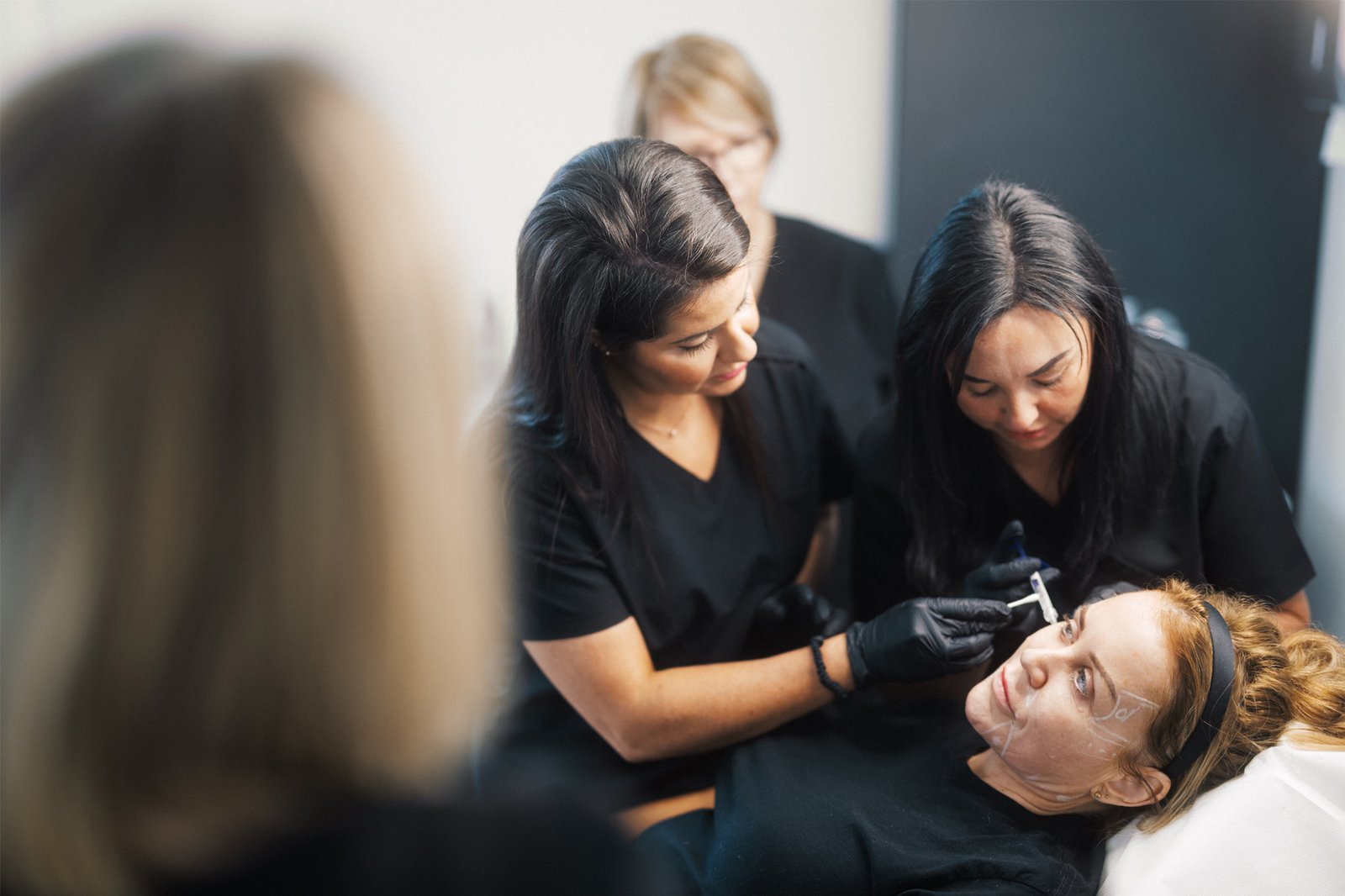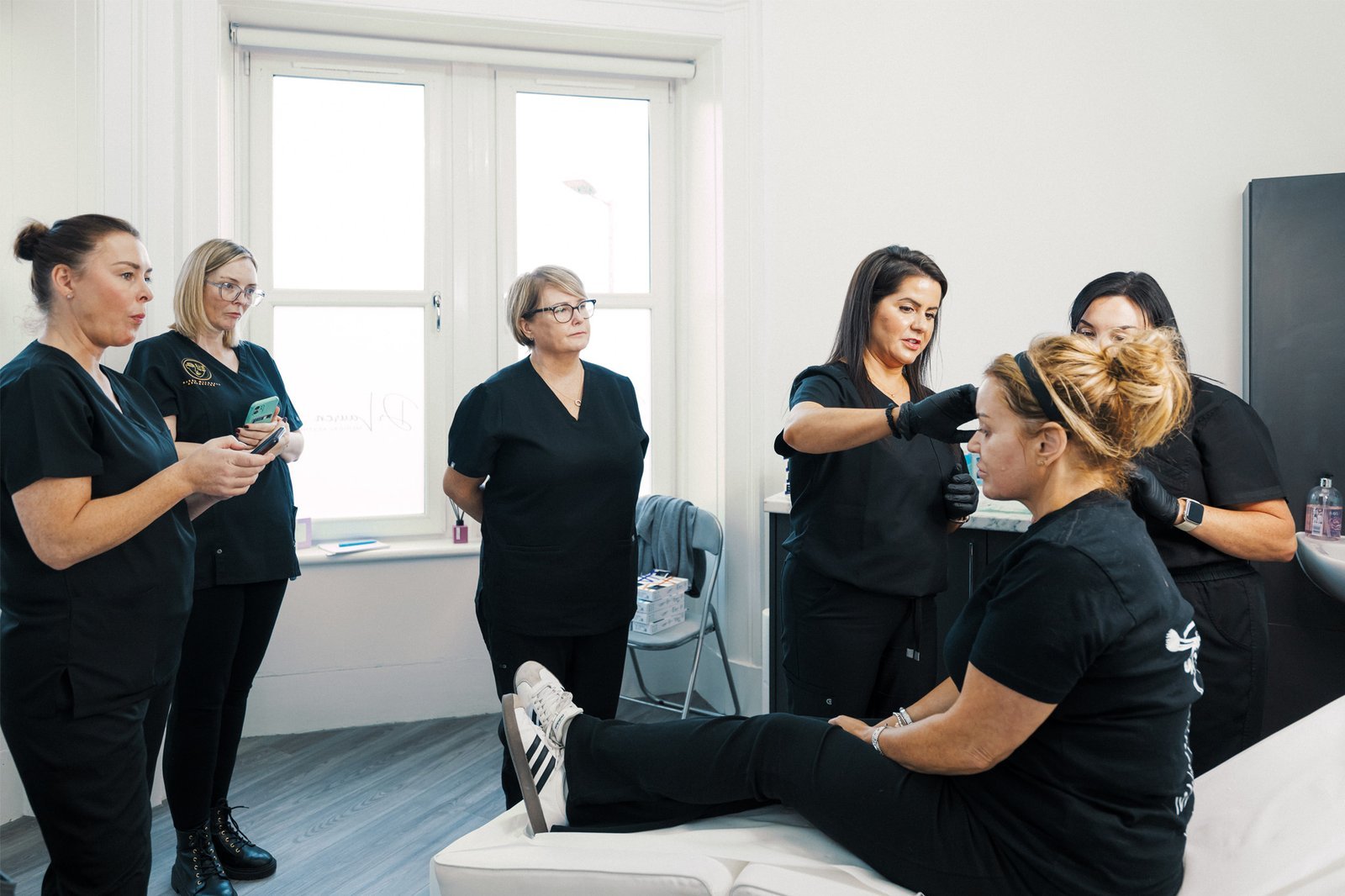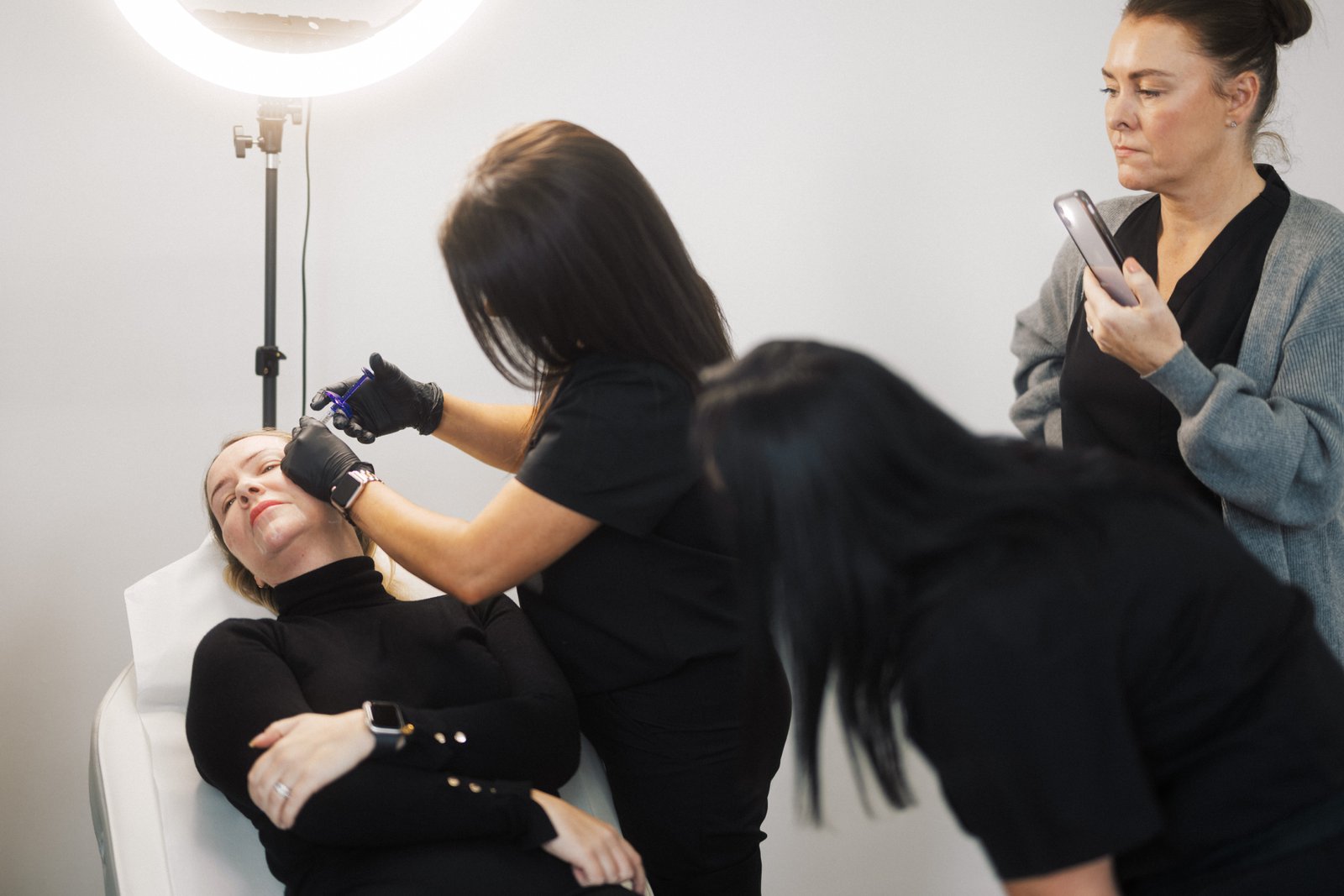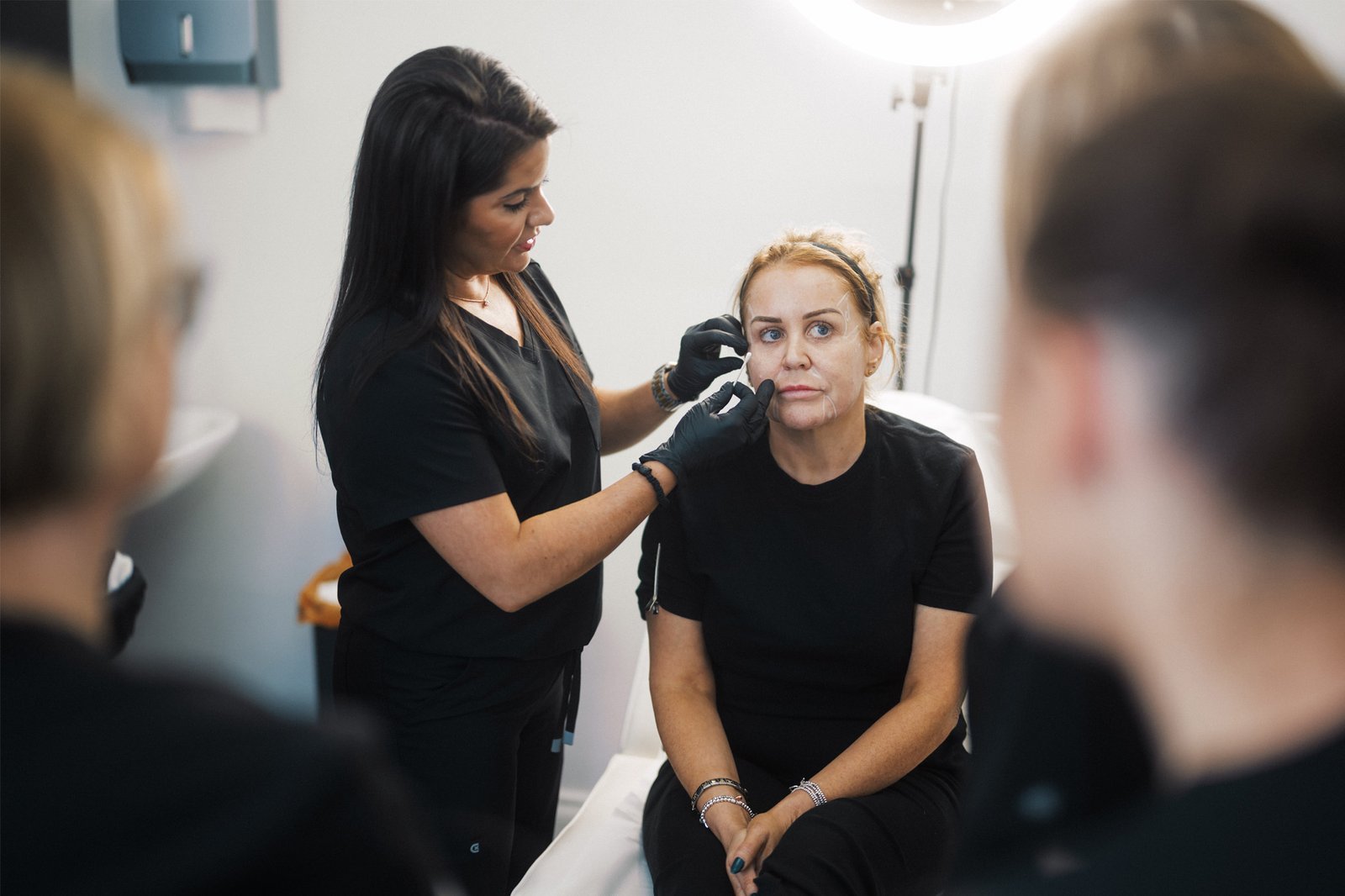
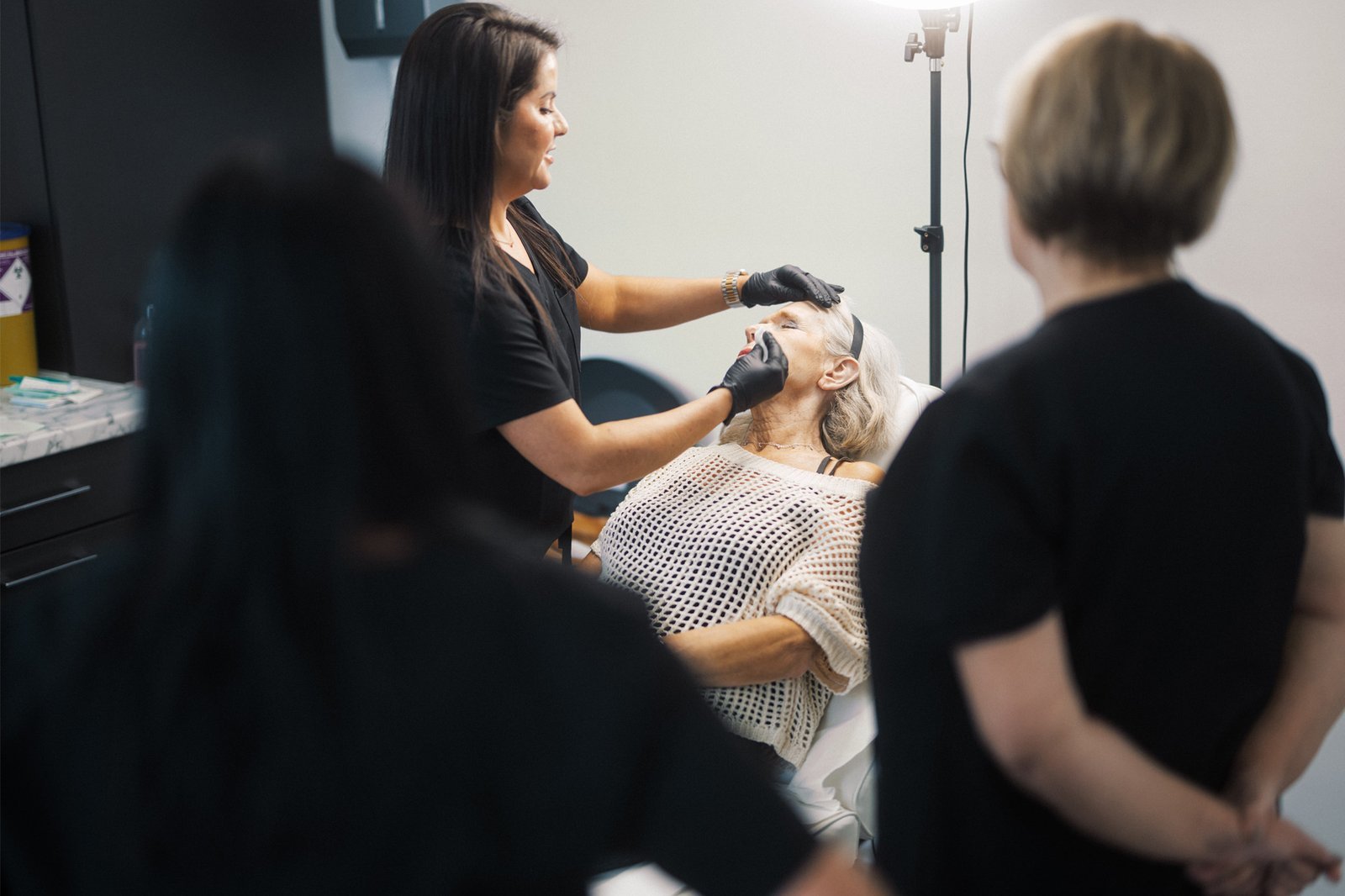
Complications are often thought of as sudden problems that happen in the treatment room, something that appears out of nowhere in the moment.
But in reality, they’re rarely as unpredictable or unmanageable as they seem. More often, they’re shaped by earlier decisions and built over time, calling for clarity, control, and considered action.
When people think about aesthetic complications in the UK, they often picture something going wrong during the treatment itself, a misplaced injection, poor technique, or an unexpected reaction.
But much like many aspects of clinical practice, what we see in the moment is not always where the issue truly begins.

In reality, complications rarely start when the needle touches the skin, they are usually the result of decisions made long before the procedure even begins.
Understanding how to prevent filler complications requires a broader perspective. It’s not just about the treatment itself, but everything that leads up to it. Consultation, planning, and clinical judgement all play an equally important role alongside technical skill [2].
This is where aesthetic risk management becomes essential, encouraging a shift away from reacting to problems and towards anticipating and preventing them in the first place.
In a truly safe aesthetic practice, outcomes are shaped by the full patient journey, not just the procedure. Every decision, from the initial consultation to the final treatment plan, contributes to the result.
That’s why aesthetic training safety must go beyond technique, placing greater emphasis on critical thinking, careful patient selection, and a strong sense of clinical responsibility.
The Role of Consultation
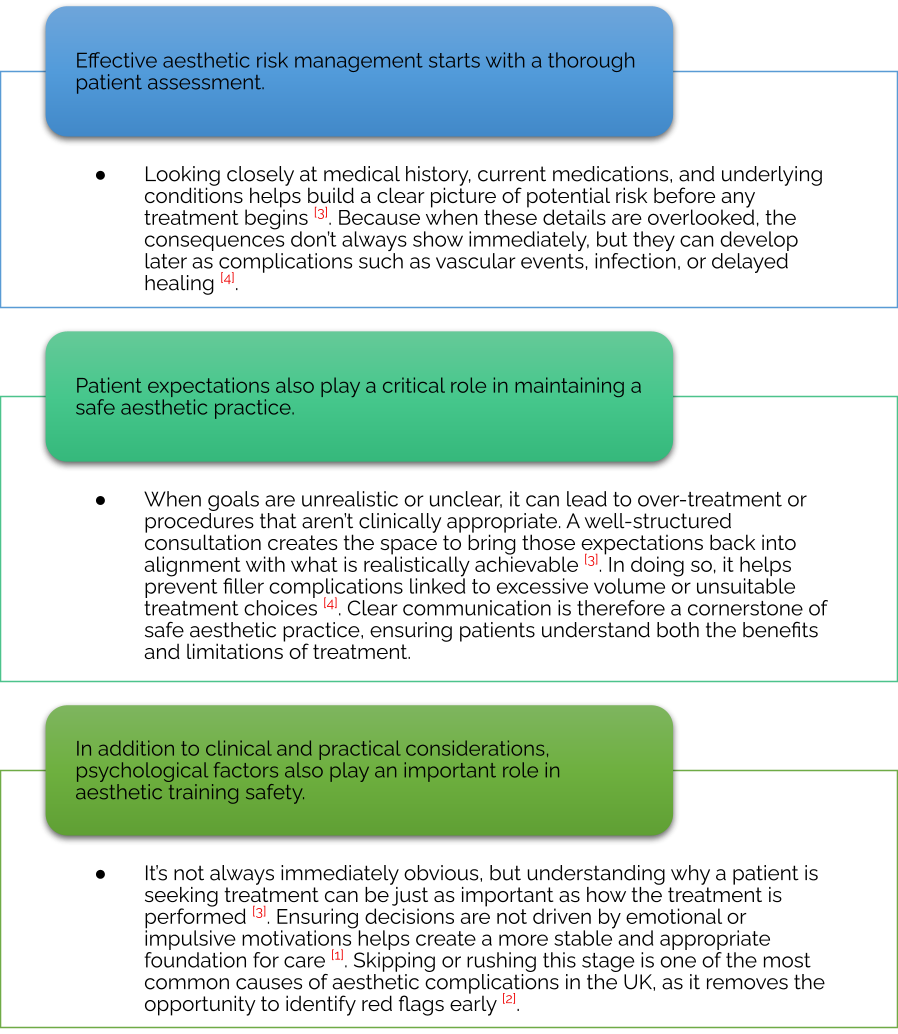
Every aesthetic treatment begins with a consultation, and when this step isn’t approached with care and depth, it’s often where problems first take shape, because this is where risks are either recognised early or missed entirely.
Treatment Planning
Treatment planning is the next critical stage. It can feel like a straightforward step, but this is often where the direction of the outcome is truly set.
In many cases, this is where complications are either prevented through careful, considered decisions or quietly set in motion by small, overlooked details.
Poor planning doesn’t always stand out in the moment. But choices such as selecting the wrong product, placing it incorrectly, or using inappropriate volume can gradually compromise both safety and results, often becoming more apparent over time [4].
To prevent filler complications, treatment planning needs to go beyond surface-level decisions. It’s not just about the area being treated, but how the face works as a whole.
Factors such as facial anatomy, skin quality, and the dynamic nature of movement all need to be carefully considered when designing a plan [2].
Because without this broader understanding, it’s easy to treat isolated areas in a way that doesn’t fully support the overall structure.
Aesthetic risk management also involves recognising when not to treat. It’s a decision that can feel counterintuitive, especially when a patient is seeking a solution, but not every concern can, or should, be addressed safely or predictably [3].
Overconfidence or pressure to meet patient demands can lead to decisions that increase risk unnecessarily [1].
A carefully considered plan sits at the core of safe aesthetic practice. It’s not just about deciding what to treat, but ensuring every aspect of the approach is intentional and aligned with the patient’s needs [2].
Because when planning is approached in this way, treatments become more predictable, controlled, and consistent.
This is exactly what aesthetic training safety aims to reinforce, teaching practitioners to think in a structured, evidence-based way, rather than relying on instinct alone [5].
Sequencing & Decision-Making
Beyond planning, the sequence in which treatments are carried out plays a significant role in shaping outcomes.
Knowing what to treat, when to treat it, and how different procedures interact is central to avoiding aesthetic complications in the UK and supporting effective aesthetic risk management [2].
Because when this sequence isn’t carefully considered, the effects don’t always appear immediately. For example, combining multiple treatments without considering tissue response can compromise healing and increase complication rates [4].
This is why a safe aesthetic practice requires a longer-term view, seeing treatments as part of an ongoing journey, rather than isolated procedures [2].
At its core, a strong, safe aesthetic practice is built around patient wellbeing. It’s not always the most obvious factor, but it shapes every decision that follows.
Creating an environment where thoughtful, considered choices are prioritised over speed or volume is what allows safer outcomes to develop [5].
This is why mindset matters just as much as skill.
When decisions are guided by care rather than pressure, aesthetic risk management becomes a natural part of practice, something that is continually reinforced through high-quality aesthetic training safety [1].
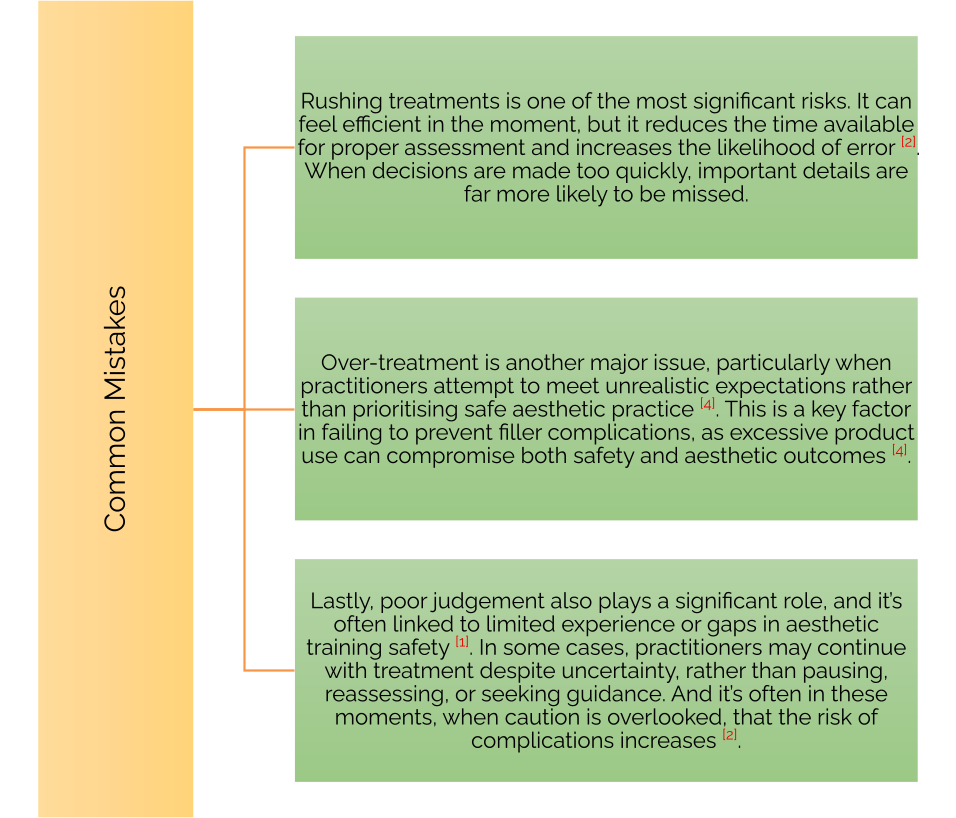
Common Mistakes
Many of the most common causes of aesthetic complications in the UK aren’t always complex or unexpected. In fact, they’re often surprisingly simple, yet consistently overlooked in practice.
Safe aesthetic practice isn’t defined by the absence of complications, but by the systems, decisions, and foresight that reduce their likelihood. This is where strong aesthetic risk management becomes essential, grounded in careful thinking and sound clinical judgement.
With this approach, and a clear focus on aesthetic training safety, complications can often be recognised early and avoided long before they have the chance to develop.
BIBLIOGRAPHY
- Acquisition Aesthetics. (n.d.). Aesthetic complications discussion. [online] Available at:
https://www.acquisitionaesthetics.co.uk/blog/aesthetic-complications-discussion/ - Acquisition Aesthetics. (n.d.). Safety and risk in aesthetics. [online] Available at:
https://www.acquisitionaesthetics.co.uk/blog/safely-and-risk-aesthetics/ - Aesthetic Expert Witness. (n.d.). Risk & assessment in aesthetic consultations. [online] Available at:
https://www.aestheticexpertwitness.co.uk/blog/risk-amp-assessment-in-aesthetic-consultations - Derma Medical. (n.d.). Botox and filler complications every aesthetic practitioner should know. [online] Available at:
https://dermamedical.co.uk/botox-and-filler-complications-aesthetic-practitioner-should-know/ - UK Parliament House of Commons Library. (2023). Regulation of non-surgical cosmetic procedures (CBP-10331). [online] Available at:
https://researchbriefings.files.parliament.uk/documents/CBP-10331/CBP-10331.pdf