Starting a career in medical aesthetics is an exciting step, and it is natural to want to prepare as much as possible before your first training day.
Many people assume that receiving hours of videos, lengthy manuals and extensive reading materials before a course will give them a head start.
However, effective learning is not about consuming the greatest amount of information; it is about understanding, applying and retaining knowledge.
At the ATA, our approach to aesthetics training in Scotland is intentionally different.
Rather than overwhelming delegates with excessive pre-course material, we focus on delivering the right information at the right time.
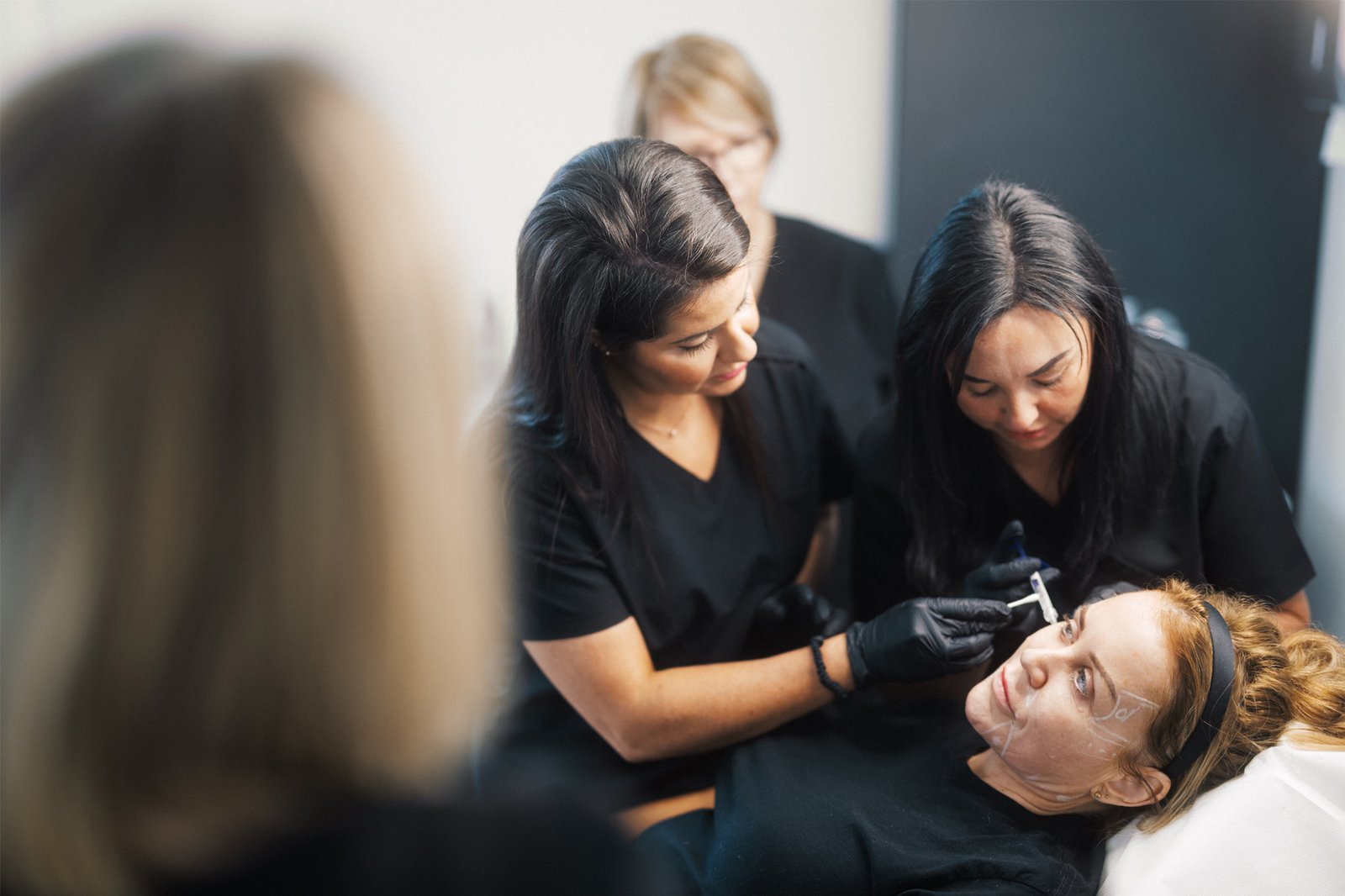
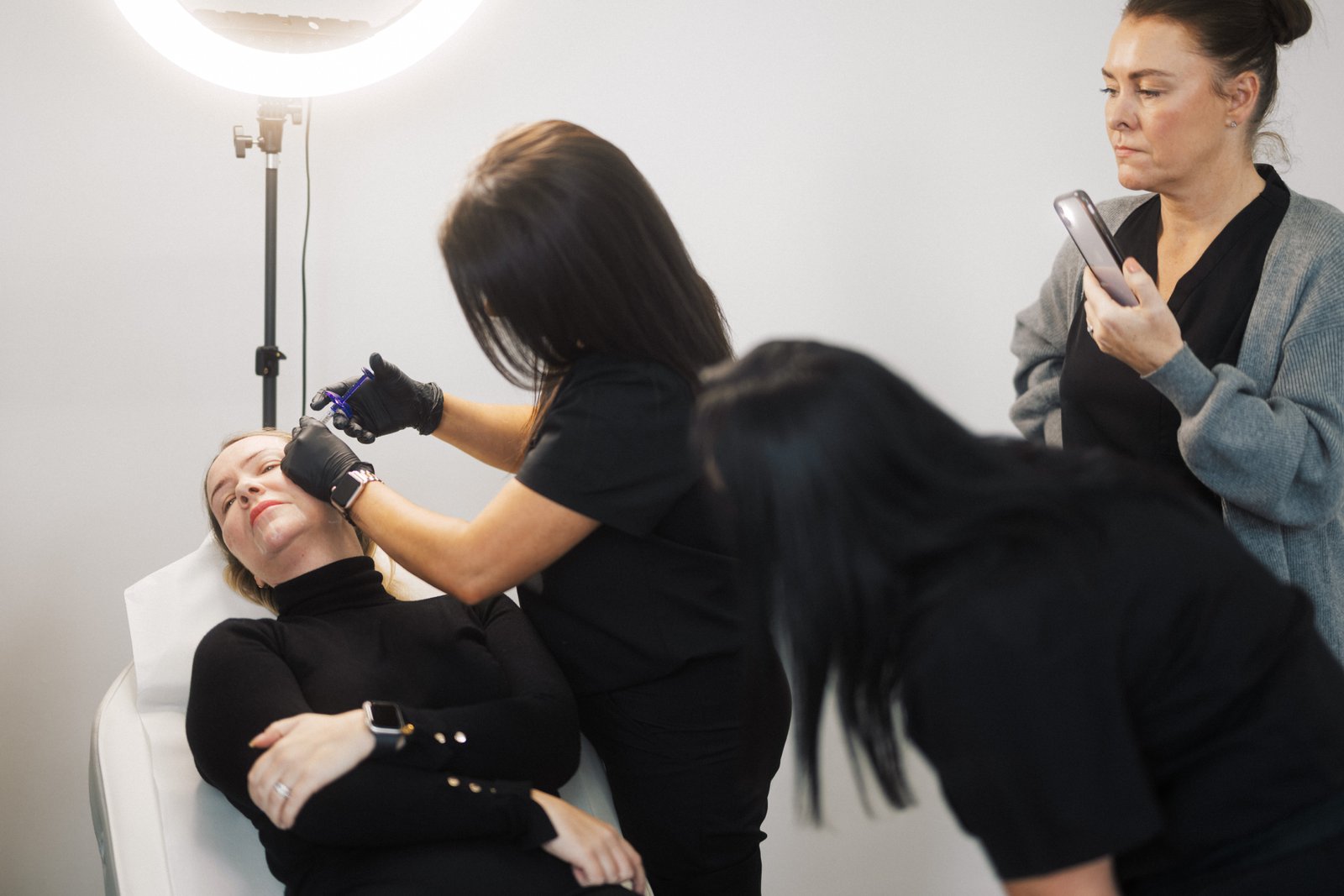
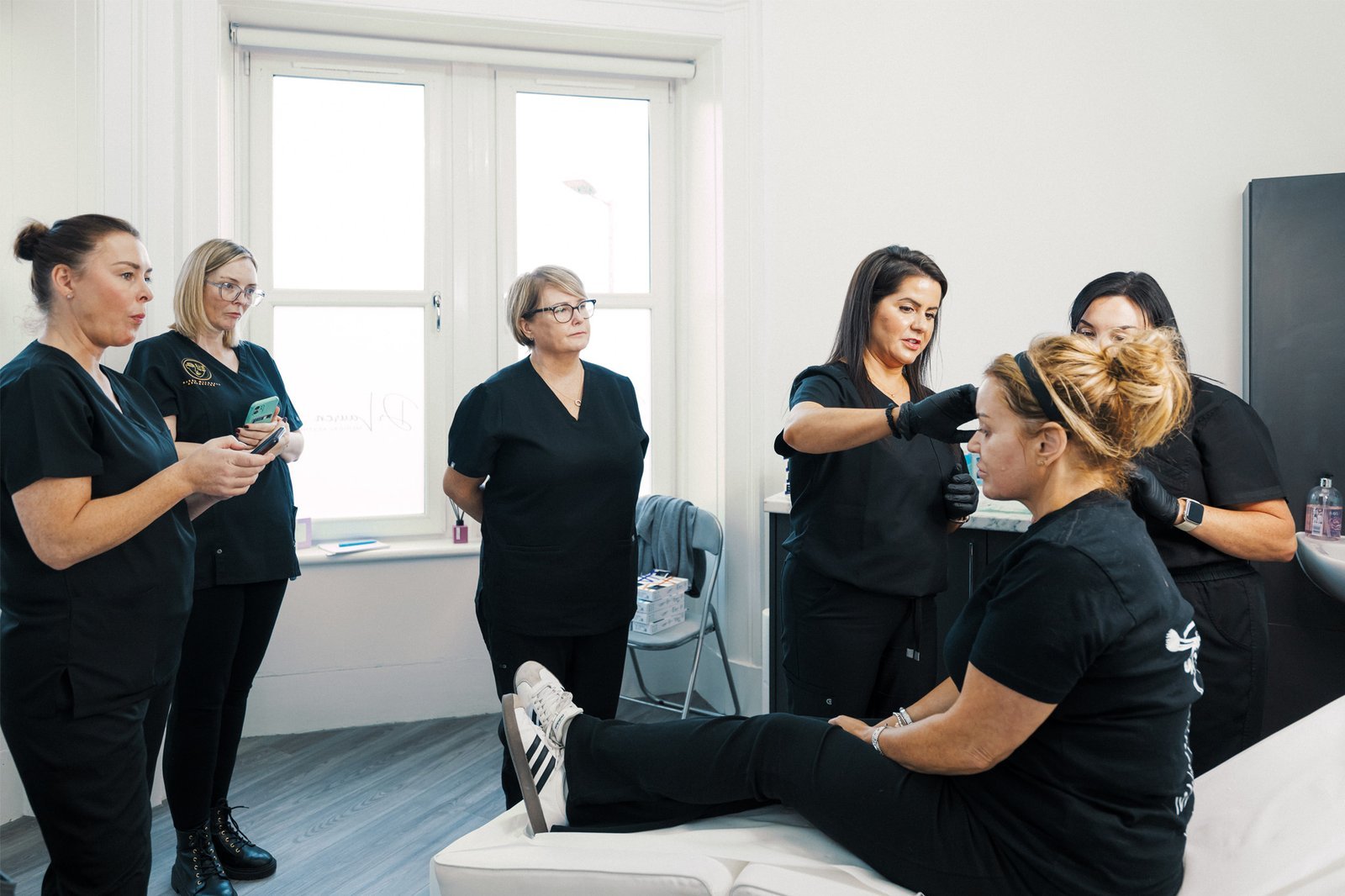
Our foundation aesthetics course has been carefully designed so that learning happens in context, through discussion, demonstration and hands-on practice with experienced trainers.
Whether you are considering foundation Botox and filler training, a medical aesthetics training programme, or searching for an aesthetics course in Glasgow, understanding how people learn best can make all the difference to your confidence and long-term success.
More content doesn’t always mean better learning
There is a growing expectation that professional courses should include extensive online learning before delegates even arrive. While this may seem beneficial, more information does not necessarily create better practitioners.
The temptation to send hours of videos and reading
Many training providers believe that filling delegates’ inboxes with hours of recorded lectures and downloadable documents demonstrates value. In reality, this often creates unnecessary pressure.
Before even attending their foundation aesthetics course, delegates may feel they need to memorise anatomy, injection techniques, product information and clinical protocols without ever seeing these concepts demonstrated in practice.
Instead of feeling prepared, many begin to question whether they are capable of keeping up.
Why information overload reduces confidence
Too much information presented without guidance can make learning feel overwhelming.
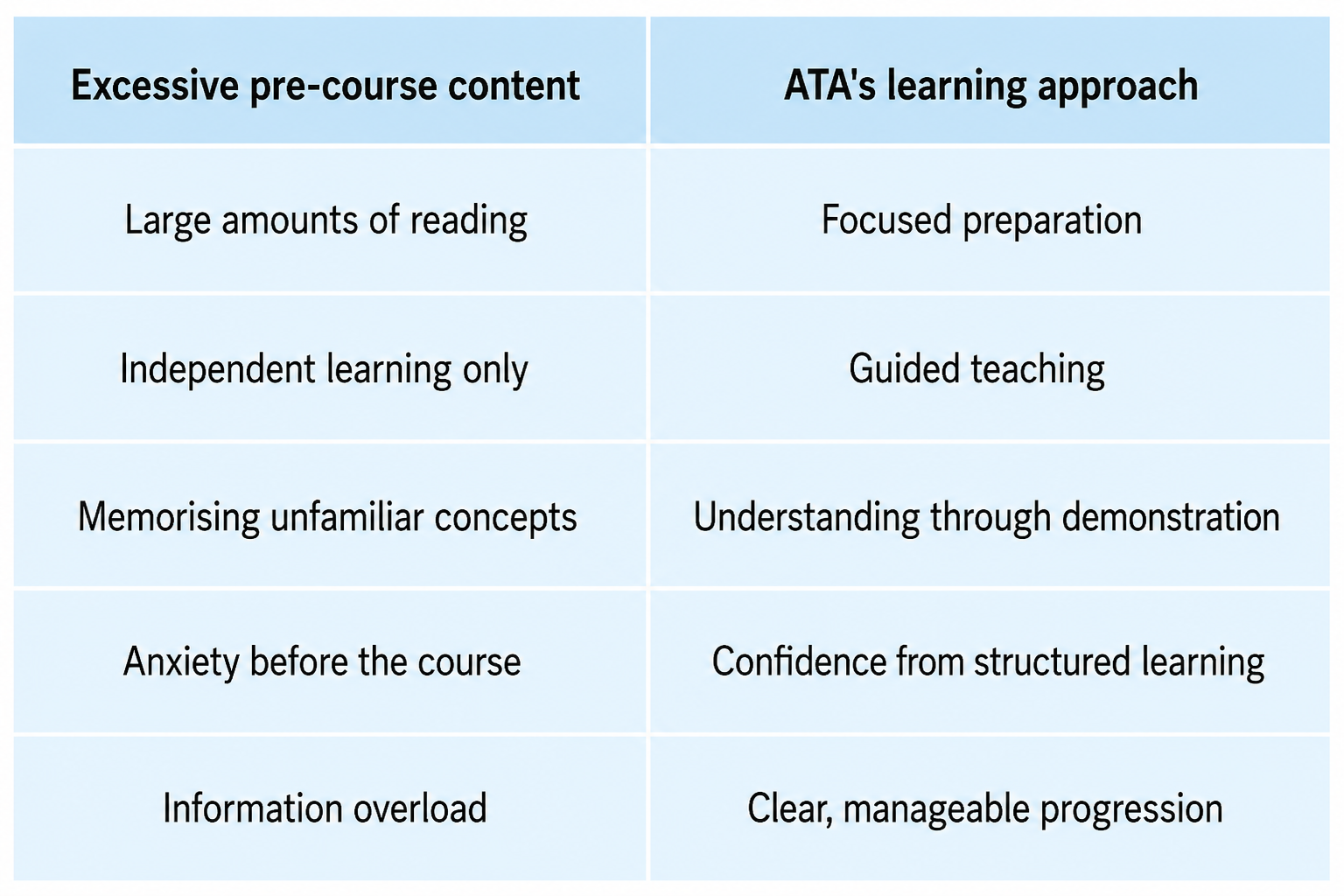
Rather than building confidence, excessive pre-course content often increases self-doubt. Delegates worry about remembering everything before they have even met their trainers.
Learning should feel exciting; not intimidating.
Context is everything
One of the biggest reasons the ATA limits pre-course material is because medical aesthetics is a practical discipline.
Reading about injection techniques is very different from watching them demonstrated, understanding why specific decisions are made, and then practising under expert supervision.
Concepts become clearer through demonstration
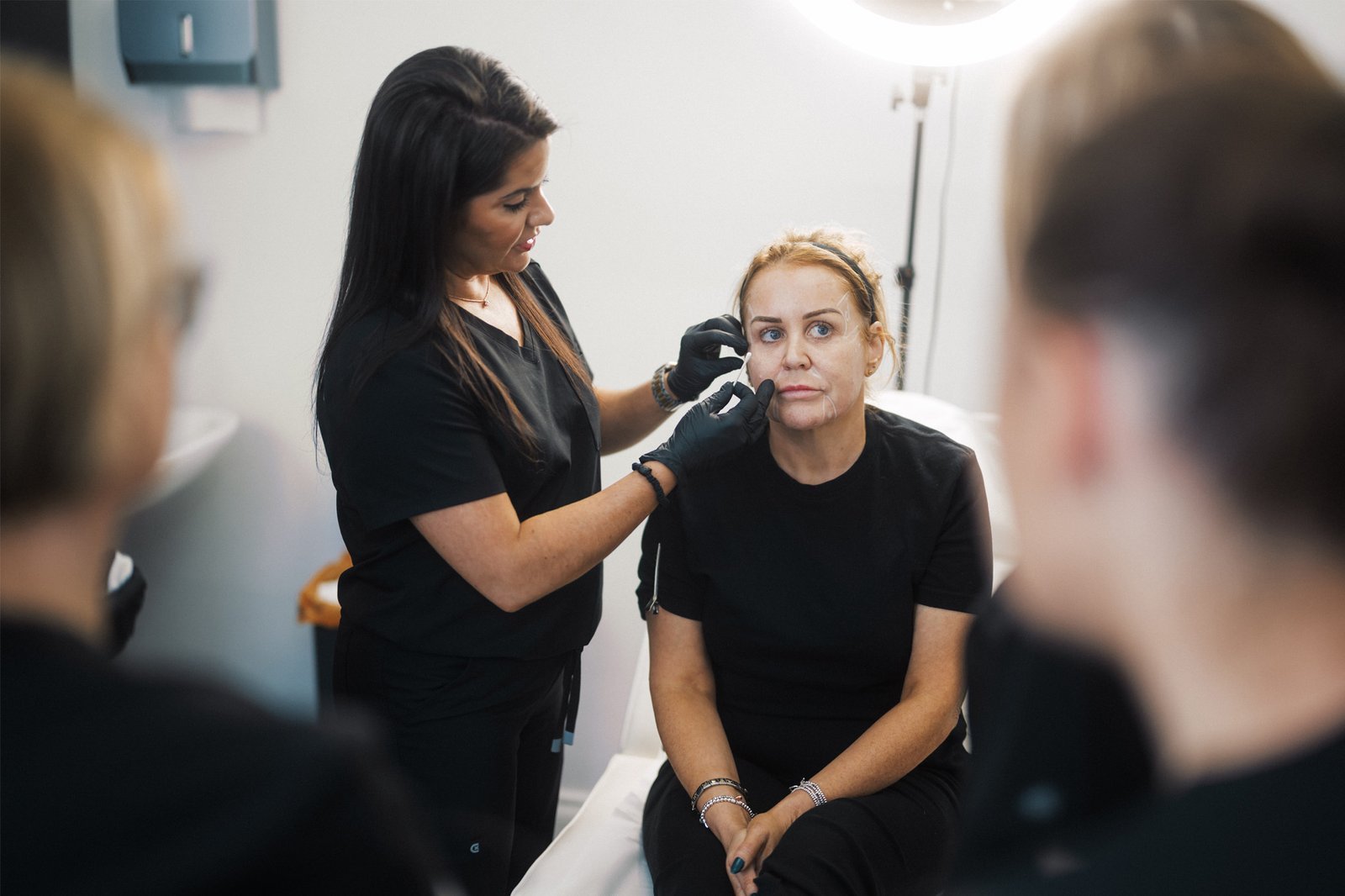
Complex topics such as facial anatomy, consultation techniques and treatment planning make much more sense when taught alongside practical demonstrations.
Instead of trying to visualise procedures from written notes, delegates see:
- How anatomy relates to treatment.
- Why injection depth matters.
- How practitioners assess individual patients.
- The reasoning behind clinical decisions.
This transforms theoretical knowledge into genuine understanding.
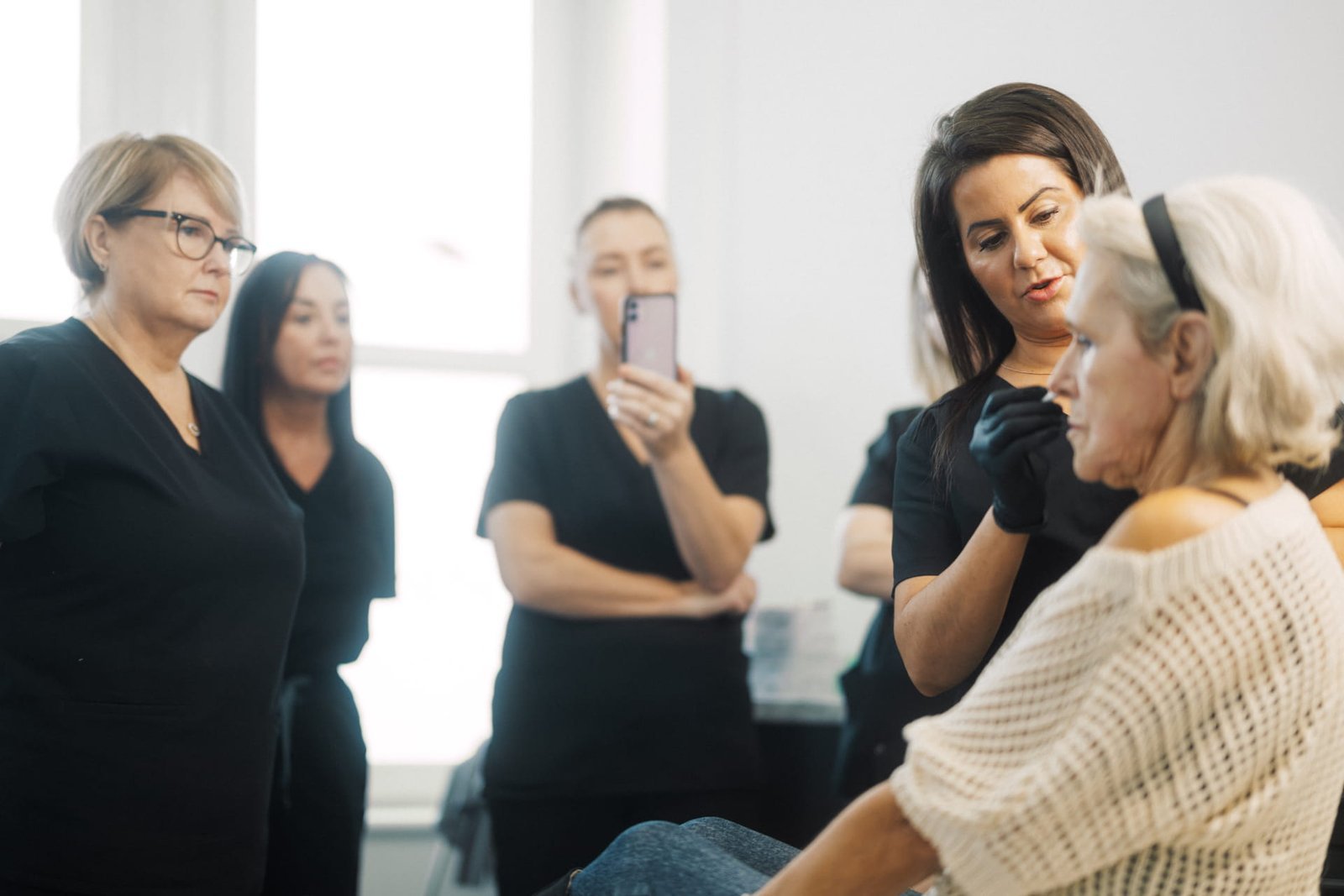
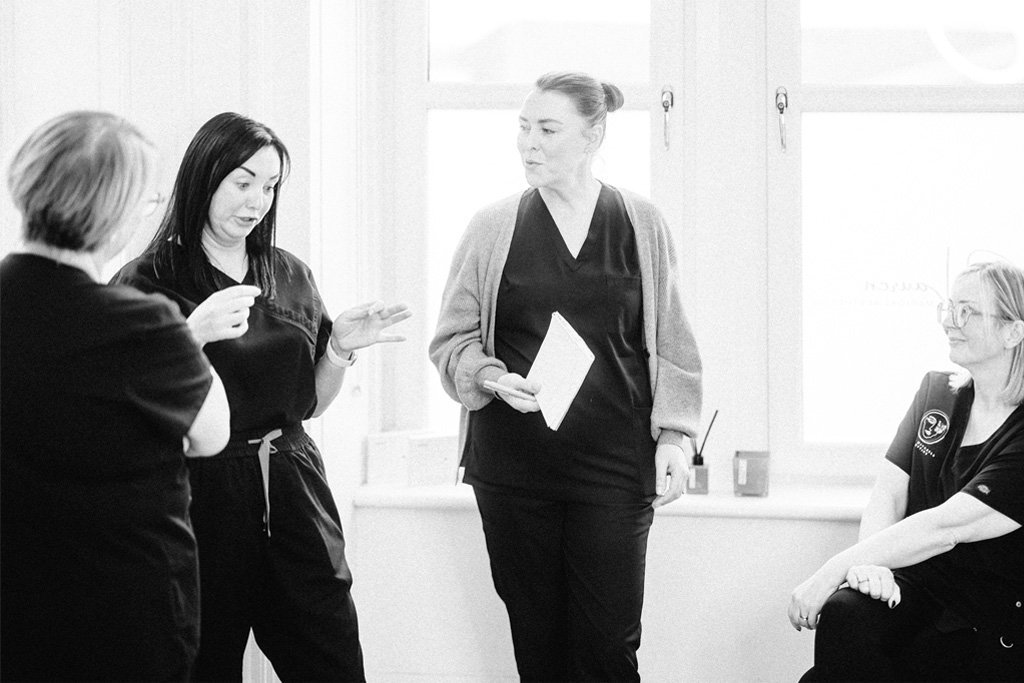
Learning happens through conversation
Another advantage of classroom teaching is the ability to ask questions immediately.
Questions often arise naturally during demonstrations:
- Why was this injection point chosen?
- Why wasn’t another treatment suitable?
- What would happen if anatomy varied?
- How should complications be prevented?
These discussions cannot be replicated by pre-recorded videos alone.
Building understanding rather than memorisation
The ATA’s doctor-led training focuses on developing clinical thinking rather than encouraging delegates to memorise facts.
Instead of simply remembering steps, delegates learn to understand why those steps matter.
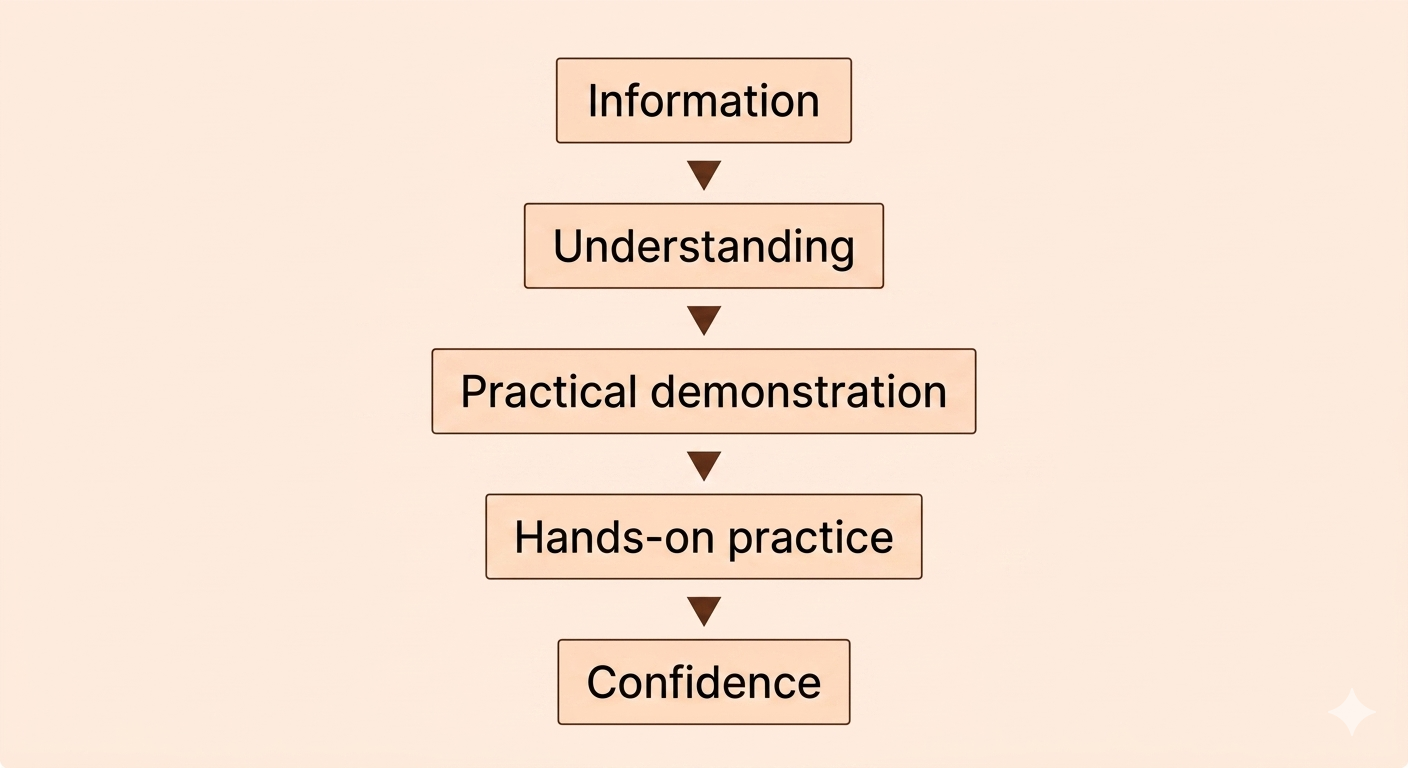
This progression creates knowledge that lasts far beyond the course itself.
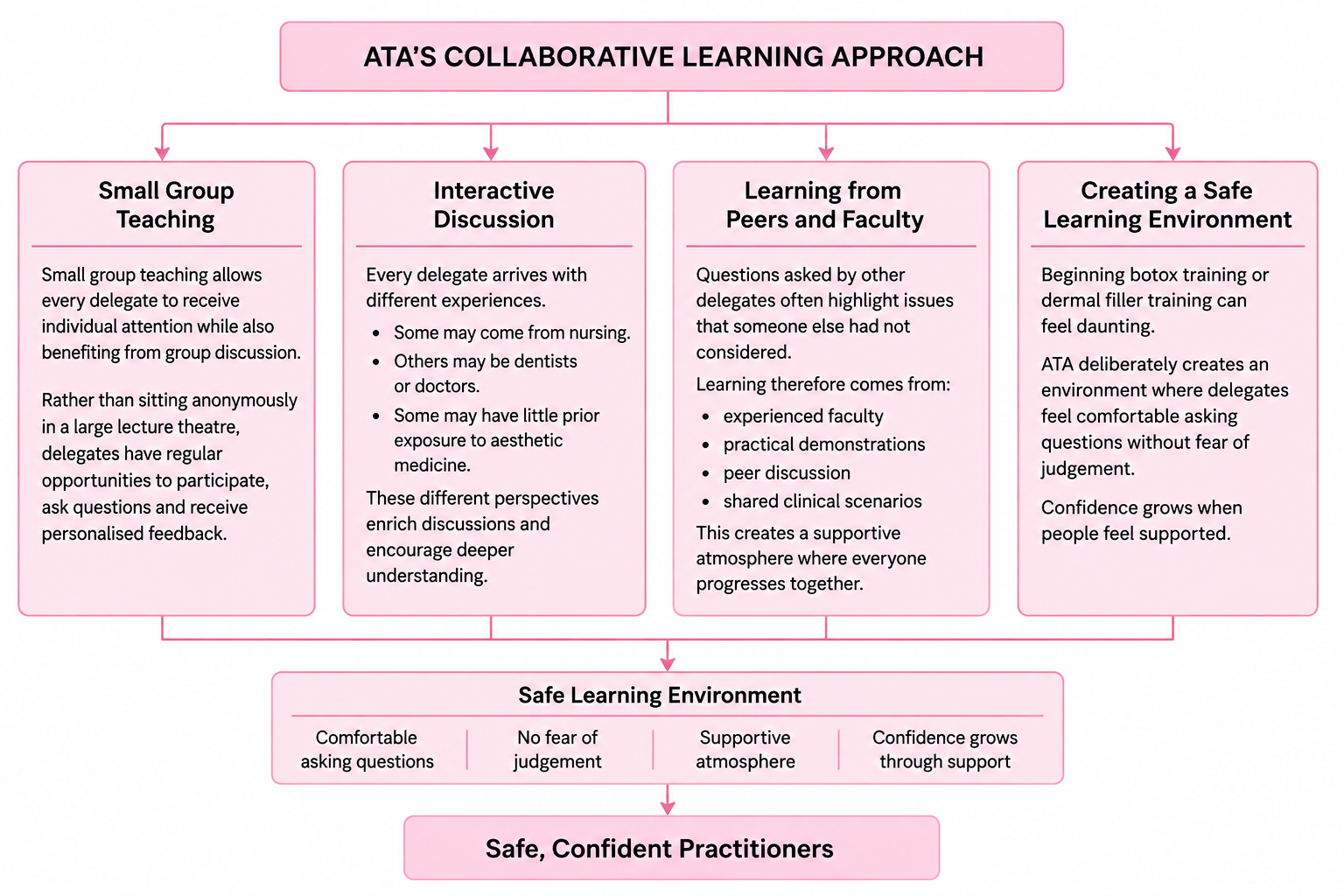
Learning together
Medical aesthetics is not learned in isolation.
One of the greatest strengths of the ATA’s medical aesthetics training is the collaborative learning environment.
Building confidence step by step
One of the biggest misconceptions surrounding a beginner aesthetics course is that delegates need to know a great deal before they attend.
The opposite is true.
Foundation training should feel achievable
The purpose of a foundation aesthetics course is to introduce core concepts safely and progressively.
Delegates are not expected to arrive as experts.
Instead, they build knowledge one stage at a time.
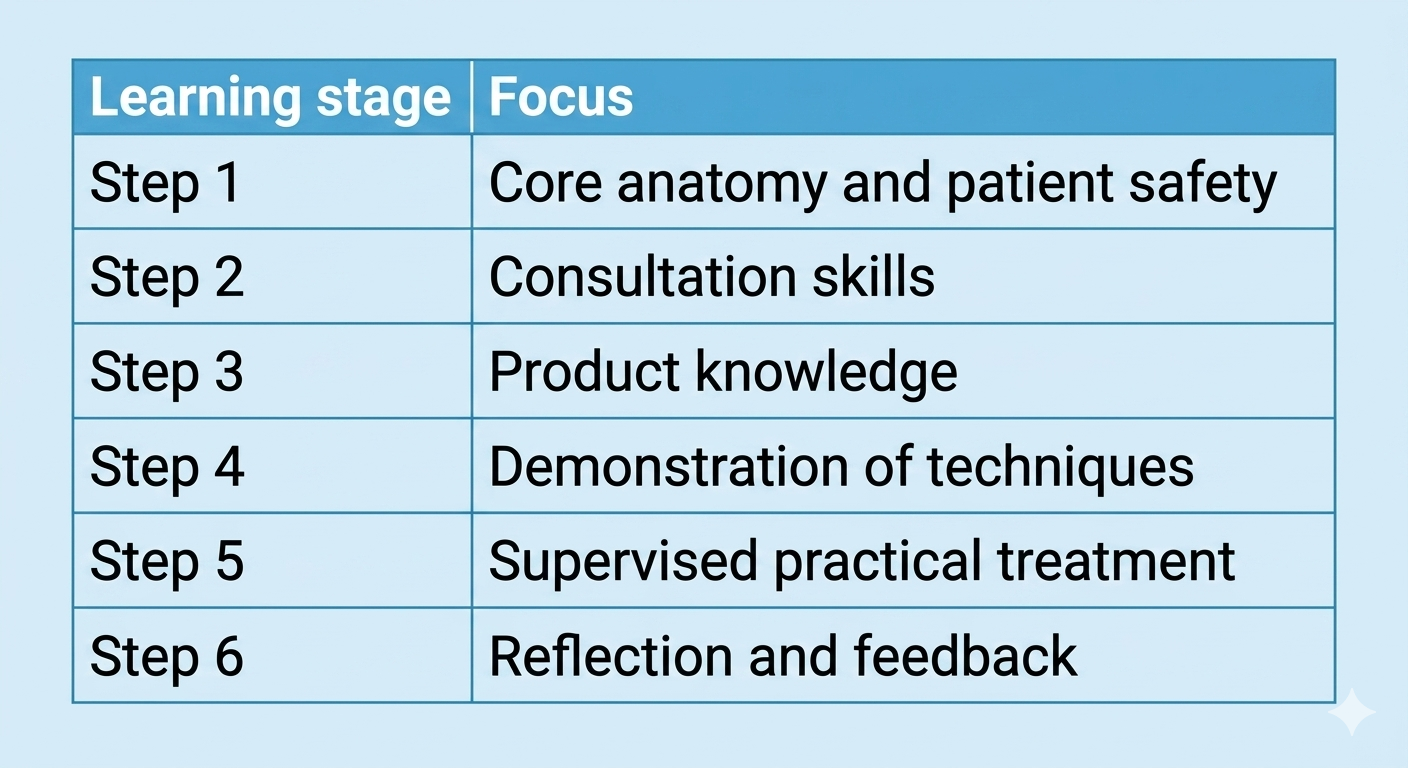
Breaking learning into manageable stages makes complex topics much easier to understand.
Confidence grows through repetition
Real confidence does not come from watching ten hours of videos.
It comes from:
- seeing procedures performed correctly
- understanding why techniques are used
- practising under supervision
- receiving constructive feedback
- repeating skills until they become familiar
This gradual approach develops competence without overwhelming delegates.
Preparing the ATA Way
Every aspect of the ATA Foundation Training has been designed to help delegates arrive ready to learn; not exhausted from weeks of intensive pre-reading.
What delegates can expect before the course
Before attending, delegates receive practical information that helps them prepare appropriately.
This includes guidance on:
- course logistics
- what to bring
- how the training day will run
- essential introductory information
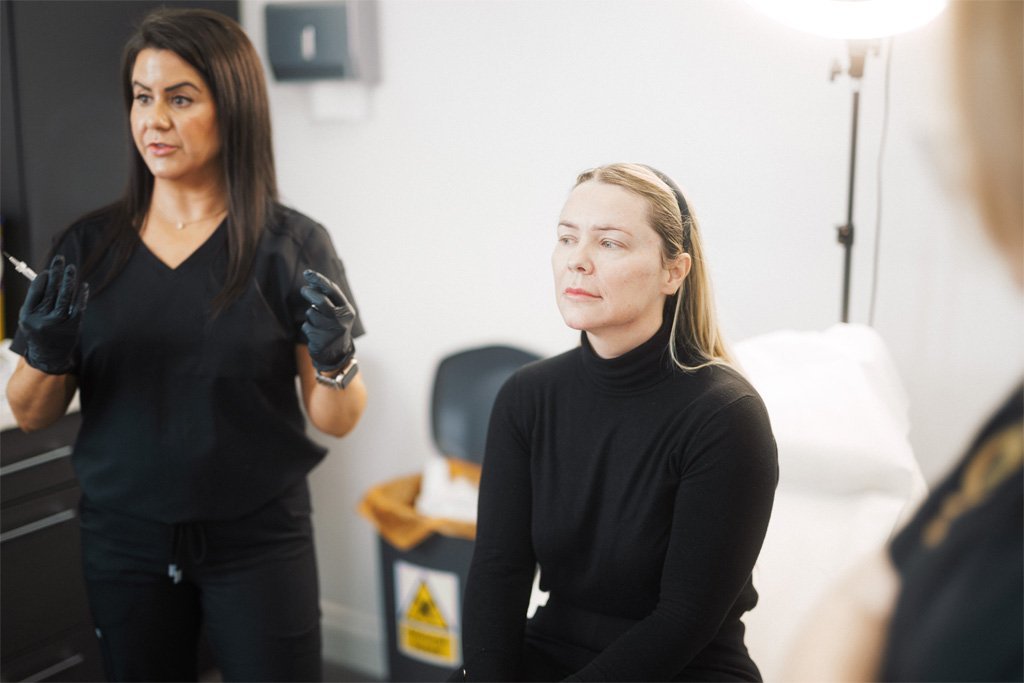
Rather than expecting delegates to memorise complex clinical material independently, ATA ensures learning begins together in the classroom.
Practical preparation over excessive reading
Preparation should support learning, not replace it.
ATA believes delegates benefit far more from arriving:
- well rested
- curious
- engaged
- ready to participate
than from trying to absorb large quantities of unfamiliar information beforehand.
This thoughtful approach helps delegates make the most of every practical teaching session.
Education designed for long-term success
A medical aesthetics course is only the first stage of becoming a safe, skilled practitioner.
The ATA views education as an ongoing journey rather than a single event.
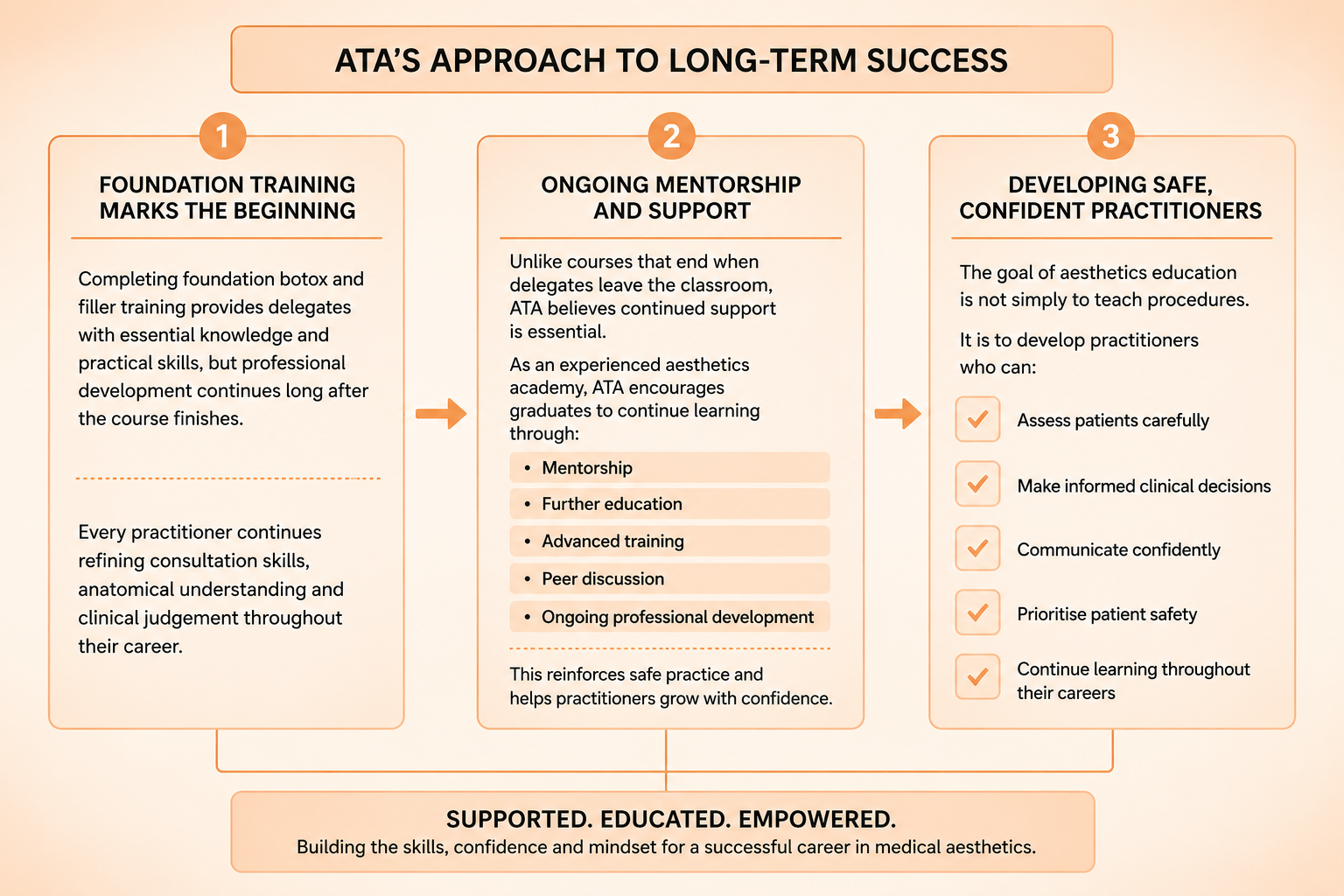
That journey starts with an educational experience designed around understanding; not information overload.
Conclusion
Choosing the right aesthetics course in Scotland is about much more than comparing the amount of pre-course material included.
True learning happens when knowledge is delivered in context, supported by practical demonstration, interactive discussion and expert guidance.
At the ATA, less before the course means more during it.
By keeping preparation focused and purposeful, delegates can arrive fresh, confident and ready to learn alongside experienced faculty and supportive peers.
Whether you are looking for an aesthetics course in Glasgow, beginning your foundation aesthetics course, or taking your first steps into medical aesthetics training; this carefully structured approach helps transform curiosity into competence.
Rather than overwhelming delegates with information before they even walk through the door, ATA Foundation Training focuses on building understanding, confidence and safe clinical practice; laying the foundations for a successful and rewarding career in medical aesthetics.
Explore foundation training
If you’re ready to begin your journey into medical aesthetics with structured, supportive and doctor-led education, explore our Foundation Training programme and discover why we’ve designed every part of the learning experience to help you succeed with confidence.
Bibliography:
- Dr James Olding – 2026 – How to Get Started in Aesthetics as a Doctor [online] Available at:
https://interfaceaesthetics.co.uk/how-to-get-started-in-aesthetics-as-a-doctor/ - Harley Academy – 2026 – Why is Theory Vital for a Successful Aesthetics Career? [online] Available at:
https://www.harleyacademy.com/aesthetic-medicine-articles/why-is-theory-vital-for-a-successful-aesthetics-career/ - Derma Institute – 2026 – The Honest Guide to Aesthetic Training Courses in the UK [online] Available at:
https://dermainstitute.co.uk/the-honest-guide-to-aesthetic-training-courses-in-the-uk/ - Rikin – 2026 – Aesthetics Training for Doctors (2026 Guide) [online] Available at:
https://avantiaestheticsacademy.co.uk/aesthetics-for-doctors - Alexandra Williams – 2025 – A guide to UK aesthetics qualifications [online] Available at:
https://www.policybee.co.uk/blog/a-guide-to-aesthetics-qualifications-and-starting-a-practice