The medical aesthetics business has evolved dramatically over the last decade. While advanced clinical skills remain essential, they are only one part of building a thriving practice.
Today’s practitioners operate in a competitive private healthcare environment where success depends on combining excellent patient care with sound business principles.
Whether you’re just beginning your medical aesthetics career or looking to expand an existing aesthetics business, understanding both the clinical and commercial aspects of the profession is vital.
From branding and marketing to patient communication and long-term business planning, every decision contributes to the reputation and sustainability of your practice.
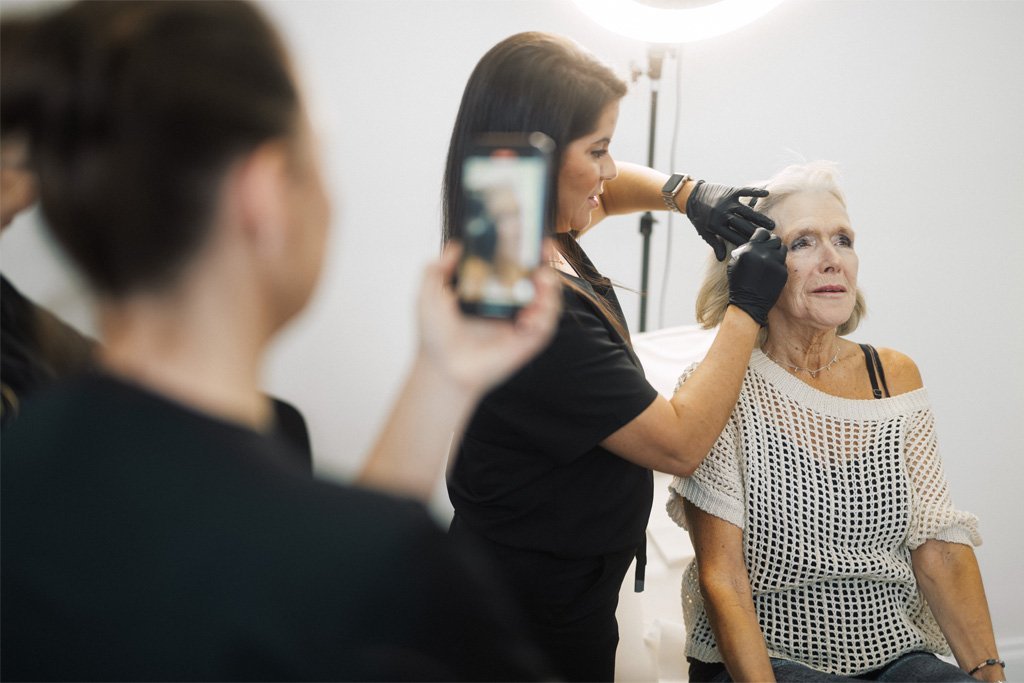
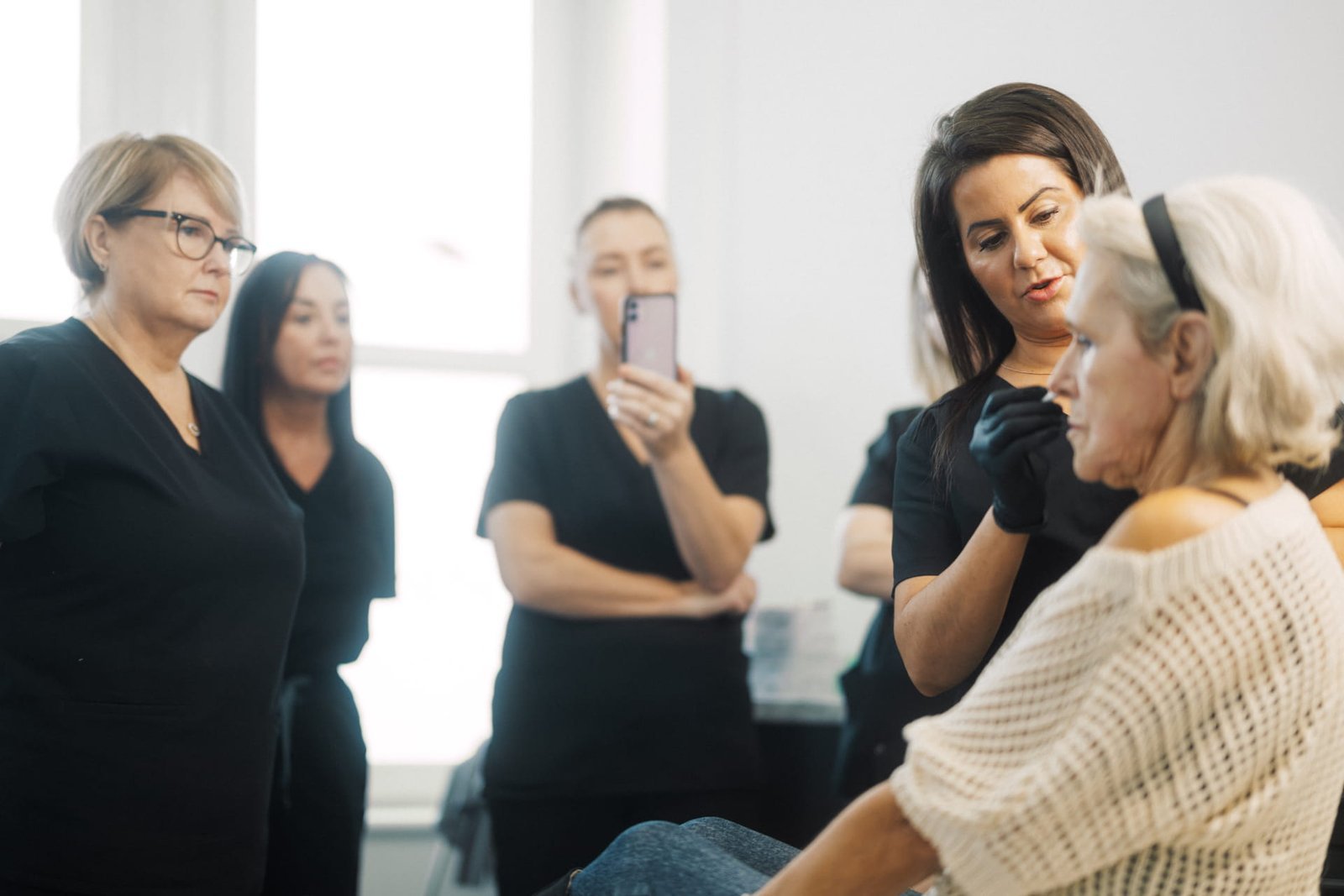
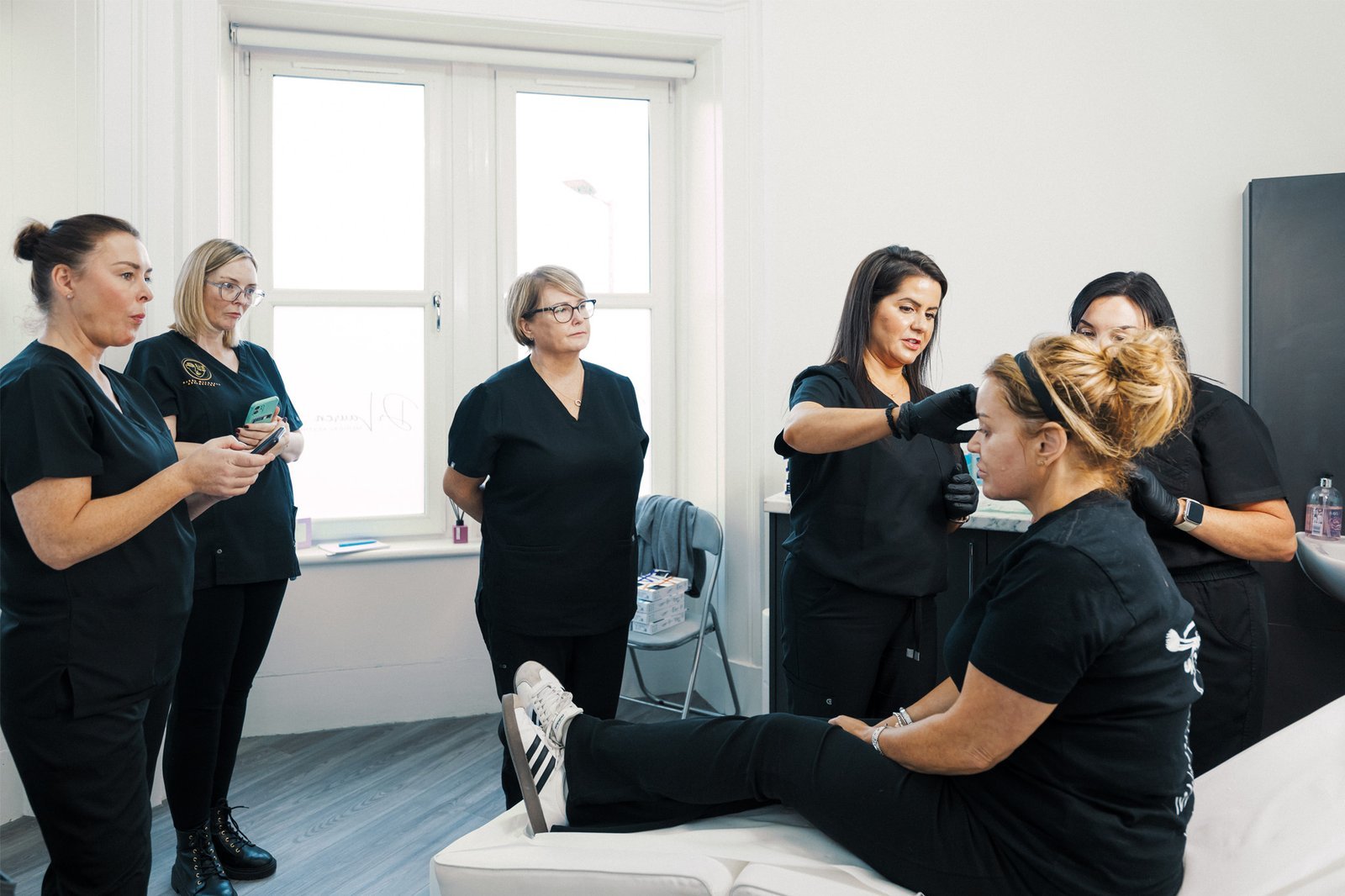
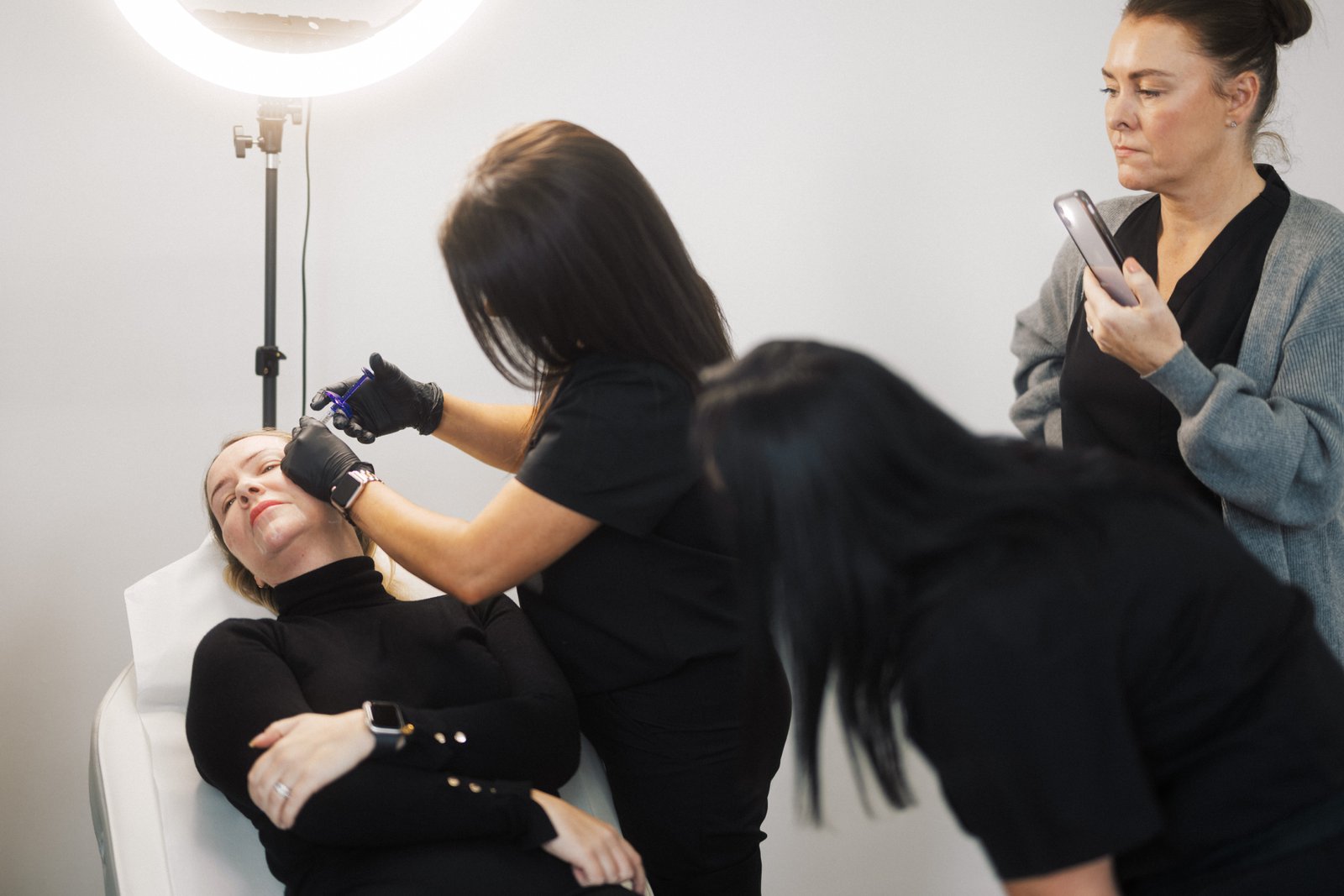
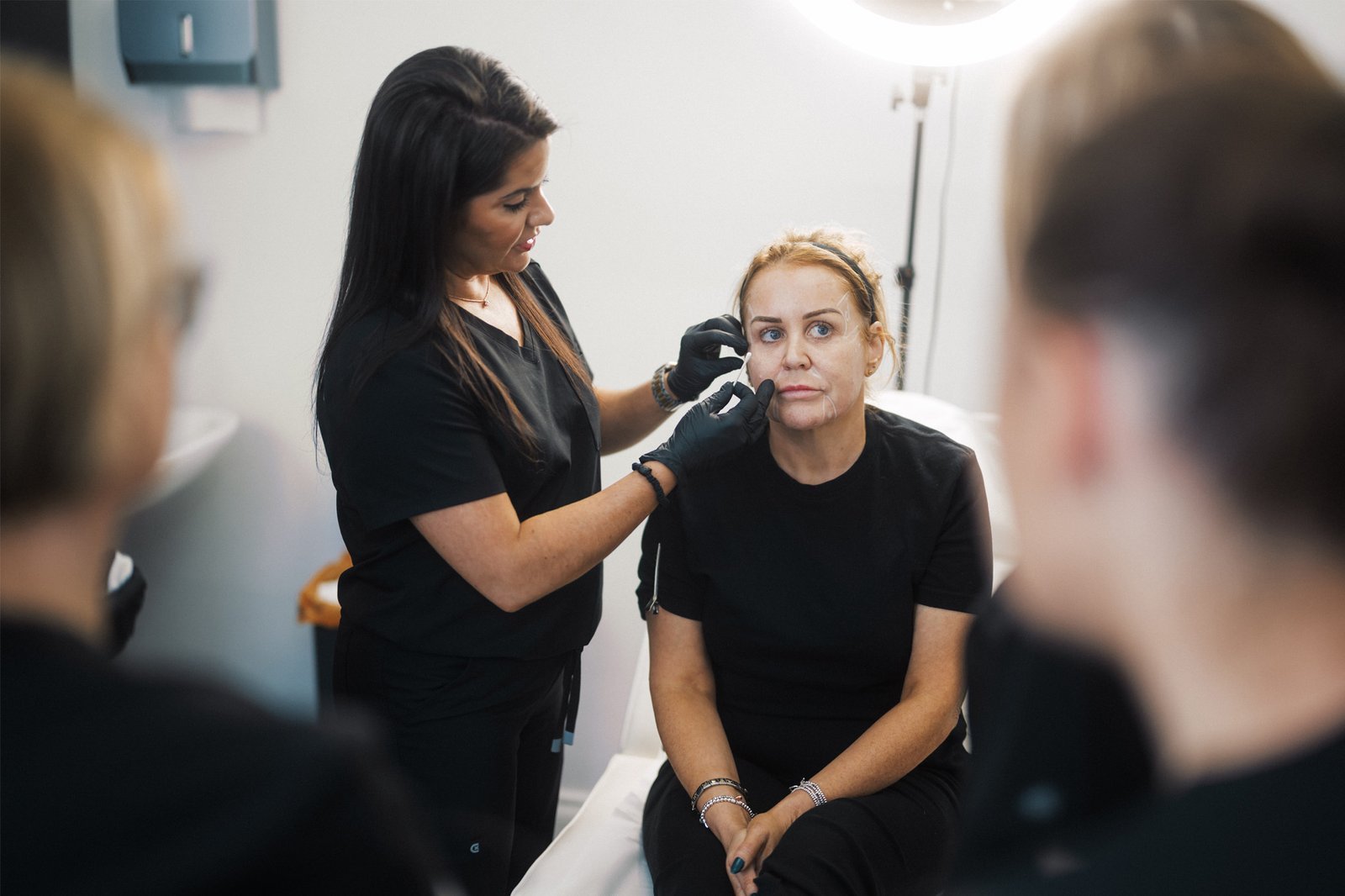
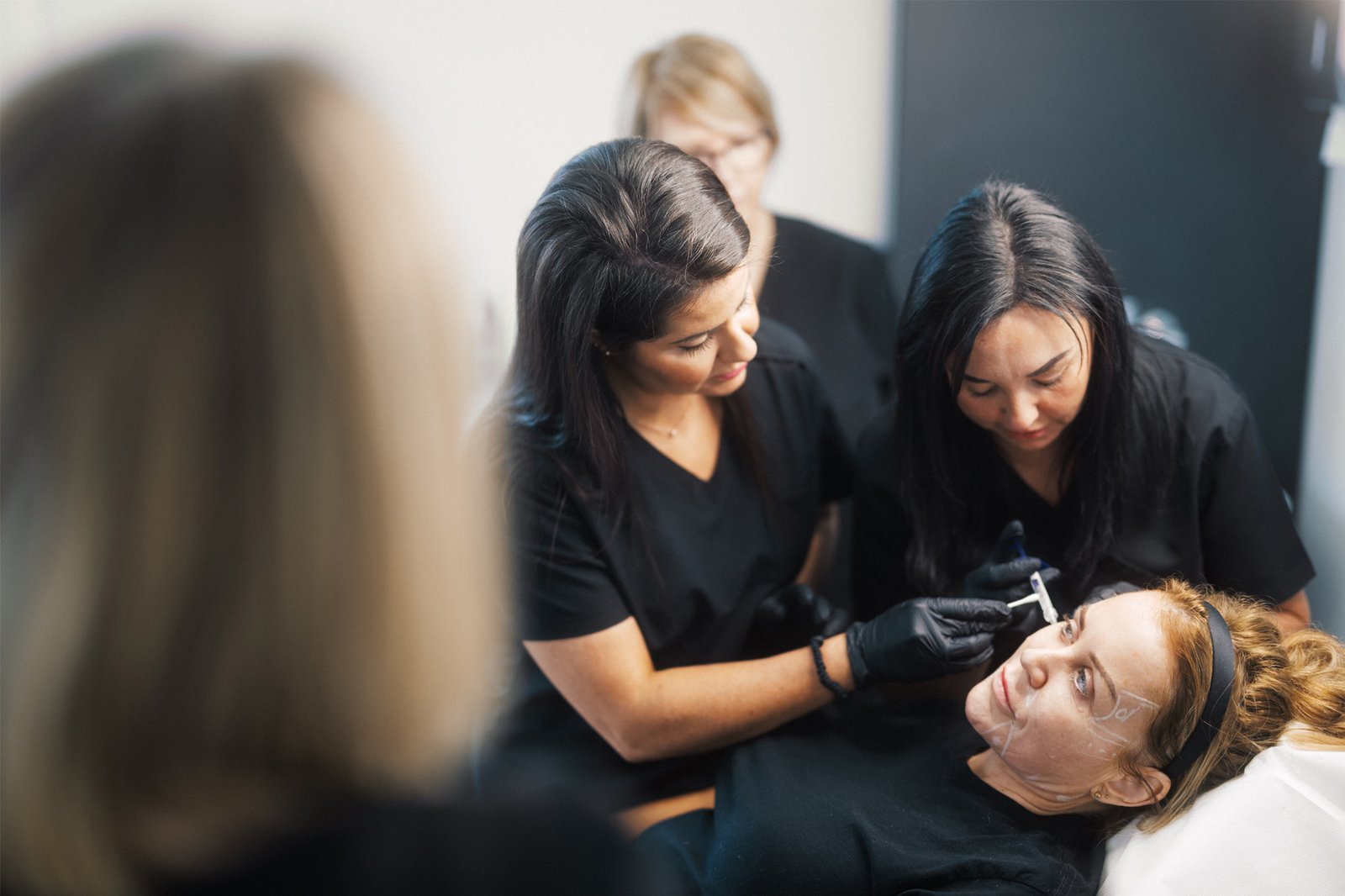
At an aesthetics academy like the ATA, the goal extends beyond teaching safe injection techniques. The objective is to prepare delegates to become confident clinicians and successful business owners who can build trusted, sustainable practices.
Medical Aesthetics Is Private Practice
Unlike many areas of healthcare, the medical aesthetics business operates almost entirely within private practice. Patients have complete freedom to choose where they receive treatment, making every aspect of your practice important; not just your clinical outcomes.
Technical ability alone does not guarantee success. Patients often select practitioners they feel comfortable with, whose values align with their own, and who demonstrate professionalism long before the first consultation.
Clinical Skills Are Only One Piece of The Puzzle
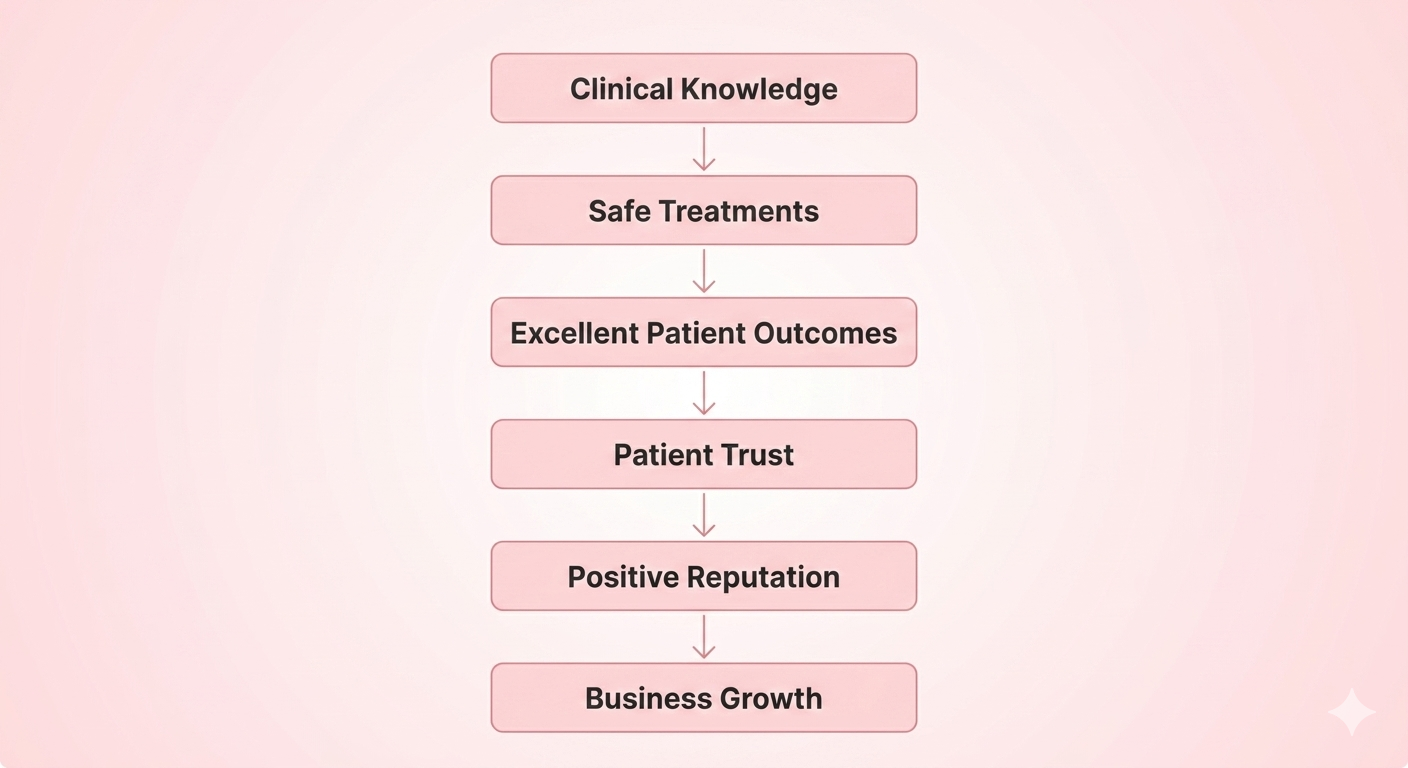
Every successful aesthetic clinic business combines several interconnected elements:
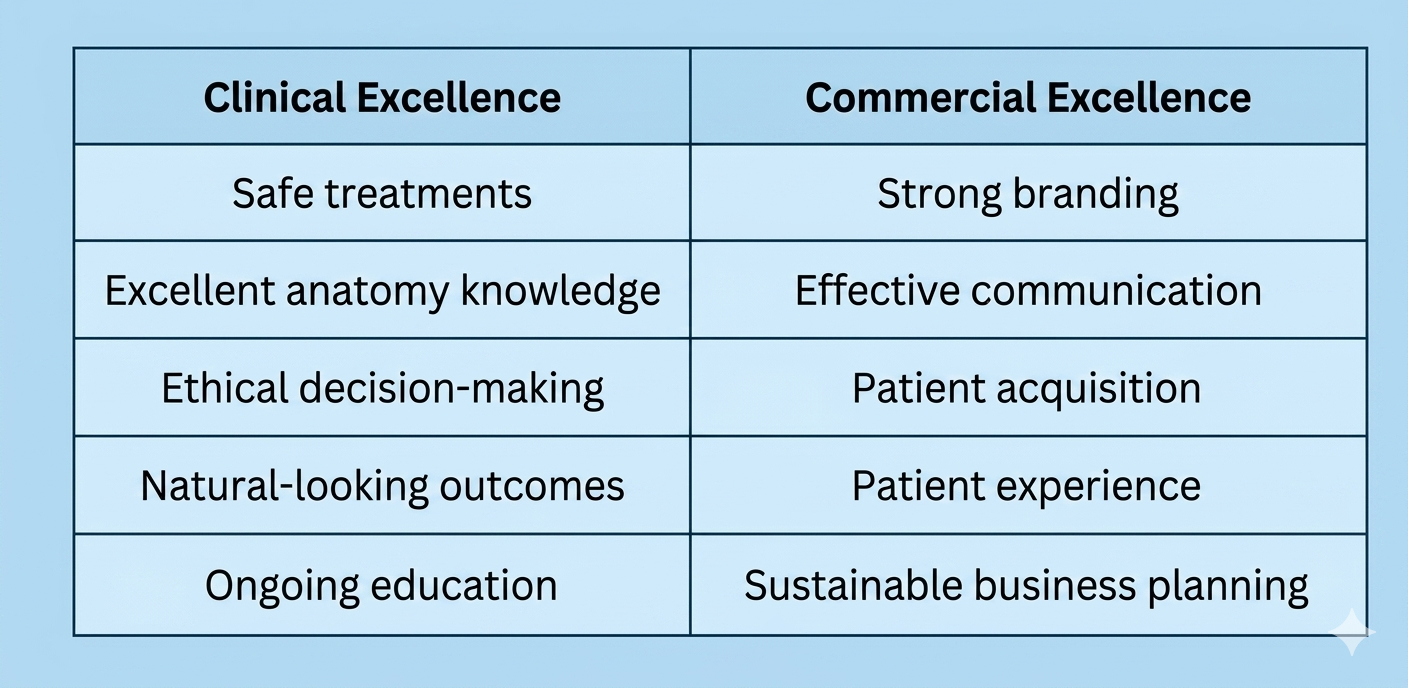
Clinical expertise earns trust after treatment, but branding, communication, and reputation often determine whether patients book in the first place.
Patients Buy Confidence
Patients are placing their trust in someone performing medical procedures on their face. Before making an enquiry, many will research:
- Qualifications
- Clinical experience
- Reviews
- Before-and-after results
- Educational content
- Professionalism online
- Communication style
People choose practitioners they know, like, and trust.
Clinical Excellence Comes First
Although commercial skills are increasingly important, they should never replace strong clinical foundations. Every successful medical aesthetics career begins with safe, evidence-based practice.
Safe Practice Is Non-Negotiable
No amount of marketing can compensate for poor clinical standards.
Safe practice includes:
- Comprehensive consultations
- Facial anatomy expertise
- Appropriate patient selection
- Managing expectations
- Understanding complications
- Ethical treatment planning
- Appropriate aftercare
This is why high-quality aesthetics training programmes in Scotland place patient safety at the centre of every educational experience.
Reputation Is Built One Patient at a Time
Outstanding patient outcomes naturally lead to:
- Positive reviews
- Recommendations
- Returning patients
- Increased trust
- Organic referrals
Long-term aesthetics business growth is built on consistently delivering safe, natural, and ethical treatments; not chasing short-term financial gains.
Building a Successful Practice
Building a Brand Patients Trust
In today’s digital world, your personal brand often becomes your first consultation.
Before patients visit your clinic, they may spend weeks or even months learning about you online. This makes branding for aesthetics an important part of any successful aesthetics business.
Your Brand Is More Than a Logo
Personal branding reflects:
- Your values
- Your professionalism
- Your communication style
- Your treatment philosophy
- The patient experience you provide
Patients increasingly seek practitioners who appear approachable, knowledgeable, and trustworthy.
Authenticity Matters
Successful brands rarely try to appeal to everyone.
Instead, they consistently communicate:
- Honest expectations
- Ethical treatment recommendations
- Educational content
- Transparent pricing
- Realistic outcomes
Authenticity builds credibility, while exaggerated claims often undermine trust.
Consistency Creates Recognition
Consistency across your website, social media, patient communication, and consultations helps reinforce professionalism and confidence.
Patients should receive the same reassuring experience at every stage of their journey.
Marketing Isn’t a Dirty Word
Many clinicians feel uncomfortable discussing marketing, believing it conflicts with medical ethics. In reality, ethical aesthetic clinic marketing is simply about helping the right patients discover your services and understand how you can help them.
Marketing should educate rather than persuade.
Education Builds Authority
Patients value clinicians who explain:
- Treatment options
- Benefits
- Limitations
- Risks
- Recovery expectations
Educational content demonstrates expertise while helping patients make informed decisions.
Examples include:
- Educational blogs
- Frequently asked questions
- Treatment videos
- Skin health advice
- Consultation guides
This approach naturally supports patient acquisition because patients begin to view you as a trusted source of information.
Building Relationships Before the Consultation
Modern patients often follow practitioners online long before booking an appointment.
Consistent educational content allows potential patients to become familiar with:
- Your personality
- Clinical philosophy
- Communication style
- Professional standards
By the time they enquire, much of the trust-building process has already begun.
Sustainable Patient Acquisition
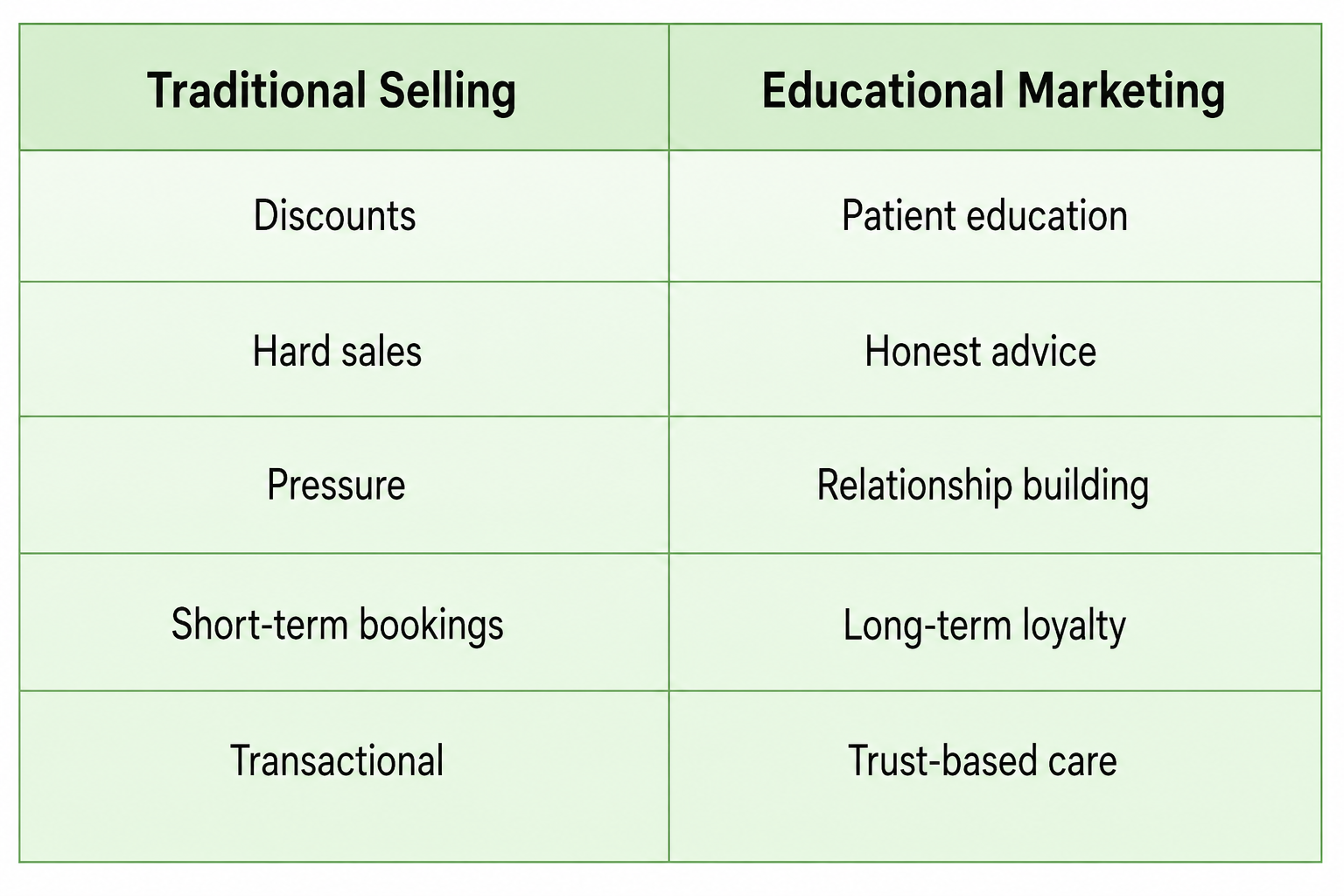
Educational marketing supports sustainable aesthetics business growth because it attracts patients who value quality care over promotional offers.
The Patient Experience Matters
Outstanding treatment results are only part of what patients remember.
Every interaction contributes to the overall experience.
Communication Makes the Difference
Patients appreciate practitioners who:
- Listen carefully
- Explain treatments clearly
- Answer questions honestly
- Set realistic expectations
- Never pressure decisions
Excellent communication reduces anxiety while strengthening trust.
Consultations Build Confidence
A consultation should feel like a collaborative discussion rather than a sales appointment.
Patients should leave feeling:
- Informed
- Comfortable
- Respected
- Empowered to make decisions
Follow-Up Demonstrates Care
Exceptional practices maintain relationships after treatment through:
- Aftercare support
- Follow-up reviews
- Availability for questions
- Outcome assessments
This reinforces professionalism and encourages long-term patient loyalty.
Reviews and Referrals
Satisfied patients become powerful ambassadors.
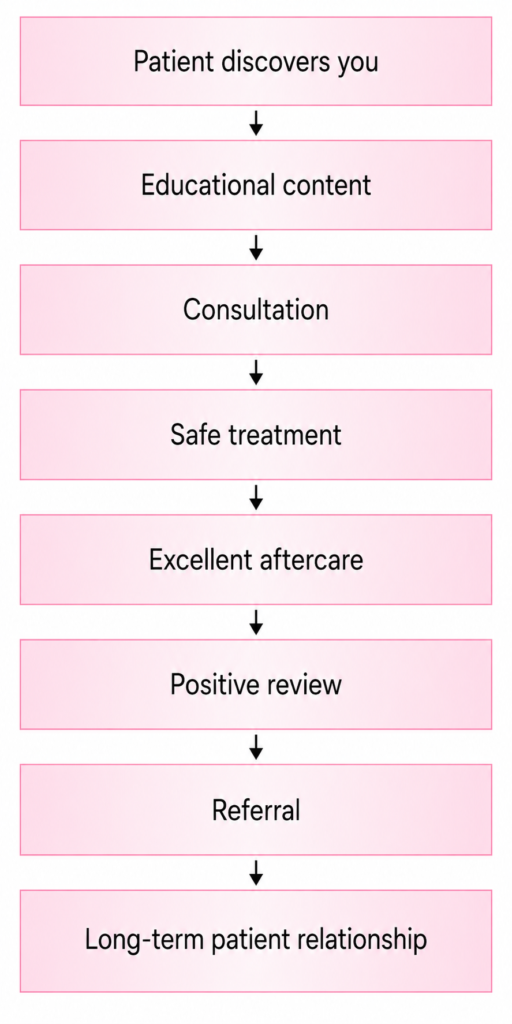
Positive reviews improve online credibility, while referrals often become one of the most reliable sources of new patients.
Excellent patient experiences naturally fuel sustainable patient acquisition without relying solely on advertising.
The Complete Patient Journey
Becoming Both Clinician and Entrepreneur
The most successful practitioners recognise that building an aesthetic clinic business requires two complementary skill sets.
They continually develop both:
- Clinical expertise
- Business knowledge
Learning should not stop after mastering injection techniques.
Successful practitioners continue developing skills in:
- Leadership
- Communication
- Financial management
- Branding
- Marketing
- Patient psychology
- Team development
These capabilities help transform a good clinician into a sustainable business owner.
The Value of Mentorship
No practitioner builds a successful practice entirely alone.
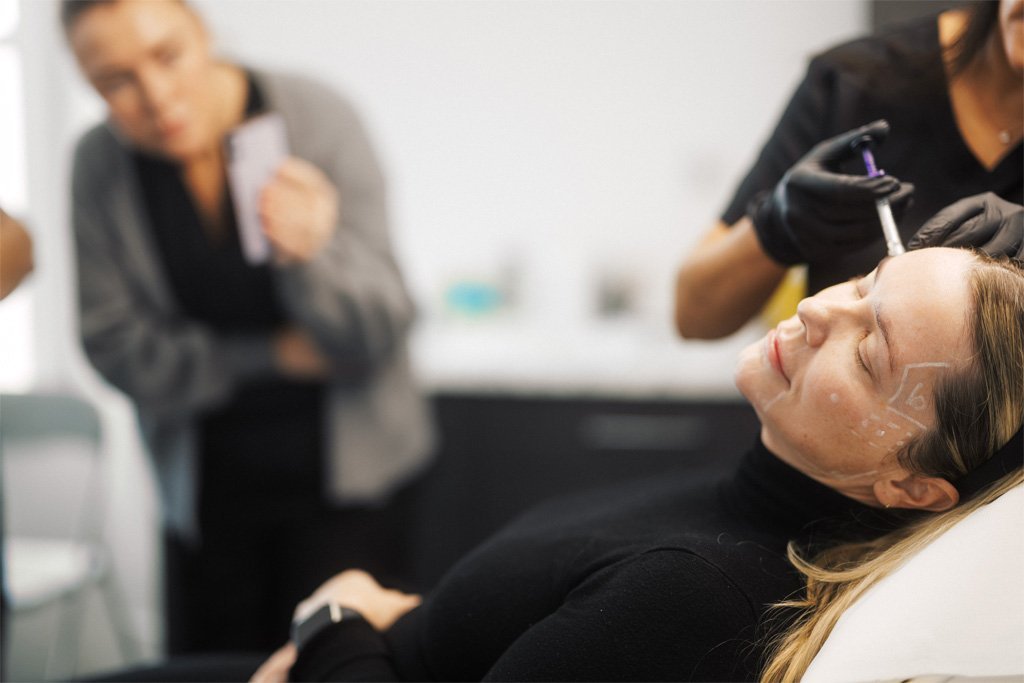
Experienced aesthetics mentorship provides valuable guidance on navigating clinical challenges while also addressing the realities of business ownership.
Mentorship can help practitioners avoid common mistakes, make informed decisions, and build confidence as they grow their practices.
Beyond the Treatment Room
As the industry becomes increasingly competitive, practitioners benefit from resources that address the broader business aspects of private practice.
This is where the Ground Floor Group (GFG) plays an important role. GFG supports practitioners by providing practical guidance on business development, leadership, systems, branding, and sustainable growth strategies.
Rather than focusing solely on clinical education, it helps clinicians build resilient private practices capable of delivering exceptional patient care while achieving long-term commercial success.
Alongside doctor-led training, this broader business education equips practitioners with the confidence to navigate the realities of running a modern medical aesthetics business.
Conclusion
Success in today’s medical aesthetics business is built on far more than exceptional injection techniques.
Clinical excellence remains the foundation, but thriving practitioners also understand branding, communication, marketing, patient experience, and the commercial realities of private practice.
Whether you’re beginning your medical aesthetics career through aesthetics training in Scotland or looking to expand an established aesthetics business, developing both clinical and entrepreneurial skills will position you for long-term success.
At the ATA, delegates are prepared not only to become safe, ethical injectors through doctor-led training, but also to build trusted practices that stand the test of time.
By combining clinical excellence with sound business principles (and leveraging resources such as GFG and ongoing aesthetics mentorship), practitioners can create practices that deliver outstanding patient care while achieving sustainable aesthetics business growth.
Explore Foundation Training
Build the clinical confidence to practise safely and the mindset to grow a successful career in medical aesthetics. Explore Foundation Training and discover why great practitioners develop both clinical excellence and commercial understanding.
Bibliography:
- Roger Kapoor – 2026 – Where Science Meets Beauty: The Medical Aesthetics Industry [online] Available at:
https://www.healthcarebusinessreviewapac.com/leadership-perspective/where-science-meets-beauty-the-m - NRC Health – 2026 – How Healthcare Organizations Build Trust by Aligning Brand, Patient Experience, and Operations [online] Available at:
https://nrchealth.com/blog/metrics-that-matter-brand-experience-trust-loyalty/ - The American Association of Aesthetic Medicine and Surgery – 2025 – The Doctor’s Crossroads: A New Path in Aesthetic Medicine [online] Available at:
https://aaams.net/blog/doctors-crossroads-aesthetic-medicine-career/ - Natalie Worster – 2025 – 7 Essential Skills Every Aesthetic Practitioner Needs [online] Available at:
https://www.matrixbeautyacademy.co.uk/aesthetic-practitioners-essential-skills/?srsltid=AfmBOop3LKxbWZjRf-DlVKCLFUh3m25WemB_CXpBEIHBPvYpyMysO3uM - Dr Bob Khanna – 2025 – Why Aesthetic Professionals Need Regular Refresher Training [online] Available at:
https://www.drbobkhanna.com/blog/why-aesthetic-professionals-need-regular-refresher-training/