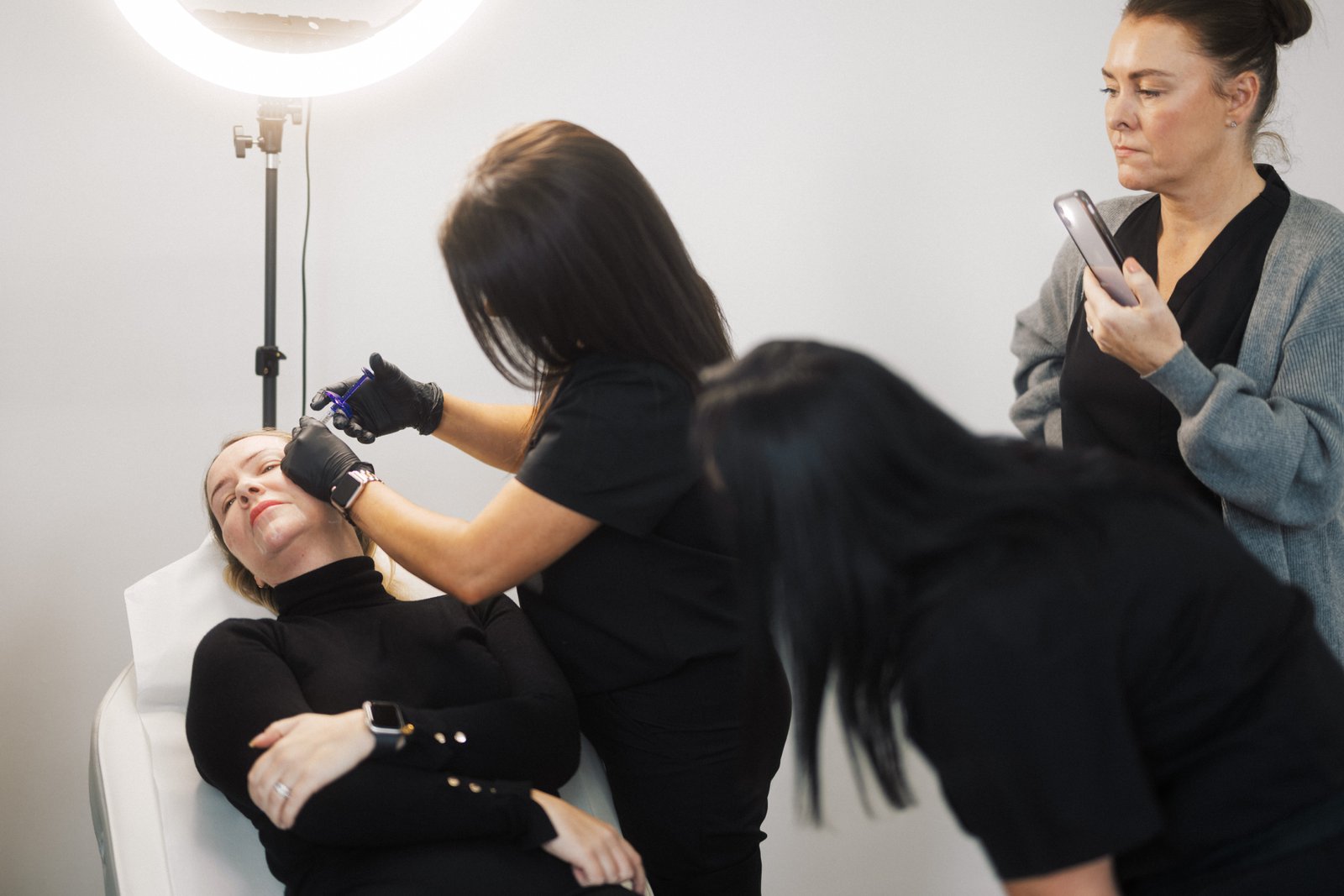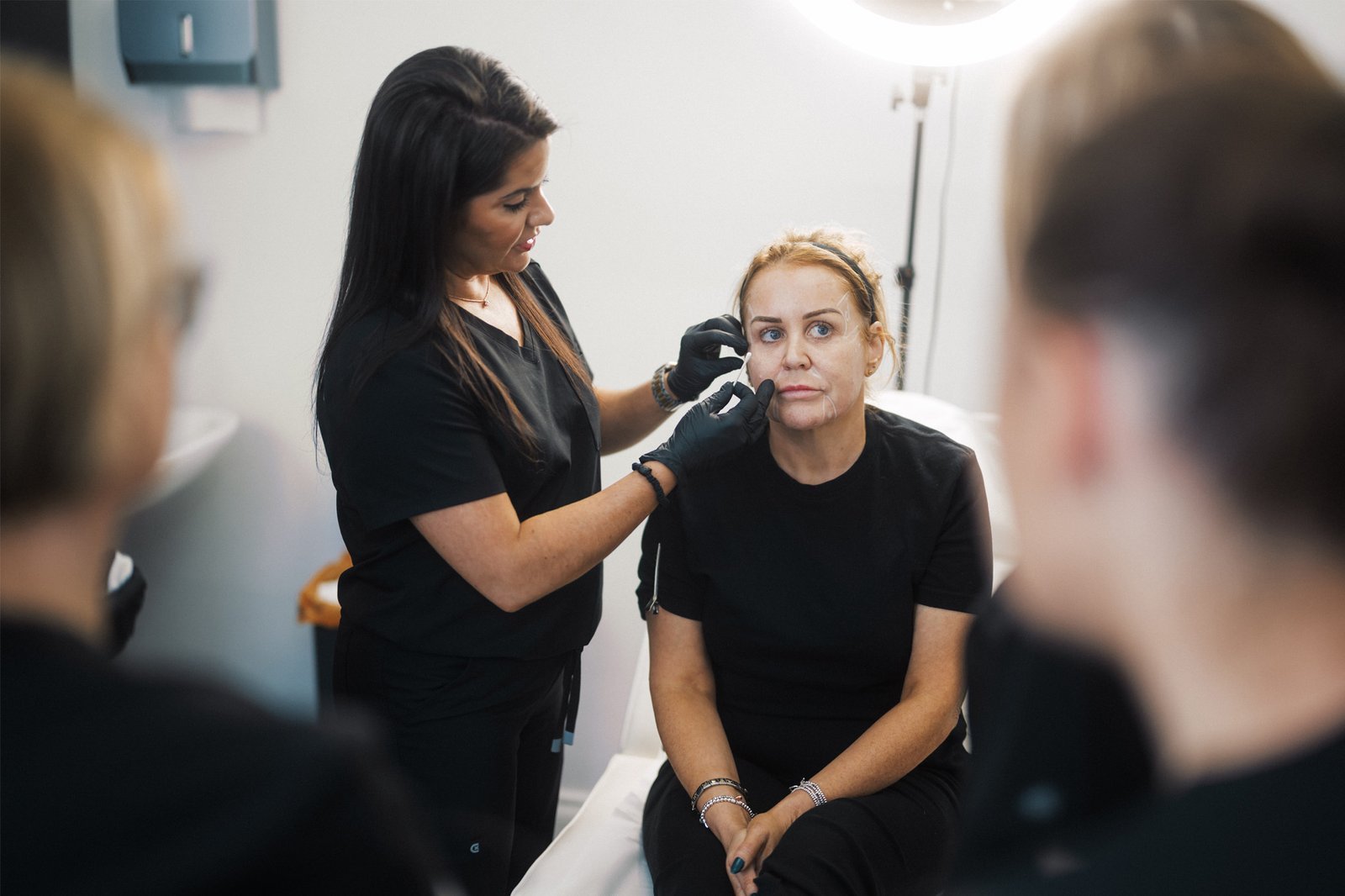
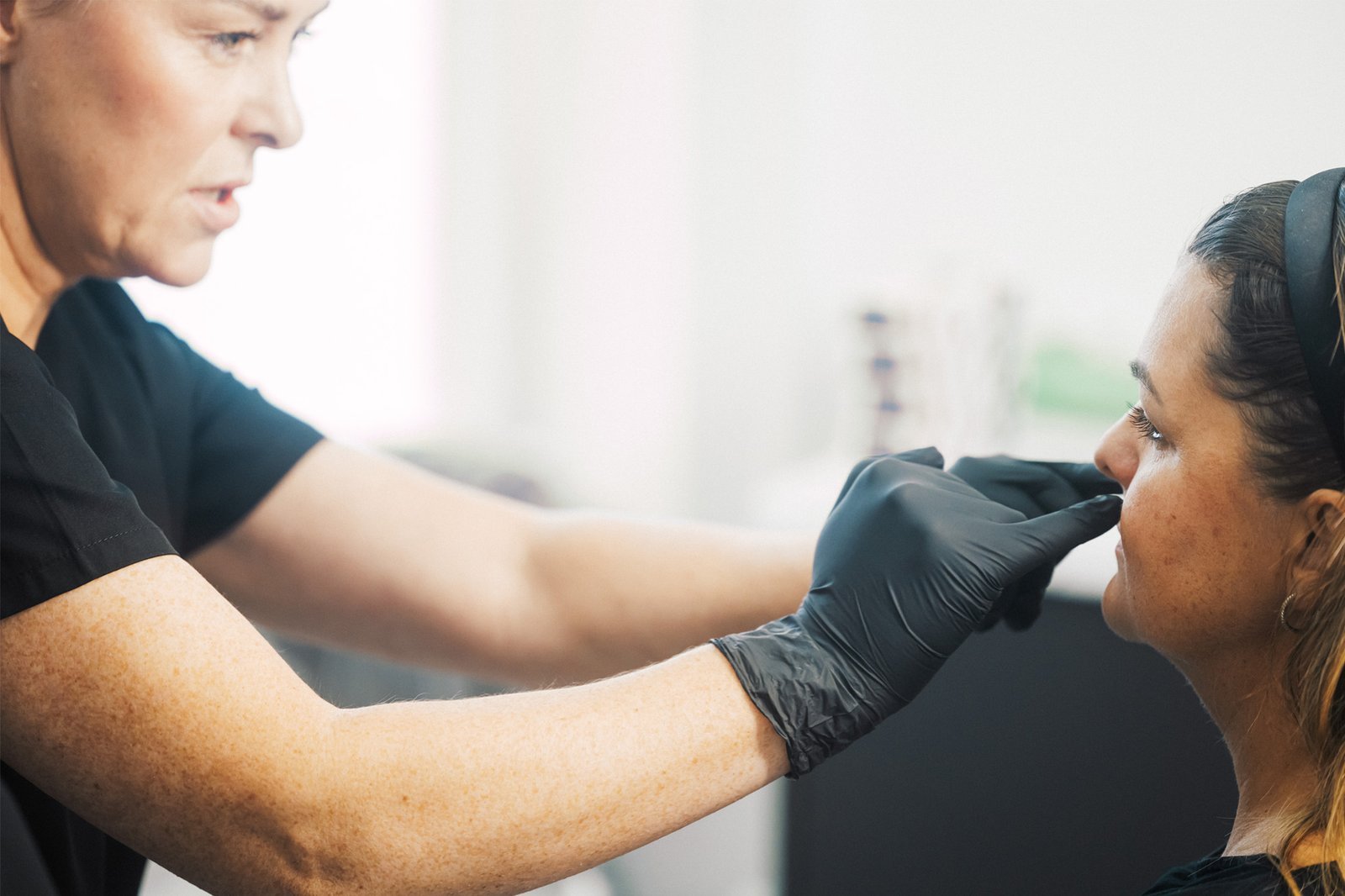
For many healthcare professionals, leaving the structure of the NHS and stepping into aesthetics feels exciting, empowering, and unfamiliar all at once.
Whether you are a nurse, doctor, dentist, or allied health professional, transitioning into aesthetics means redefining how you work, how you make decisions, and how you see yourself professionally.
The rise of the aesthetics industry has encouraged more professionals to explore a medical aesthetics career change, particularly those looking for greater flexibility, autonomy, and financial growth.
However, the reality is that aesthetics is not simply an extension of clinical work. It requires a different approach to patient care, communication, risk management, and business ownership.
For professionals considering an aesthetic career in Scotland, the journey involves much more than attending a course and learning injection techniques.
It is about evolving into a confident practitioner who can combine medical knowledge with artistry, emotional intelligence, and entrepreneurial thinking.
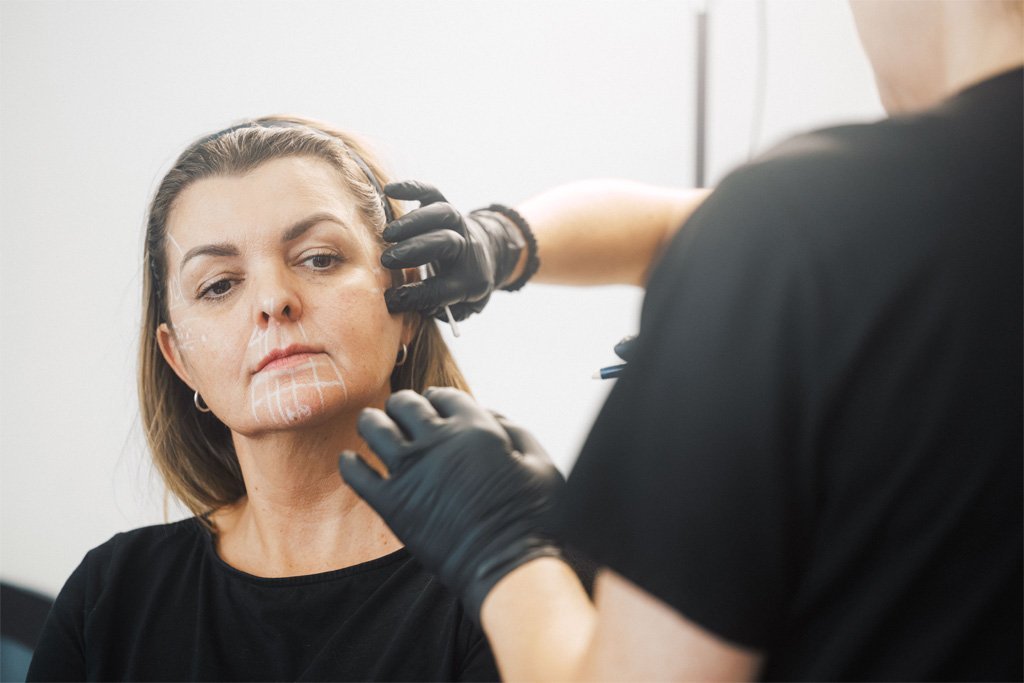
This transition can feel challenging because the NHS environment often provides clear systems, defined roles, and organisational support. In contrast, independent aesthetic practice places much more responsibility directly on the practitioner.
The shift into aesthetics is therefore not only about clinical competence; it is about personal and professional transformation.
From structure to autonomy
One of the biggest differences between NHS work and aesthetics is the move from structured systems to personal autonomy.
Within the NHS, practitioners typically work within established protocols, defined clinical pathways, multidisciplinary teams, and clear organisational governance structures.
Responsibilities are often shared among departments and colleagues, while routines and expectations remain relatively predictable from day to day.
Aesthetic practice operates very differently.
In an independent clinic setting, you often become the primary decision-maker. There may not be a senior colleague available for immediate guidance, and the responsibility for patient outcomes sits far more directly with you.
NHS vs aesthetic practice
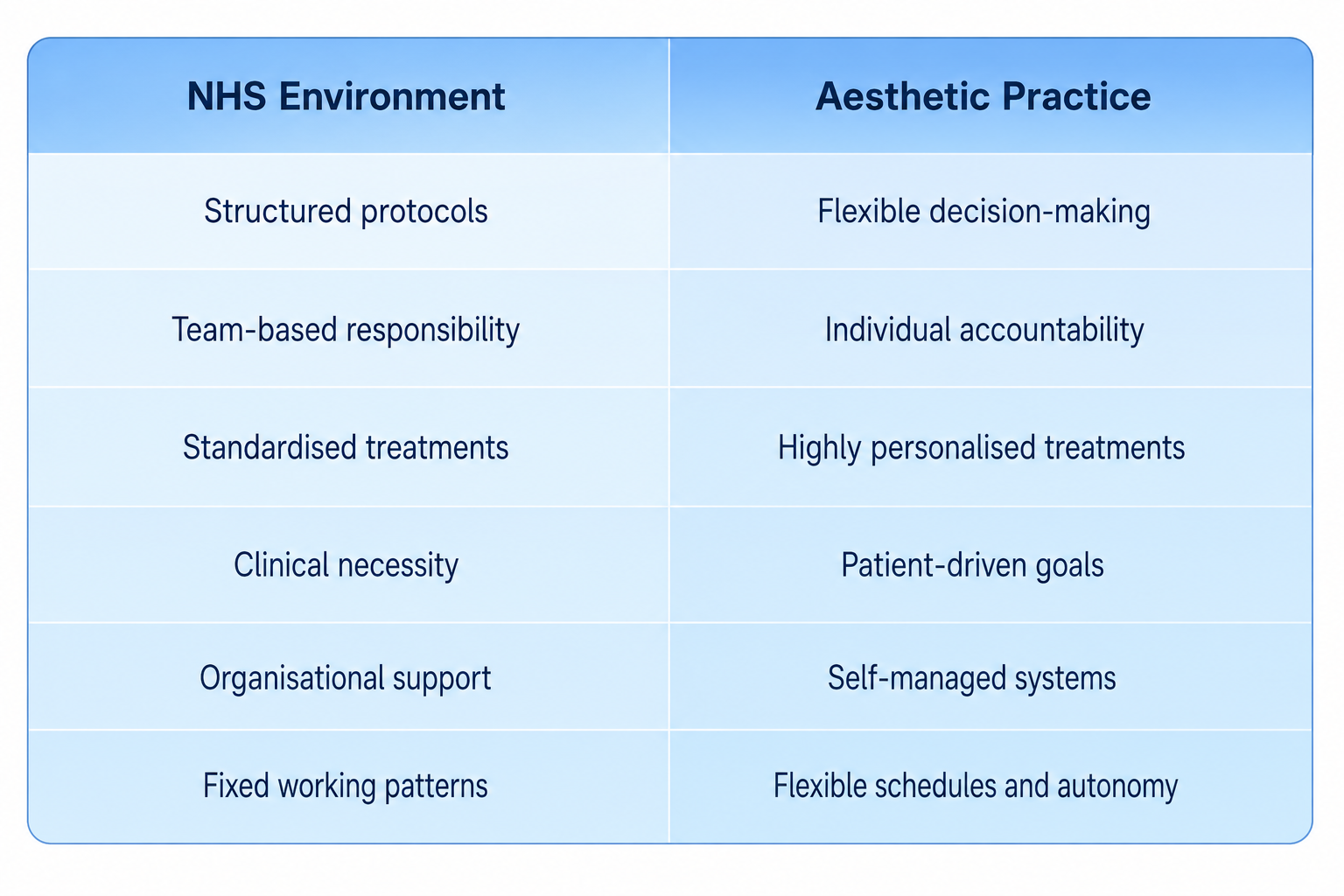
This independence is one of the biggest attractions for professionals pursuing an aesthetic career in Scotland, but it can also feel overwhelming initially.
The transition particularly impacts professionals moving from hospital or ward-based environments, where decisions are often collaborative and guided by institutional frameworks.
In aesthetics, practitioners must learn to become comfortable with uncertainty and nuanced decision-making.
The shift in daily practice:
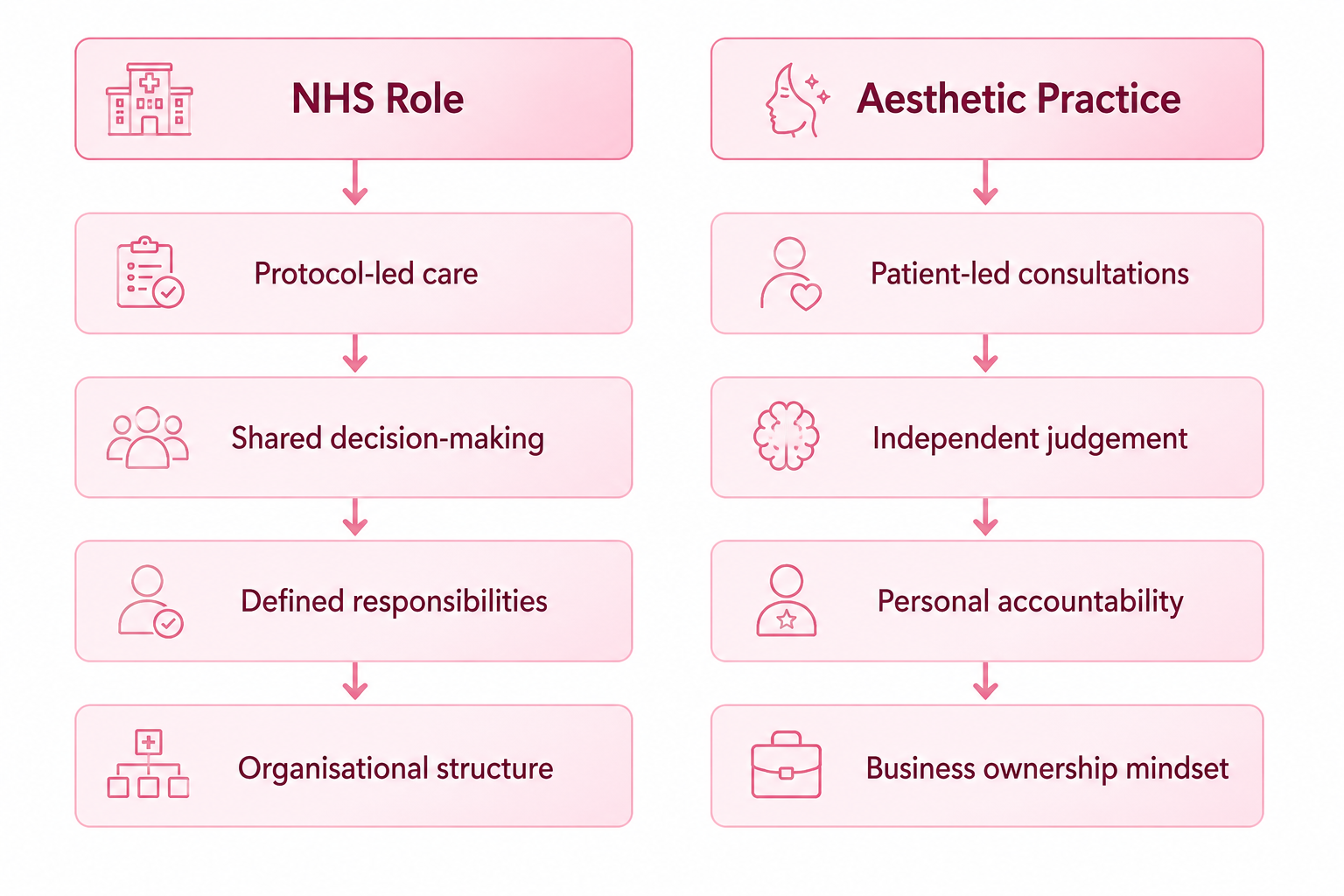
This is why successful transitions for nurses into aesthetics involve more than technical training. They require practitioners to become adaptable, proactive, and self-directed.
Ownership & responsibility
In aesthetics, your name, judgement, and reputation become directly attached to every patient outcome.
This level of ownership can feel unfamiliar for professionals coming from highly regulated healthcare systems. While governance still matters greatly in aesthetics, much of the day-to-day accountability becomes personal.
As an aesthetic practitioner, responsibility extends across every stage of the patient journey.
This includes consultations, treatment planning, clinical decision-making, consent processes, complication management, ethical boundaries, patient satisfaction, and long-term professional trust.
This requires a strong aesthetic practitioner mindset, where clinical confidence is balanced with caution and professionalism.
Unlike NHS treatment pathways, aesthetic outcomes are influenced not only by clinical safety but also by patient perception, emotional expectations, confidence levels, communication quality, and the strength of trust developed during consultations.
Developing this judgement takes time, mentorship, and reflective experience.
For those pursuing aesthetic training in Scotland, strong education providers increasingly focus not only on treatment techniques but also on consultation skills, complication management, ethics, and patient assessment.
Beyond technique
Many healthcare professionals assume aesthetics is primarily about injections and technical precision. In reality, technical skill is only one part of becoming a successful practitioner.
The practitioners who thrive long-term are often those who master communication, patient psychology, and confidence.
Skills that matter beyond injecting
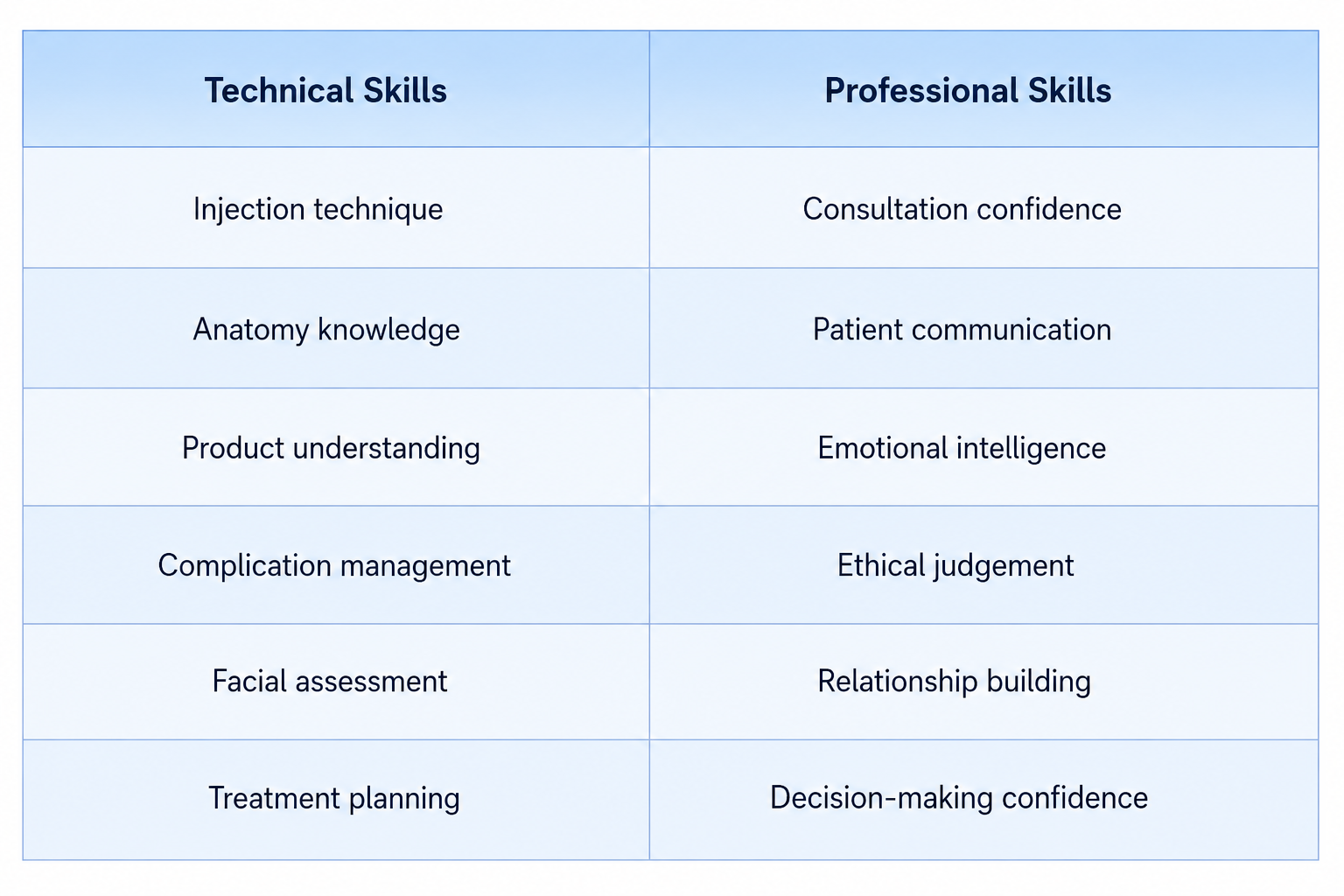
Patients often remember how you made them feel more than the technical details of the procedure.
Strong communication helps practitioners build trust quickly, understand patient motivations, manage expectations effectively, and handle concerns professionally throughout the treatment process.
Confidence is another major area of development.
In NHS environments, confidence is often supported by systems, colleagues, and established pathways. In aesthetics, confidence must come from your own preparation, judgement, and experience.
This is where the aesthetic practitioner mindset becomes essential.
Confidence in aesthetics does not mean overpromising or appearing flawless. Instead, it comes from understanding your limitations, communicating honestly, remaining calm under pressure, continuing to learn consistently, and making patient-centred decisions.
For many professionals making a medical aesthetics career change, this internal growth is one of the most transformative aspects of the journey.
Building your identity
Common misconceptions
One of the most damaging misconceptions about aesthetics is that it offers instant success with minimal effort. Social media often presents aesthetics as glamorous, financially effortless, and easy to enter. The reality is far more complex.
For many professionals transitioning from the NHS, the early stages can feel uncertain.
During the early stages, practitioners may experience slower patient growth, self-doubt, fear of complications, financial pressure, comparison with established practitioners, and difficulty building confidence.
This is completely normal.
The transition for nurses into aesthetics is often gradual rather than immediate. Many practitioners begin part-time while continuing NHS roles until they gain experience, confidence, and stability.
Despite the creative and cosmetic elements involved, practitioners must still maintain patient safety, ethical standards, ongoing education, clinical governance, and professional accountability at all times.
The most respected practitioners are usually those who approach aesthetics with humility, professionalism, and long-term commitment.
Quick success stories are rarely sustainable.
Long-term success is typically built through:
- Consistent learning
- Strong patient relationships
- Ethical practice
- Clinical confidence
- Professional reputation
This is why developing the right aesthetic practitioner mindset matters far more than chasing rapid financial results.
Conclusion
Success in aesthetics comes from who you become, not just what you learn. Transitioning from NHS roles into aesthetics is not simply about changing jobs;it is about evolving professionally.
The move requires practitioners to think differently, communicate differently, and take ownership in ways they may never have experienced before.
For those considering a medical aesthetics career change, the journey involves much more than technical training. It requires emotional intelligence, resilience, ethical judgement, and the willingness to grow continuously.
For professionals exploring an aesthetic career in Scotland, the opportunity can be incredibly rewarding, but only when approached with realistic expectations and long-term commitment.
High-quality aesthetic training in Scotland provides the foundation, but true success comes from experience, reflection, and personal growth.
Ultimately, aesthetics changes more than your career path. It changes how you think, how you lead, how you communicate, and how you define yourself as a practitioner.
And that transformation is what truly shapes long-term success.
Bibliography:
- Rikin – 2026 – Aesthetics Training for Doctors (2026 Guide) [online] Available at:
https://avantiaestheticsacademy.co.uk/aesthetics-for-doctors - Mike Sherwood – 2026 – The Honest Guide to Aesthetic Training Courses in the UK [online] Available at:
https://dermainstitute.co.uk/the-honest-guide-to-aesthetic-training-courses-in-the-uk/ - Dr James Olding – 2026 – How to Get Started in Aesthetics as a Doctor [online] Available at:
https://interfaceaesthetics.co.uk/how-to-get-started-in-aesthetics-as-a-doctor/ - Ellen Cummings – 2025 – Government to regulate aesthetic procedures with new licensing and safety measures [online] Available at:
https://professionalbeauty.co.uk/government-aesthetic-treatment-regulation-licensing