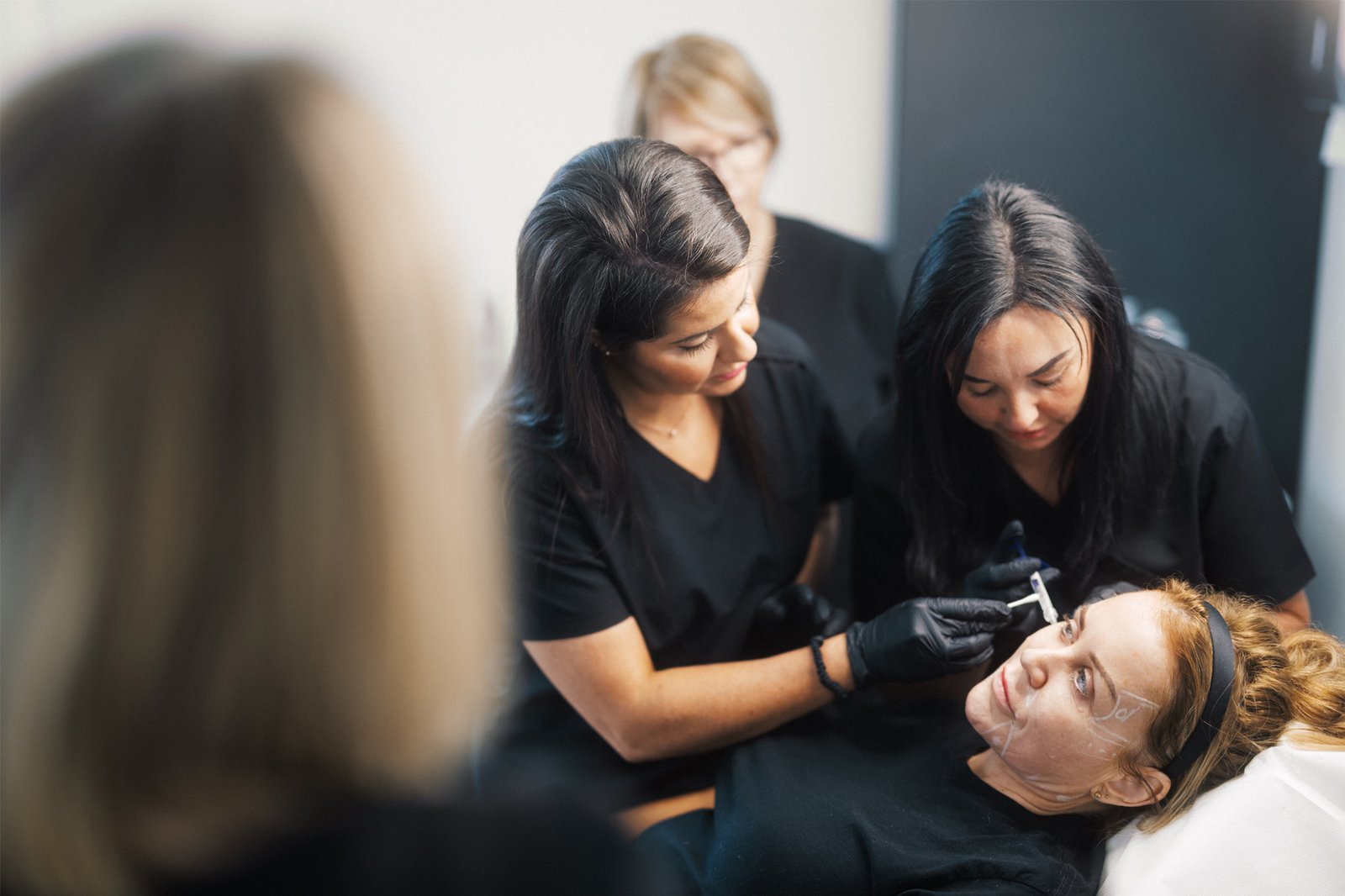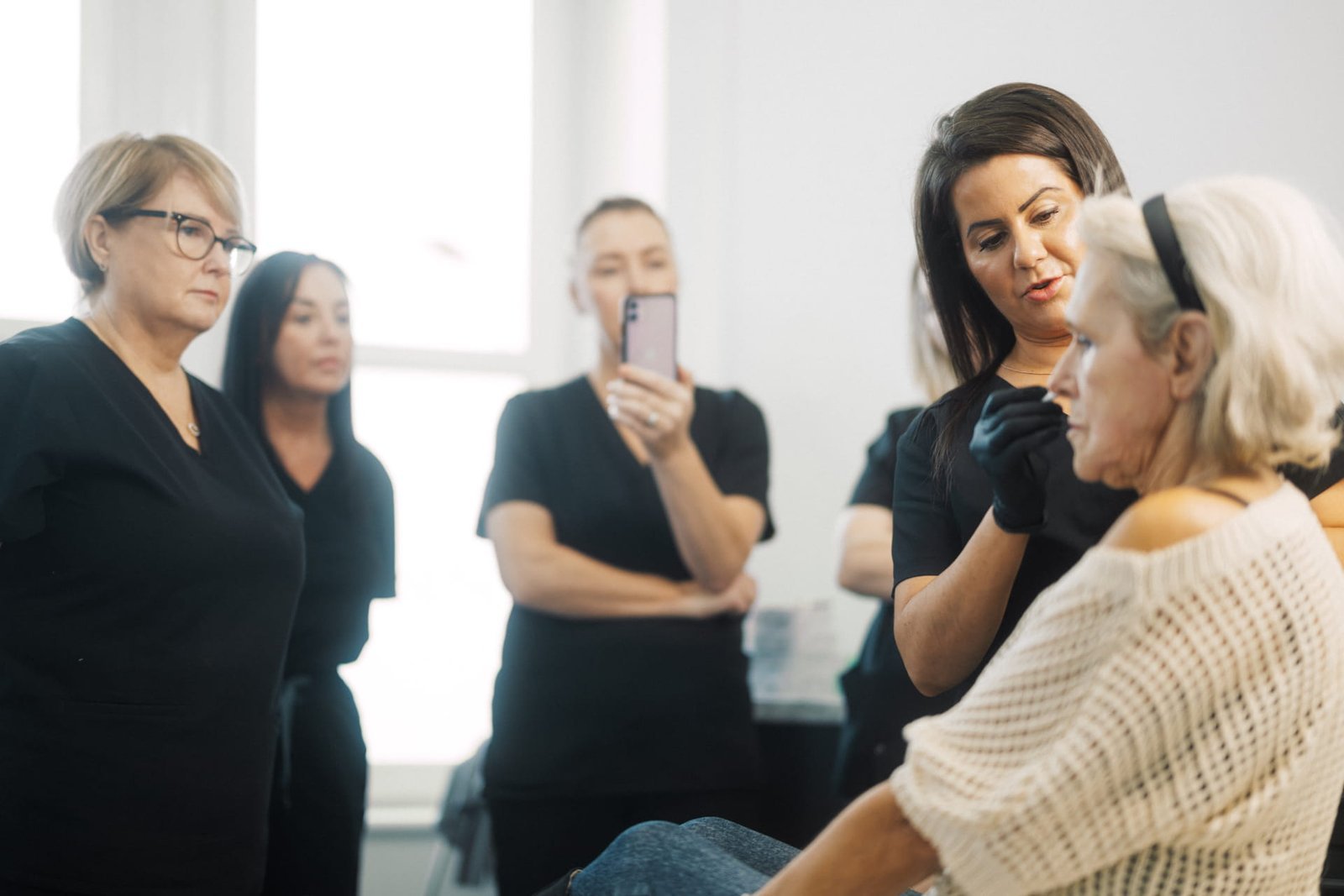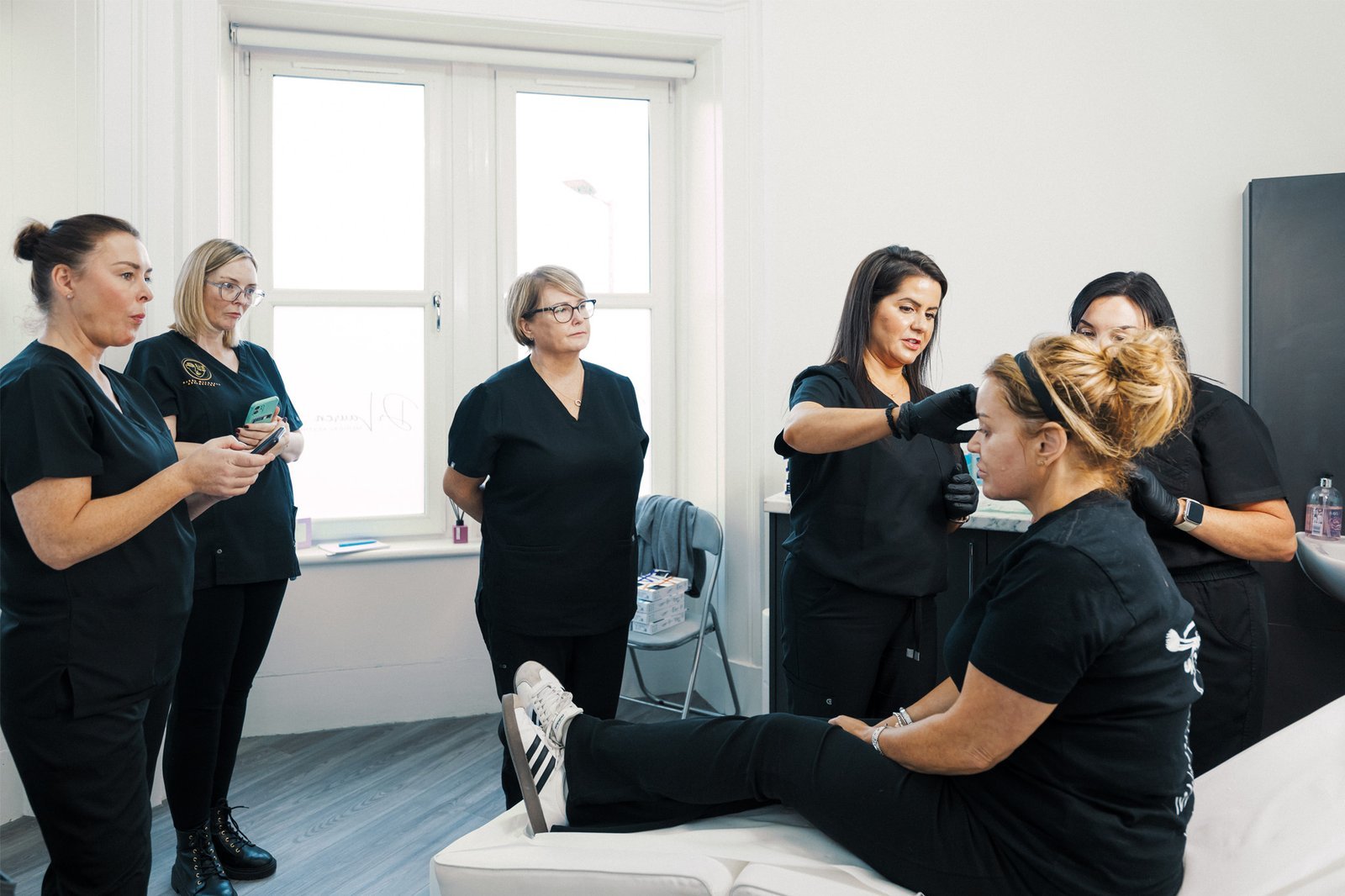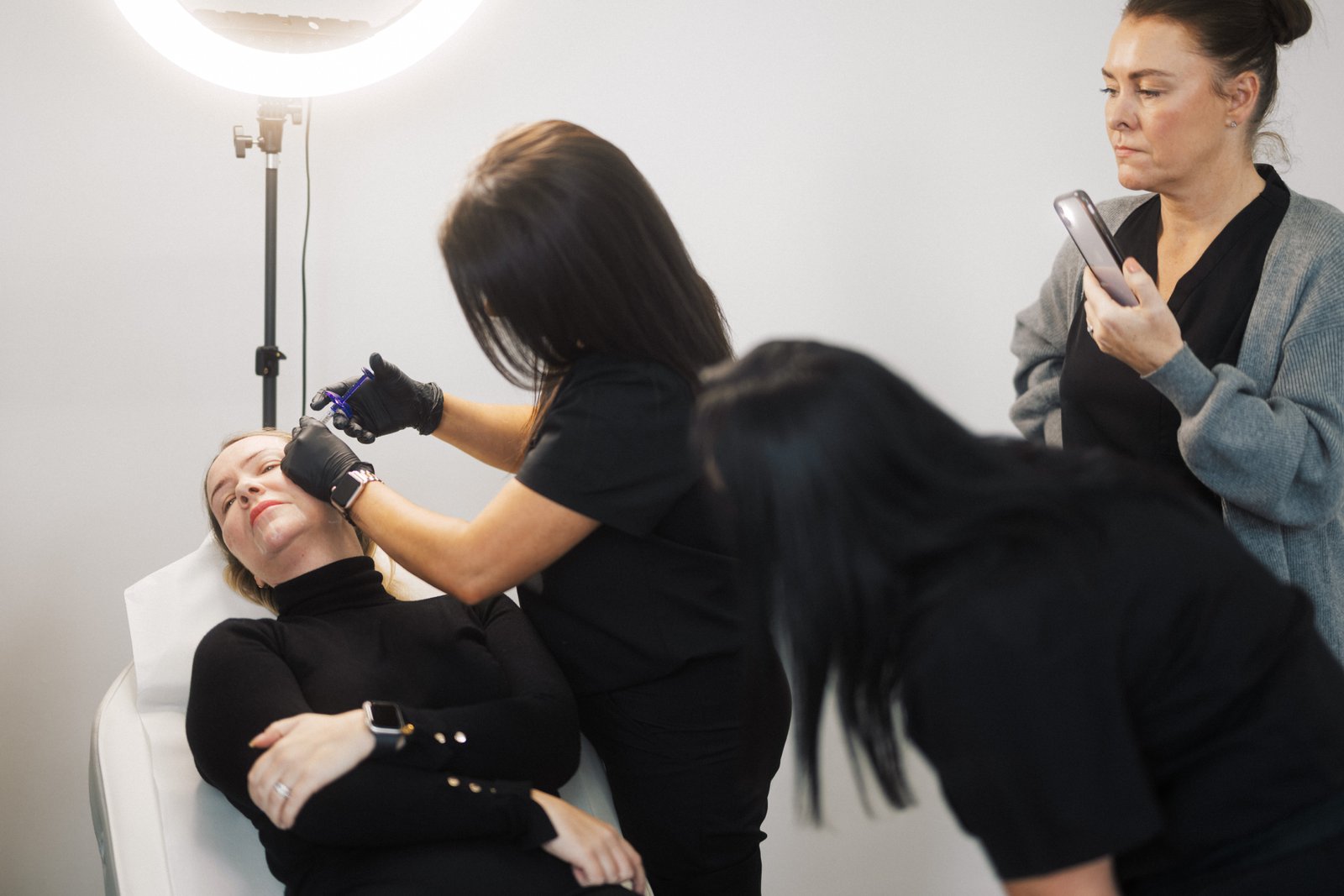
In aesthetic medicine, conversations often revolve around technique. Practitioners discuss needle angles, injection depths, product rheology, cannula versus needle choice, and advanced placement methods.
These technical skills are undeniably important. Precision matters. Safety matters. Experience matters.
However, outcomes are often determined long before the syringe is opened or the first mark is made. The most natural, balanced, and long-lasting results rarely come from technique alone.
They come from careful observation, sound judgement, and a clear treatment strategy.
This is where aesthetic treatment planning becomes essential. It bridges the gap between knowing how to perform a procedure and knowing whether, where, when, and why it should be performed.
A practitioner may deliver flawless injections technically, yet still create an unnatural or disappointing result if the wrong treatment is chosen. In contrast, a clinician with strong planning skills can often achieve elegant outcomes with subtle interventions.
What is treatment planning?
Treatment planning is the structured clinical process that happens before any procedure begins. It involves analysing the patient as a whole rather than focusing on a single complaint.
A patient may request lip filler, jawline definition, or wrinkle reduction. But treating only the requested area without understanding the wider facial picture can lead to imbalance.
Effective facial assessment aesthetics includes:
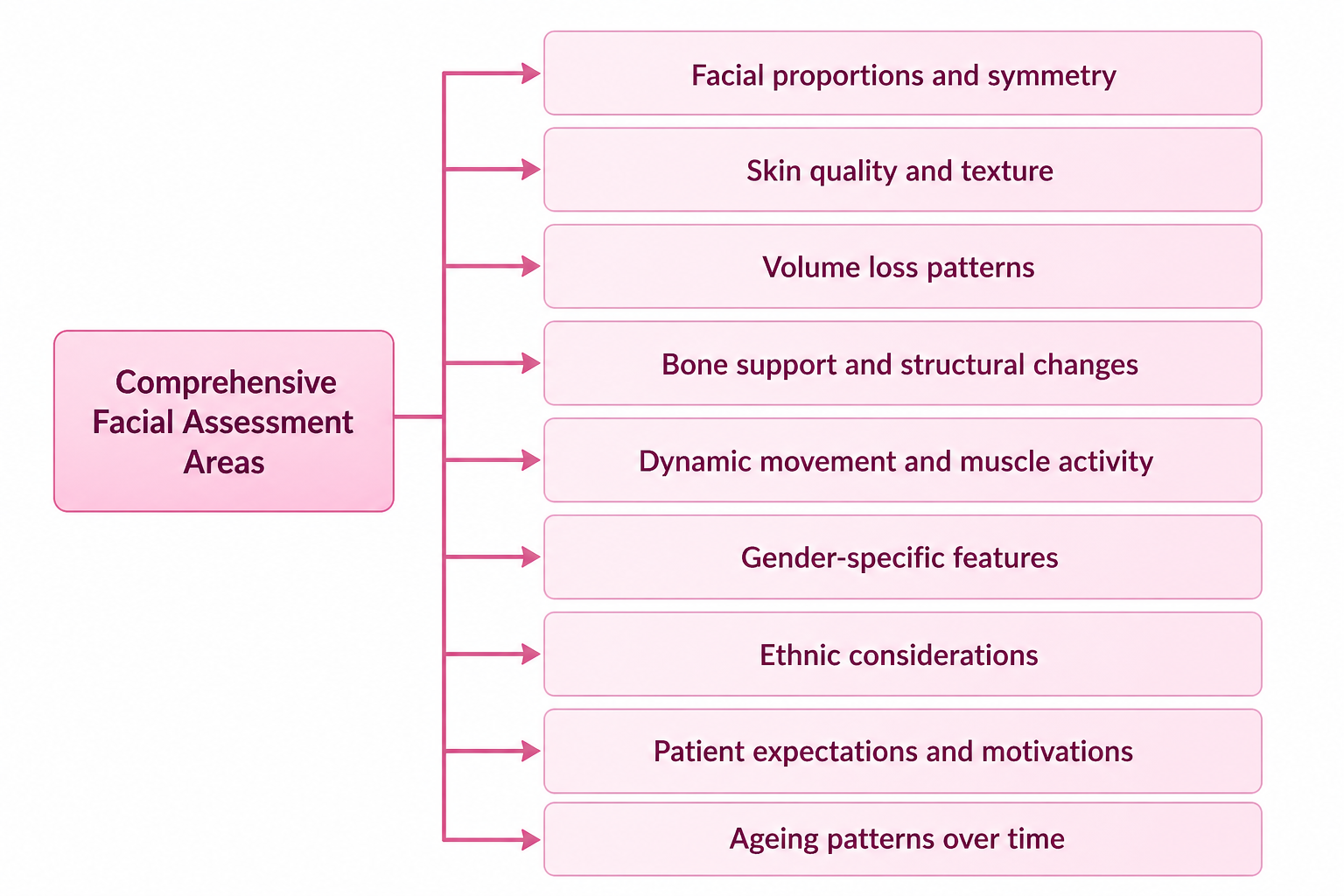
Rather than reacting to one concern, treatment planning creates a roadmap.
Core components of a strong treatment plan:
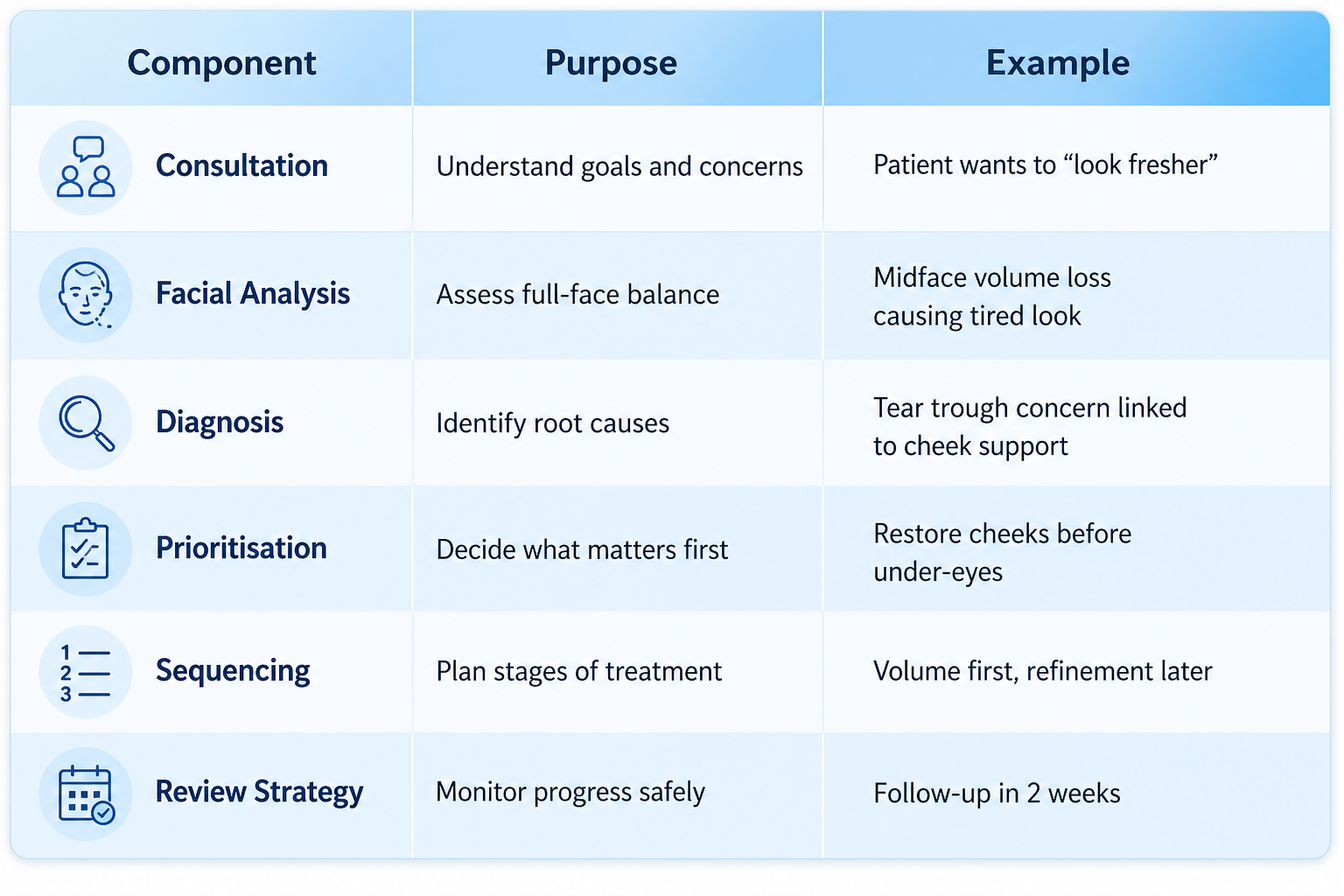
This structured process is the foundation of aesthetic decision making.
Why technique alone isn’t enough
Technical excellence cannot compensate for poor judgement.
A clinician may place filler smoothly, evenly, and safely, but if too much product is used, if the wrong area is prioritised, or if treatment ignores facial harmony, the result can still look overdone.
Technique answers the question:
Can this be done well?
Planning answers the more important question:
Should this be done at all?
Common problems when planning is missing:
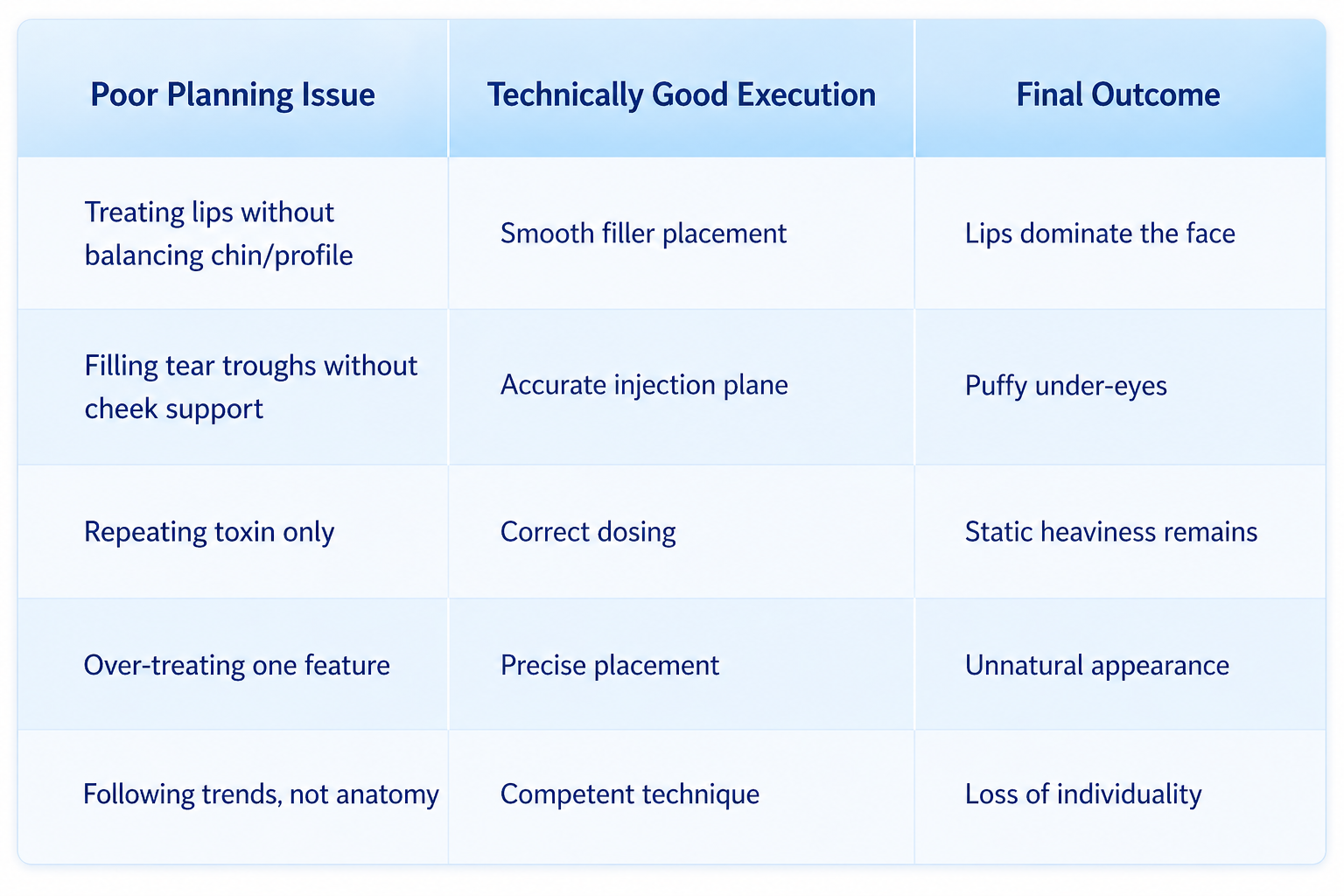
This is especially relevant for patients seeking how to get natural results in aesthetics. Natural outcomes are rarely achieved by adding more products. They come from restraint, proportion, and intelligent planning.
Even the best technical injector can create poor results if they only respond to requests rather than diagnose needs.
Clinical thinking: the skill behind great results
Clinical thinking is what separates a technician from a clinician.
It includes judgement, pattern recognition, prioritisation, and the ability to adapt treatment to the person in front of you.
Key elements of clinical thinking:
1. Decision-making
Not every concern needs injectable treatment. Some patients need skincare, energy-based devices, weight stabilisation, or surgery referral instead.
Good aesthetic decision making means selecting the right modality, not just the available one.
2. Sequencing
The order of treatment matters. For example:
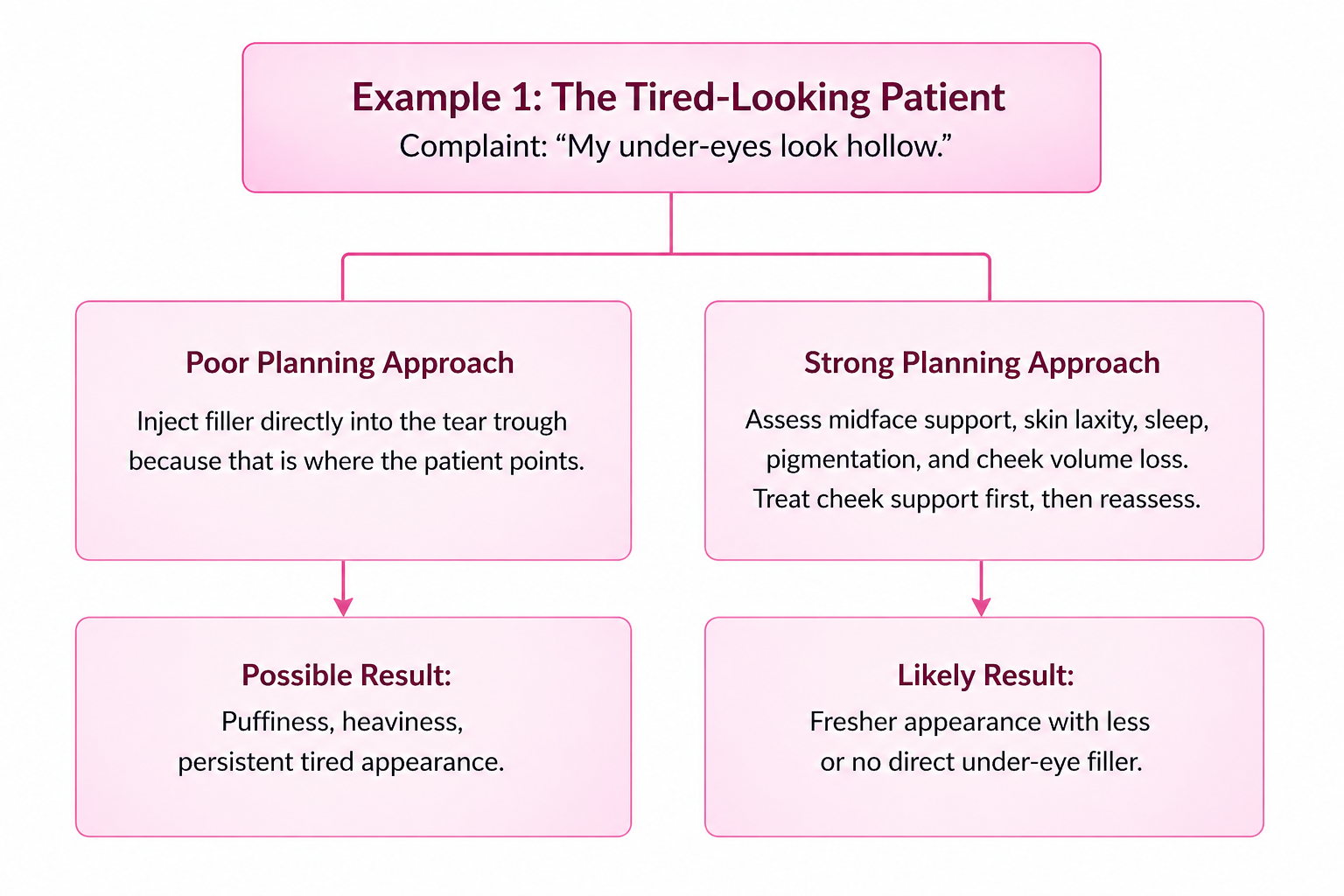
- Midface support before nasolabial folds
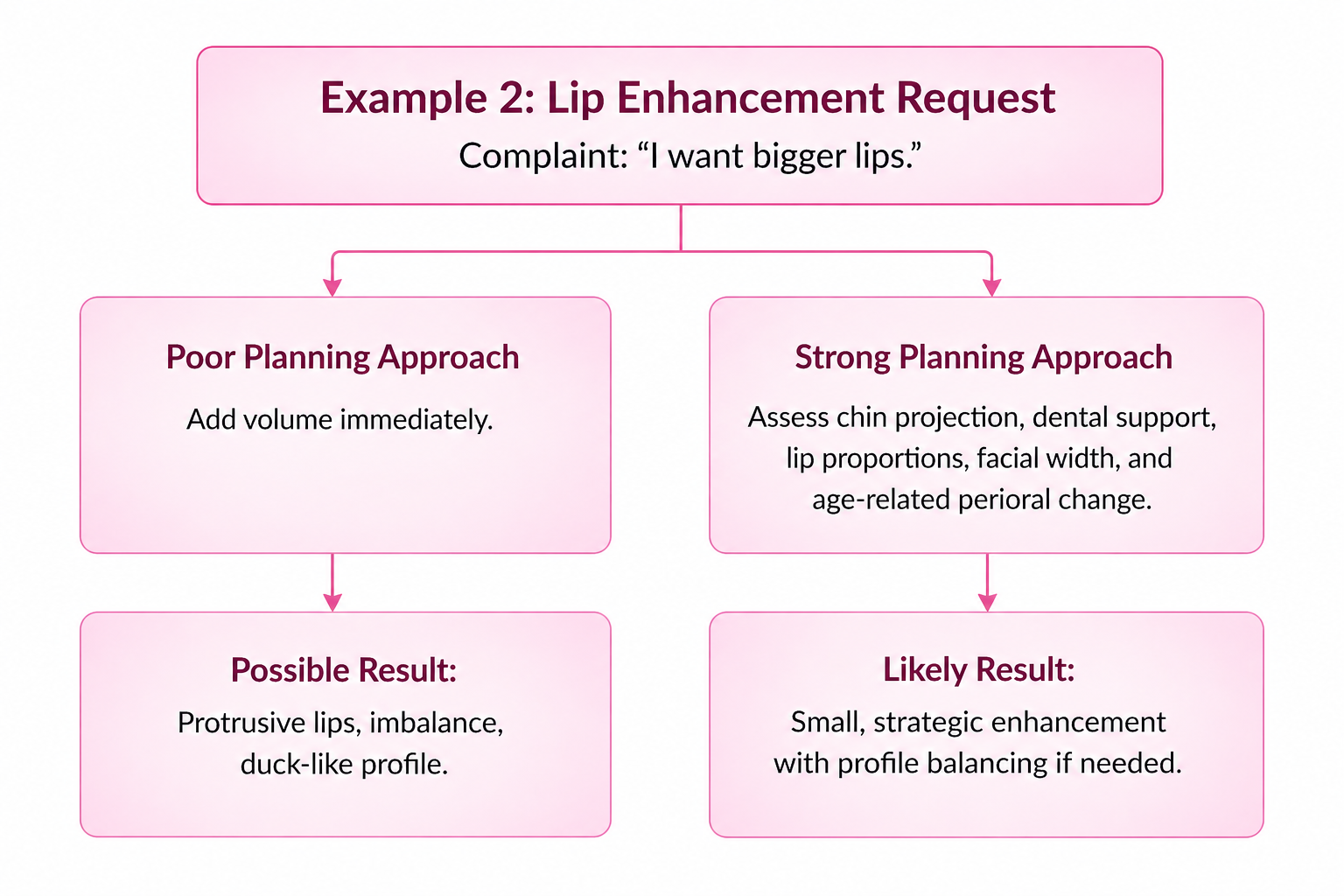
- Chin projection before lip balancing
- Skin quality before detailed contouring
- Toxin before filler in some upper-face cases
Treating symptoms before causes often leads to wasted product and poor longevity.
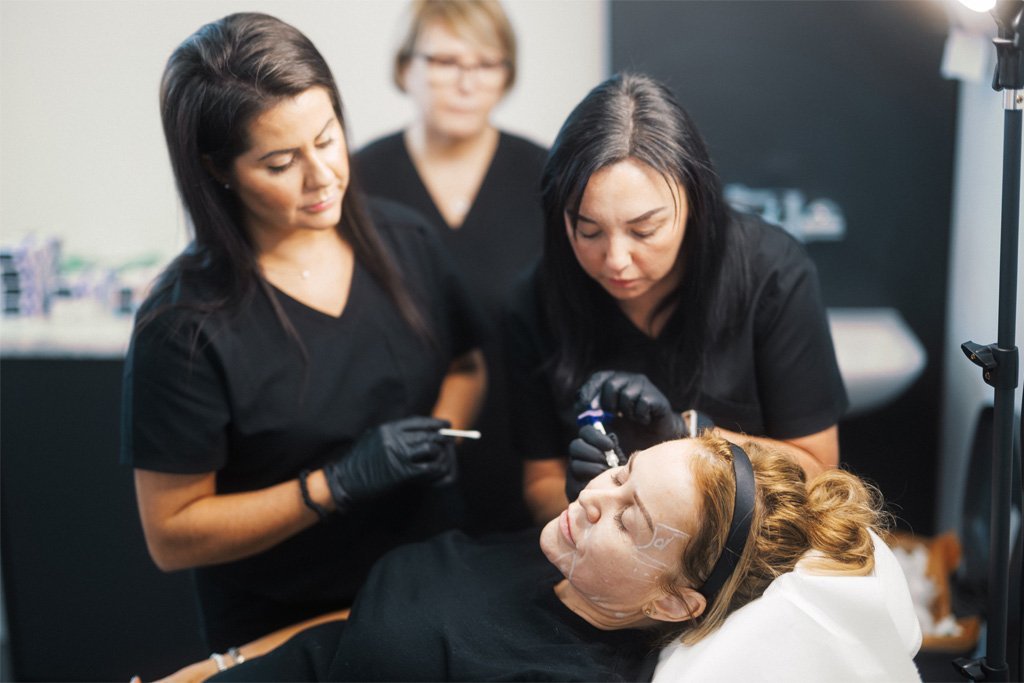
3. Knowing when not to treat
Sometimes the best decision is to decline treatment.
Examples include:
- Unrealistic expectations
- Body dysmorphic tendencies
- Pressure from social media trends
- Excessive prior treatment
- Requests that would worsen harmony
Saying “no” can be the most advanced skill in practice.
4. Long-term vision
Good clinicians think beyond today’s appointment. They consider how repeated treatments will affect appearance over months and years.
Will this patient still look balanced after three future top-ups?
Will cumulative filler migrate?
Will muscle weakening alter expression?
Planning protects long-term aesthetics.
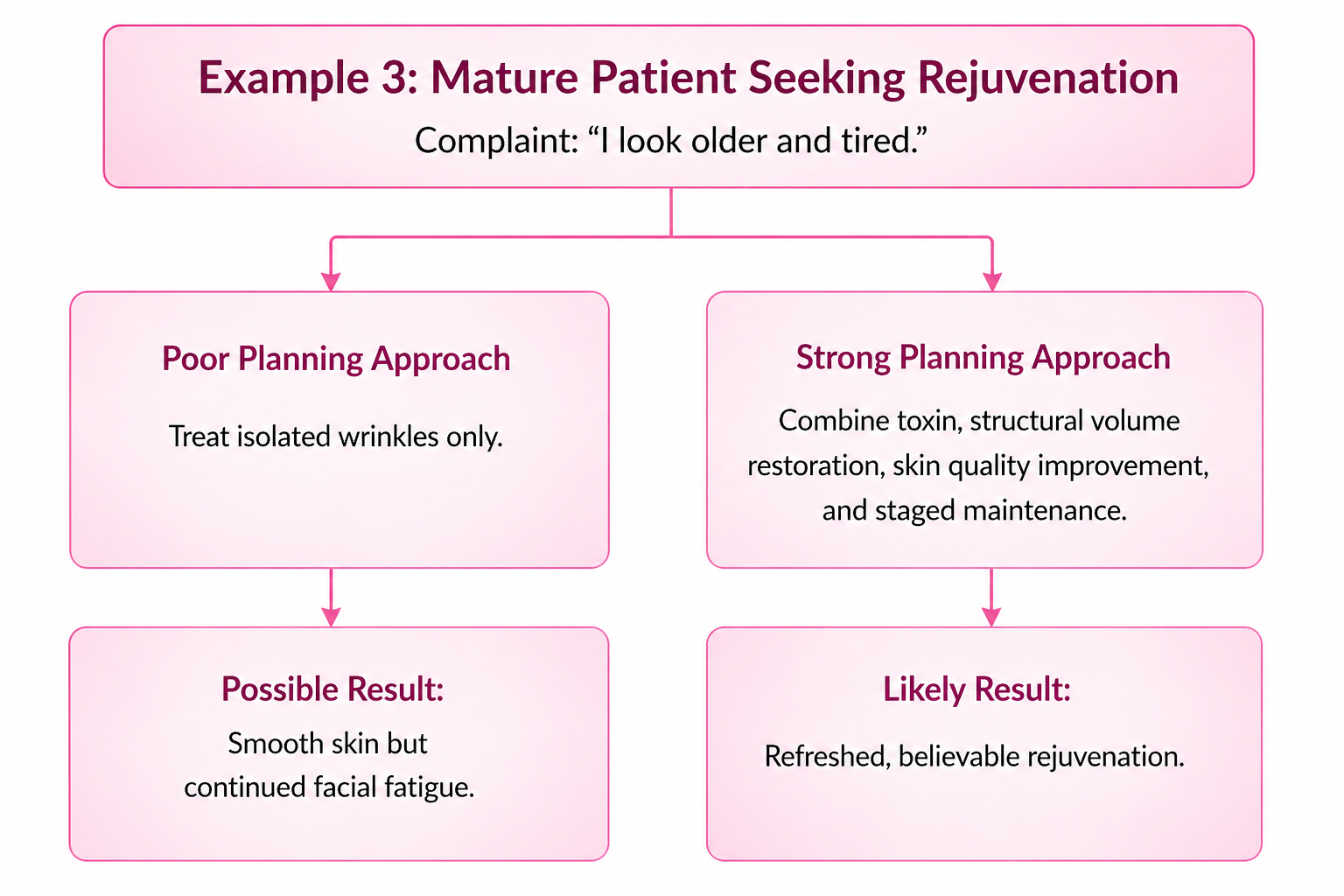
Real-world application
The difference between subtle and overdone outcomes is often planning, not product.
Conclusion
Technique is vital in aesthetics, but it is only part of the equation. Beautiful outcomes are not created solely by steady hands or advanced tools. They are created through assessment, judgement, restraint, and intelligent sequencing.
That is why aesthetic treatment planning deserves equal attention to injection technique. It transforms treatment from a procedure into a clinical strategy.
The most respected practitioners are not simply those who can do treatments well. They are those who know what to treat, when to treat it, how much to treat, and when to stop.
Therefore, in aesthetics strong results come from thinking, not just doing.
Bibliography:
- Sante – 2026 – Realistic Expectations: Aesthetic Treatment Results Explained [online] Available at:
https://santeclinics.com/blog/realistic-expectations-aesthetic-treatment-results - Harley Academy – 2026 – Why is Theory Vital for a Successful Aesthetics Career? [online] Available at:
https://www.harleyacademy.com/aesthetic-medicine-articles/why-is-theory-vital-for-a-successful-aesthetics-career/ - Beauty and Fly – 2025 – How to achieve natural-looking results with aesthetic treatments [online] Available at:
https://beautyandfly.com/how-to-achieve-natural-looking-results-with-aesthetic-treatments/ - Dr Azadeh Ovaici – 2025 – Why Seeing a Doctor for Aesthetic Treatments Matters: Medical Aesthetics Explained [online] Available at:
https://www.drazadeh.co.uk/medical-aesthetics-explained/ - AL Aesthetics – 2025 – The Benefits of a Personalised Treatment Plan in Aesthetic Medicine [online] Available at:
https://www.alaesthetics.co.uk/latest-news/benefits-of-a-personalised-treatment-plan-in-aesthetic-medicine