
Do you have that knot in your stomach filled with nervous energy that comes with starting something new? Every person out there, like you, who is considering aesthetic training recognises this mix of excitement, nerves, and self-doubt.
Many delegates spend months researching, reading, and weighing up their options before committing to a course.
Starting a medical aesthetic training course isn’t a small step.
It’s a professional and financial commitment, so feeling uncertain is completely normal. It doesn’t mean you’re not ready. It just shows a genuine desire to do things safely and ethically, which is exactly the mindset medical aesthetics requires.
To move beyond the nerves and make an informed decision, clarity matters. In this blog, we share practical aesthetic training advice to support informed decision-making, so you can confidently commit to a filler training course in Scotland that aligns with your goals, both financially and professionally.
Why Aesthetic Training Is Different from Beauty Courses
There is a common misconception that aesthetic training is simply an extension of beauty courses, but this could not be further from the truth. Medical aesthetic courses in the UK are a clinical discipline rooted in anatomy, physiology, pharmacology, and risk management [4].
This medical foundation distinguishes aesthetics training from beauty courses by placing patient safety and clinical judgement at its core [2].
It involves prescription-only medicines such as botulinum toxin and dermal fillers, which interact directly with facial muscles, nerves, and blood vessels [6]. As a result, inadequate training can carry serious medical consequences [2].
A strong understanding of facial anatomy is therefore essential within recognised medical aesthetic courses in the UK for delivering safe and natural results [2].
For this reason, reputable training providers are very specific about who can train and practise in aesthetics, requiring delegates to meet clear professional, ethical, and legal standards [1]. These requirements are fulfilled through medically led training delivered within established educational courses [2].
This structured, high-quality approach protects patients, builds practitioner confidence, and supports safe and responsible progression through Botox and filler training in Hamilton and across the UK [4].

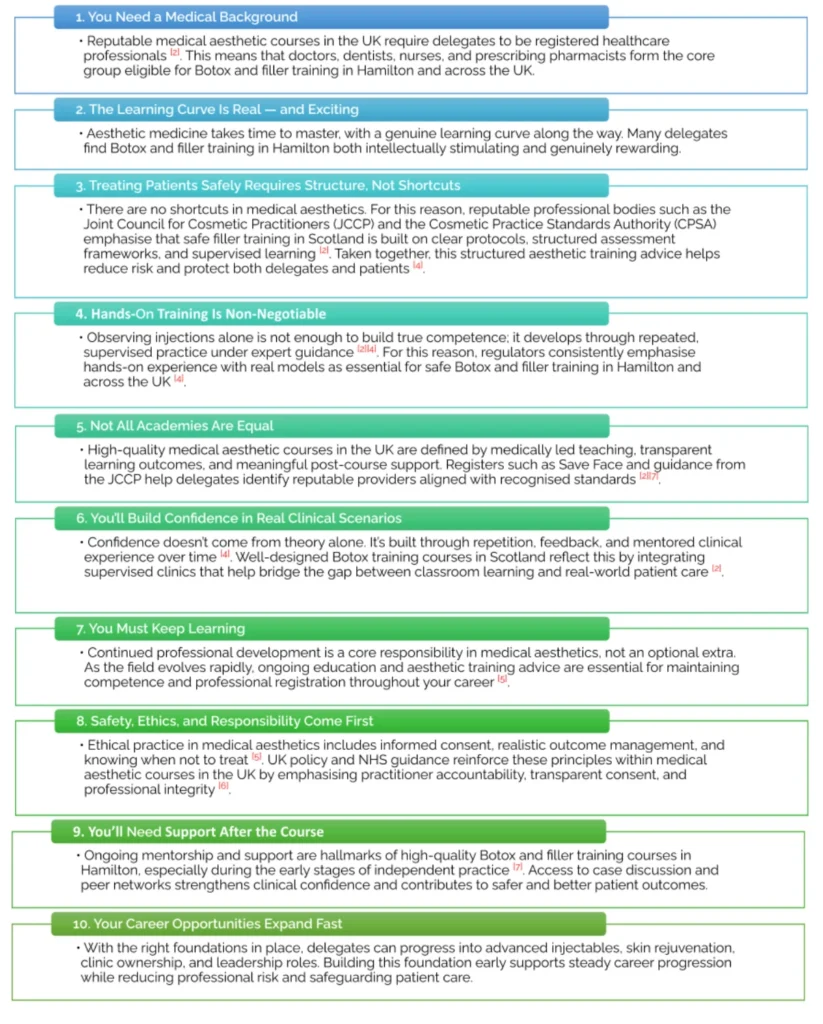
10 Key Things Every Delegate Should Know
Before committing to aesthetic training, it’s worth taking the time to understand what the journey involves and how to start aesthetic training in a way that feels right for you.
What to Look for in a Great Training Academy
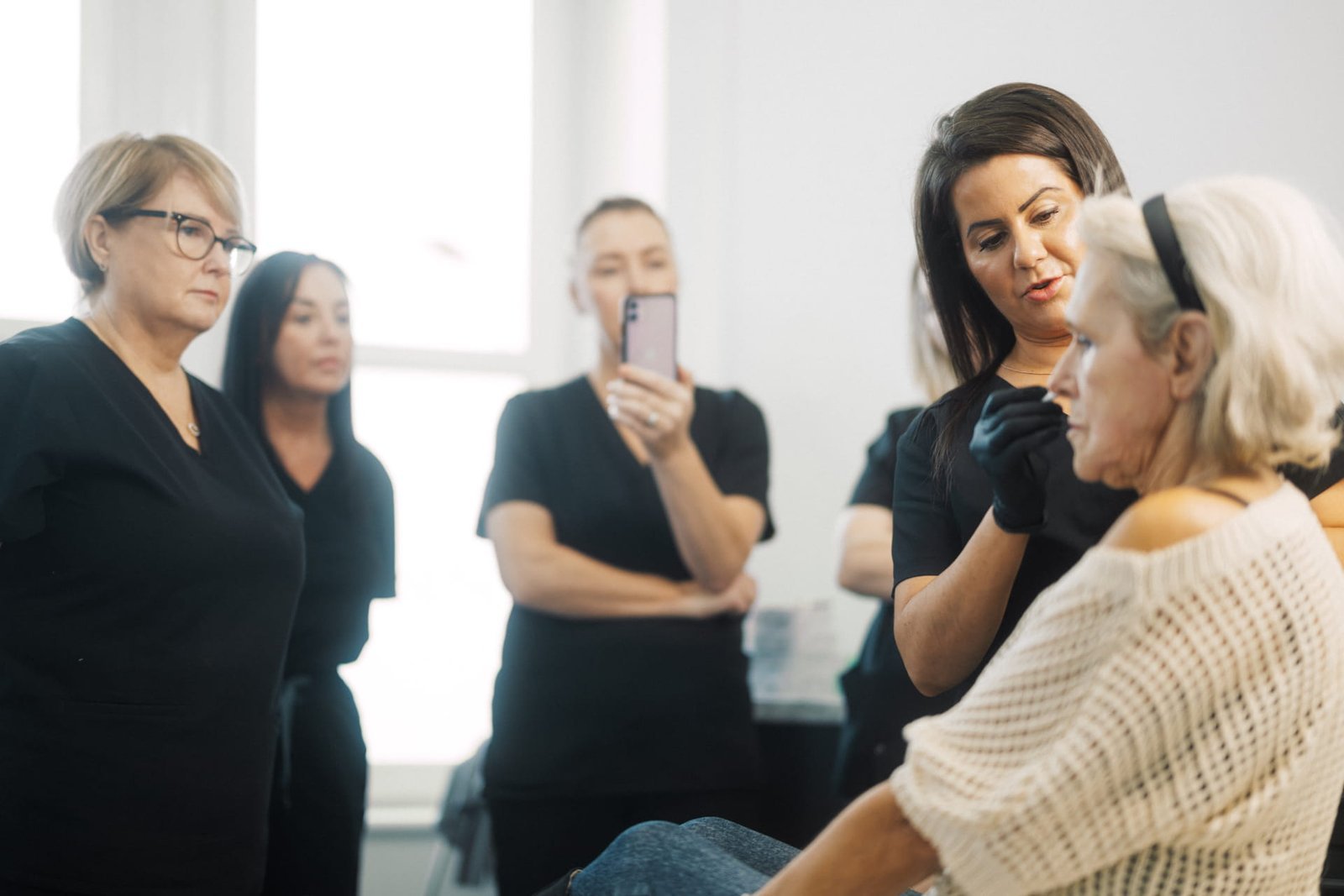
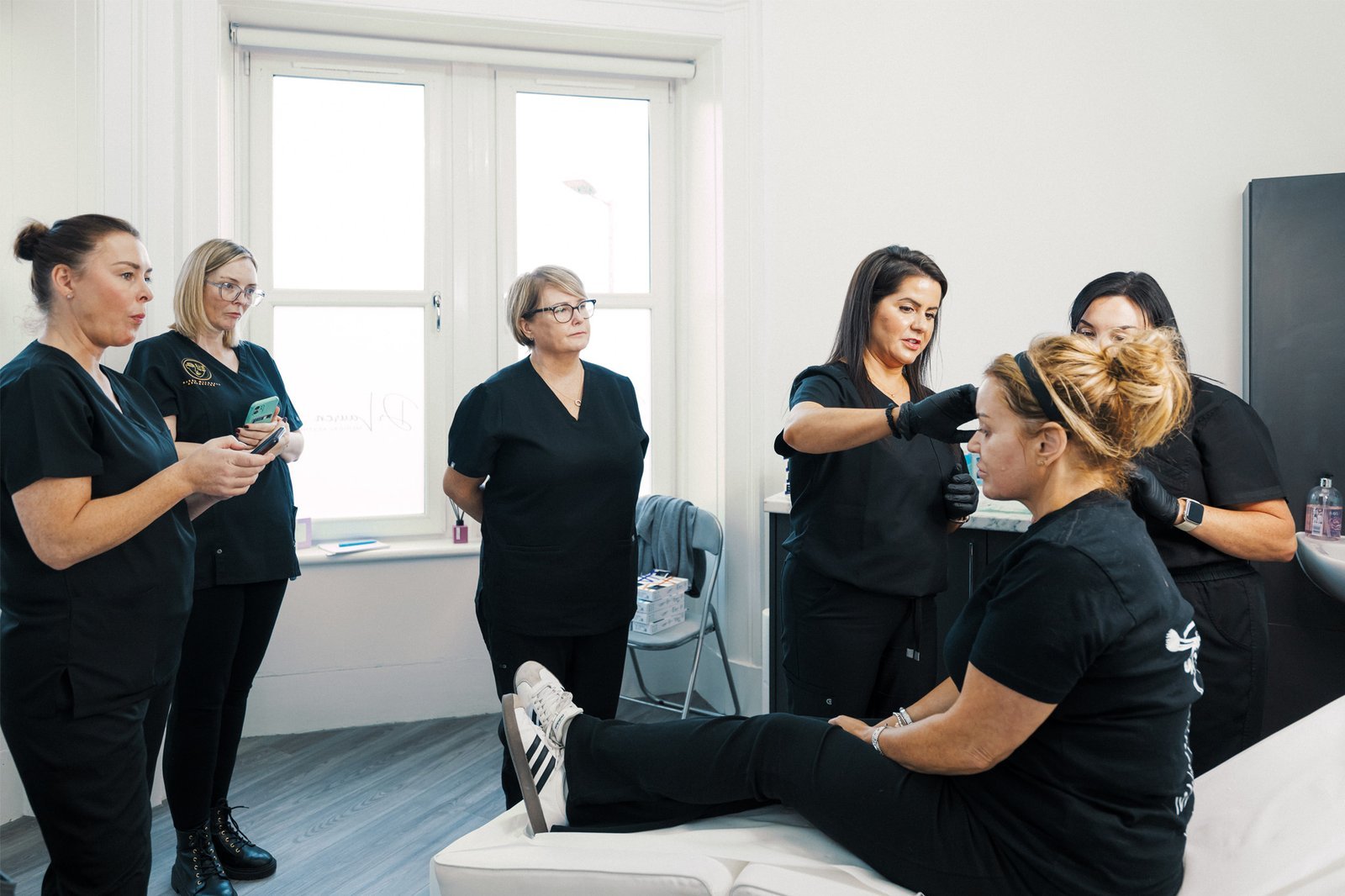
The strongest courses for Botox and filler training in Scotland combine evidence-based teaching guided by experienced medical professionals, in which training is delivered in small groups, allowing for close supervision and personalised feedback [2][4].
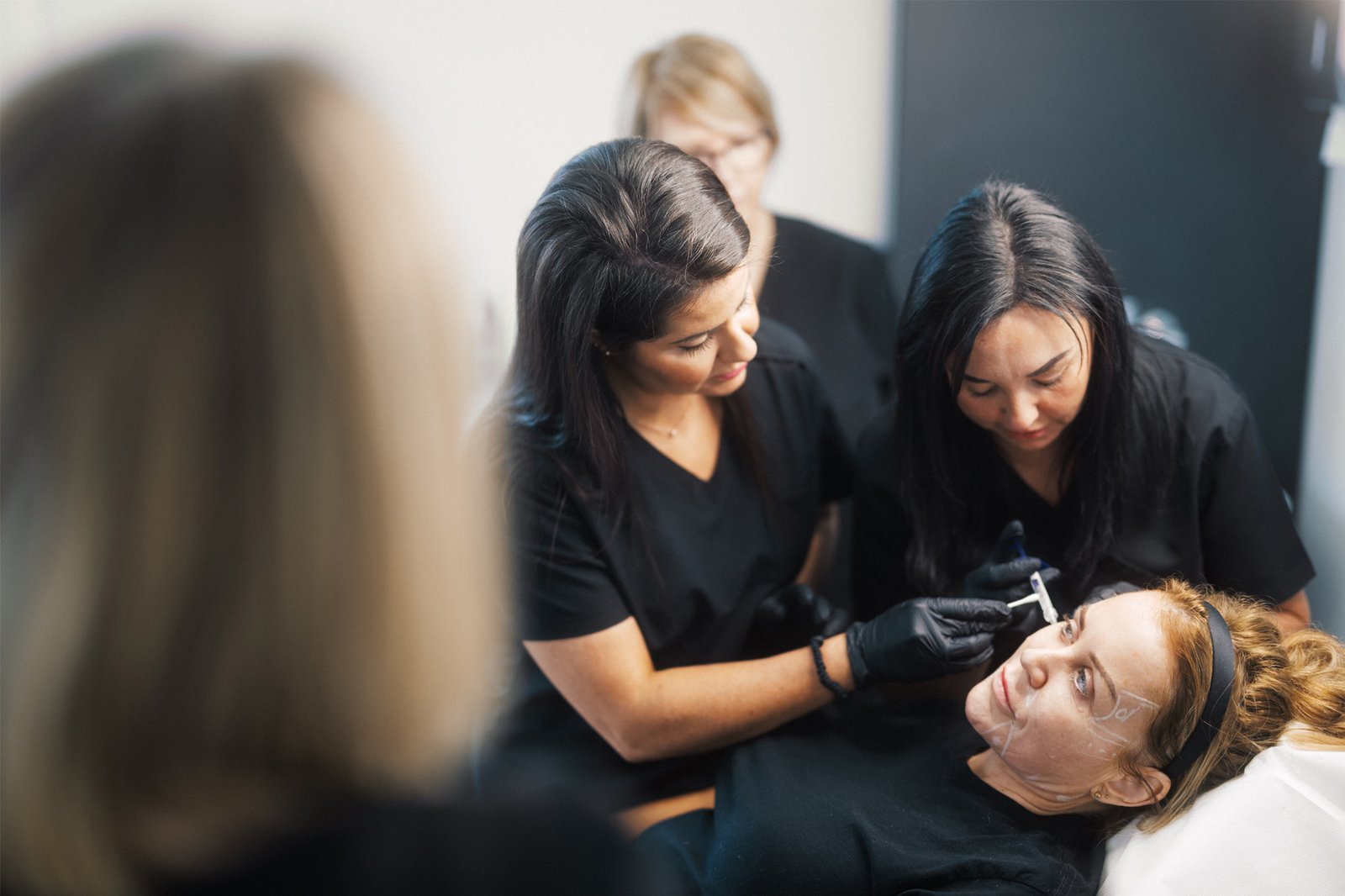
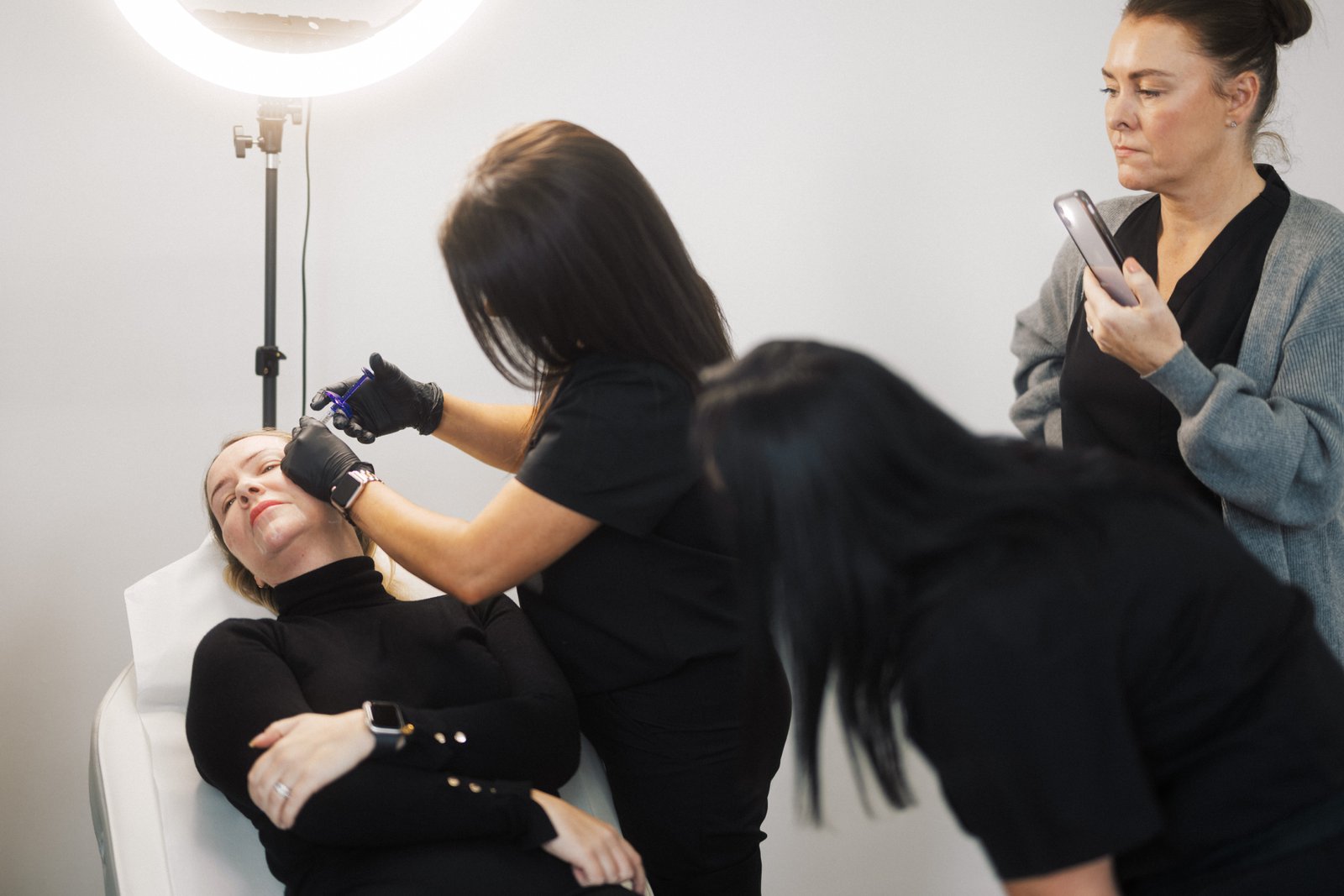
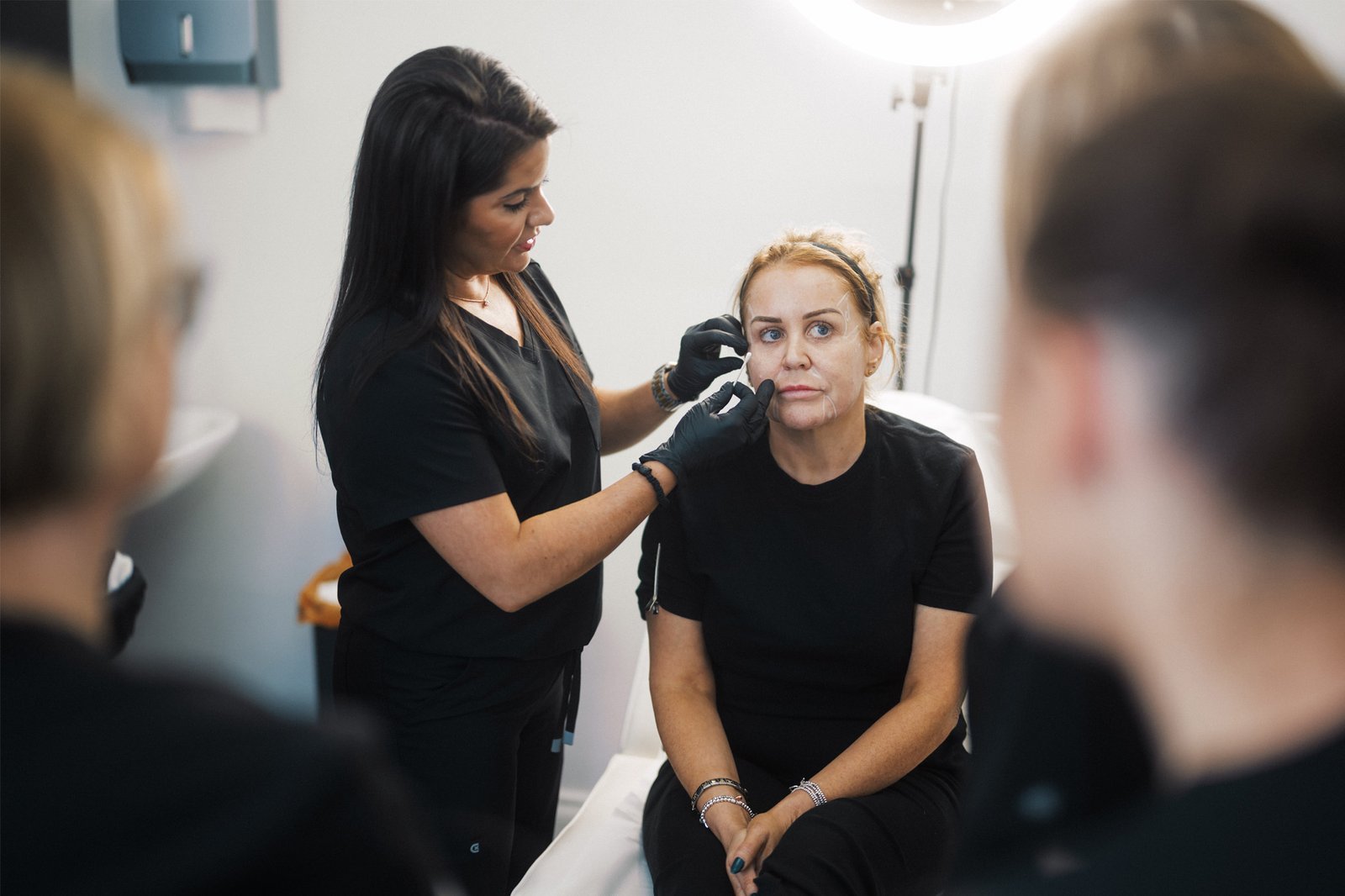
This supportive setting gives delegates the opportunity to gain hands-on experience with live models under expert guidance, helping them build confident and safe clinical skills.
Another key feature of a strong course is a clear structure that progresses from foundation to advanced levels, helping delegates build confidence and long-term competence at each stage [4][7].
You’ll see this approach reflected in courses such as ATA, where structured learning, clinical support, and long-term practitioner development sit at the heart of Botox and filler training in Hamilton.

Why Confidence Comes from Proper Foundations
If you’re questioning whether you’re good enough for medical aesthetic courses in the UK, you’re already showing a key quality of a safe delegate: self-awareness. In medical aesthetics, safe practice depends on strong anatomical knowledge, clear protocols, and recognising risk [2][4].
Delegates with this mindset feel comfortable learning under supervision, asking for guidance when they need it, and moving forward at a pace that supports safer treatments and lasting clinical confidence.
This is an important part of understanding how to start aesthetic training in the right way. That’s why real confidence in aesthetics grows from solid foundations, not from rushing ahead.
The Emotional Side: Imposter Syndrome Is Normal
Worry about starting a new career in medical aesthetics is a normal and valid part of the transition. Many delegates feel significant pressure to succeed quickly, often driven by social media visibility, financial investment, and early expectations around confidence and competence [4].
These pressures can, in turn, heighten the fear of making mistakes or causing harm, particularly given the medical risks associated with injectables and the responsibility of managing complications safely.
This is why a supportive aesthetic training advice and plays a crucial role in reducing these fears by encouraging gradual progression and providing safety nets during early clinical practice [4].
If you’re considering how to start aesthetic training, take the time to explore your options, ask questions, and make sure you feel fully informed before committing to Botox and filler training in Hamilton.
When you’re ready to seek further aesthetic training advice, you can learn more about ATA courses or arrange an introductory conversation in your own time. Clarity comes before confidence, and reaching this point means you’re already on the right path.

Bibliography
- House of Commons Library. (2025). The regulation of non-surgical cosmetic procedures in England, Research briefing CBP-10331. Available at:
https://commonslibrary.parliament.uk/research-briefings/cbp-10331/ - Joint Council for Cosmetic Practitioners. (2018). Education and Training Provider Standards, Version 14. Available at:
https://www.jccp.org.uk/SystemFiles/Education%20and%20Training%20JCCP%20Standard13Feb2024.pdf - Joint Council for Cosmetic Practitioners. (2025). Education & training provider. Available at:
https://www.jccp.org.uk/EducationAndTrainingProvider - Joint Council for Cosmetic Practitioners. (n.d.). Good Practice Guide for Education and Training in the Aesthetics Sector. Available at:
https://www.jccp.org.uk/ckfinder/userfiles/files/JCCP%20Good%20Practice%20Guide%20for%20Education%20and%20Training%20in%20the%20Aesthetics%20Sector%281%29.pdf - Joint Council for Cosmetic Practitioners and Cosmetic Practice Standards Authority. (n.d.) Code of Practice, Version 2. Available at:
https://www.jccp.org.uk/ckfinder/userfiles/files/JCCP%26CPSA%20Code%20of%20Practice_v2.pdf - NHS. (n.d.) Choosing who will do your cosmetic procedure – advice, NHS. Available at:
https://www.nhs.uk/tests-and-treatments/cosmetic-procedures/advice/choosing-who-will-do-your-procedure/ - Save Face. (n.d.). Save Face for practitioners. Available at:
https://www.saveface.co.uk/en/page/save-face-for-practitioners - UK Government. (2021). The licensing of non-surgical cosmetic procedures in England: consultation document. Available at:
https://www.gov.uk/government/consultations/licensing-of-non-surgical-cosmetic-procedures/the-licensing-of-non-surgical-cosmetic-procedures-in-england